


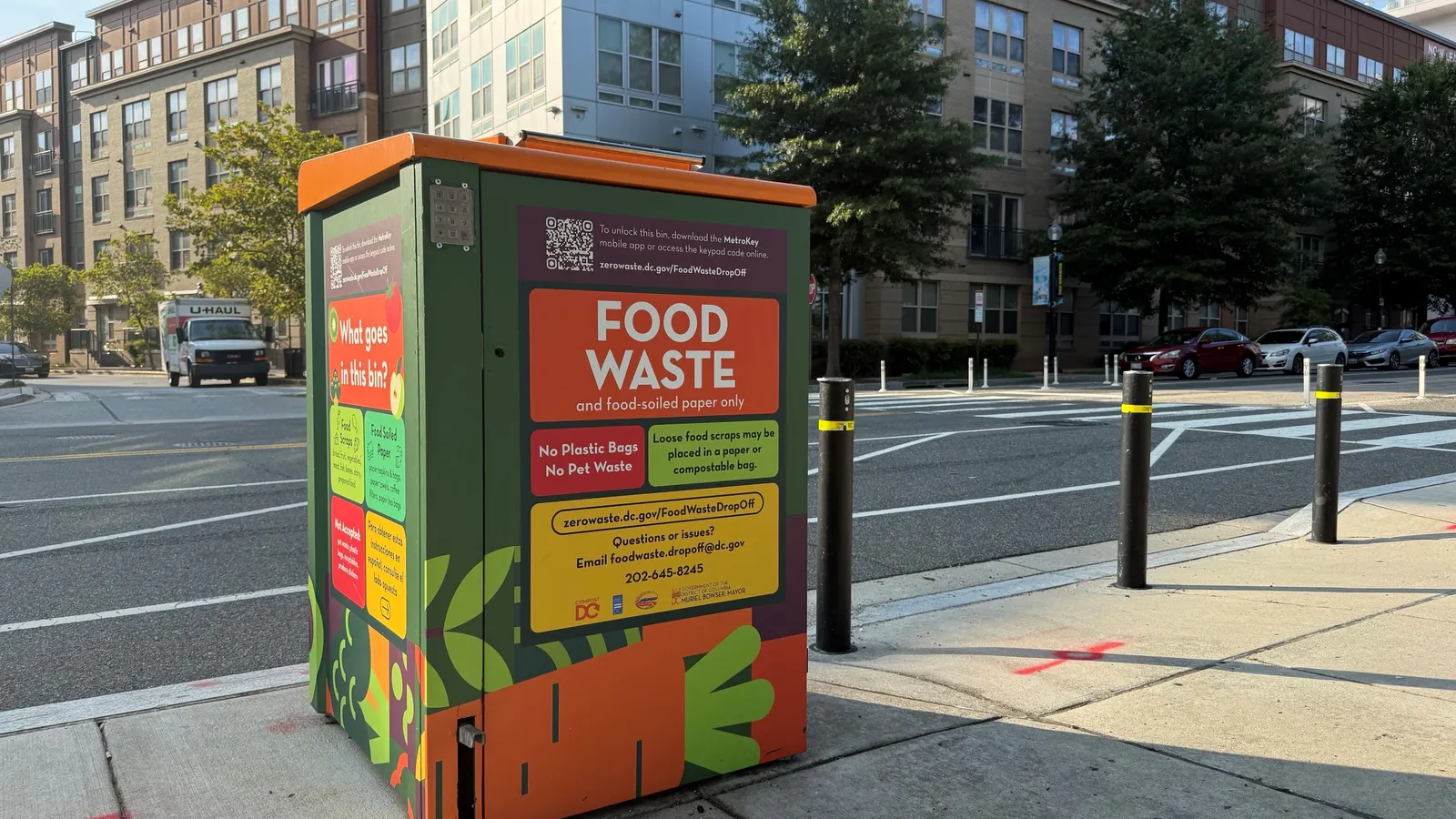
As Washington, D.C. navigates the complexities of urban sustainability, the Department of Public Works (DPW) is doubling down on a deceptively simple solution: the smart compost bin. By expanding its network of keypad-accessible food waste drop-off sites, the District is attempting to dismantle the barriers that have long prevented apartment-dwellers—who constitute the majority of the city’s population—from participating in municipal composting efforts. This initiative is a cornerstone of the District’s ambitious "Zero Waste" roadmap, which aims to divert 80% of the city’s waste from landfills and incinerators by 2040.
The Core Mandate: A Citywide Shift in Waste Management
The push for expanded composting is not merely a localized environmental project; it is an economic and regulatory necessity. For years, D.C. has relied heavily on the Reworld waste-to-energy facility in Lorton, Virginia, to handle its municipal solid waste. However, with the 2040 goal to divert 80% of waste firmly established, the city is under pressure to modernize its infrastructure.
The current strategy focuses on closing the "accessibility gap." While D.C. mandates that apartment building managers provide basic waste and recycling services, organic waste collection has historically remained optional or inaccessible. Previously, residents motivated to compost were forced to either trek to farmers markets with buckets of scraps or invest in costly countertop electronic composters. The smart bin program, which allows residents to unlock designated receptacles 24/7 using a unique key code, provides a middle ground that balances convenience with municipal oversight.
Chronology: A Decade of Incremental Progress
The evolution of D.C.’s composting infrastructure has been a gradual, data-driven process that began long before the current expansion phase.
- 2014: The city initiates its foundational food waste collection programs, marking the beginning of a long-term commitment to tracking organic waste diversion.
- 2022–2023: Recognizing that standard drop-off sites were insufficient, the DPW pivots toward the "smart bin" model, utilizing keypads to ensure secure and managed access. The program experiences a surge in popularity, gaining 10,000 registered users in just 18 months.
- 2024: The District updates its comprehensive Zero Waste Plan, codifying the 80% diversion goal and targeting a reduction of 1.38 million metric tons of carbon dioxide equivalent in greenhouse gas emissions.
- Late 2024/Early 2025: The city begins integrating additional material streams into the drop-off network, starting with a pilot program for battery disposal at eight farmers market locations.
Supporting Data: By the Numbers
The success of the smart bin program is quantified by the consistent volume of organic material redirected from incinerators. According to John Johnson, program manager for the D.C. Office of Waste Diversion, the city has collected more than 11 million pounds of food waste since 2014 across all collection initiatives.
Crucially, the smart bin infrastructure—a relatively recent addition—is responsible for 10% of that total. This figure is particularly striking when considering the logistical challenges of urban waste collection. The program is currently supported by a partnership with Compost Crew, which handles the physical collection from the bins, and Maryland Environmental Services, which oversees the industrial-scale composting process.
The environmental impact is equally significant. The updated 2024 Zero Waste Plan explicitly links these programs to a citywide reduction of the solid waste stream by 18%. By diverting organic matter, the city not only reduces the volume of trash destined for the Lorton incinerator but also significantly lowers the methane emissions that would otherwise be generated in a landfill environment.
Official Perspectives: Balancing Utility and Equity
For city officials, the challenge lies in scaling a program that requires both individual behavioral change and logistical precision.
John Johnson emphasizes that the ultimate metric for success is equitable access. "The goal is to make sure that we have equitable distribution throughout the city," Johnson noted. "Residents are more likely to use the bin if it’s close to their home." To that end, the Office of Waste Diversion is using heat mapping and resident feedback to determine the placement of new units, ensuring that underserved neighborhoods are not excluded from the city’s green transformation.
DPW Director Anthony Crispino adds that the program is also about community education. Beyond simply collecting food scraps, the city is launching a series of how-to workshops and offering rebates for home-composting equipment, acknowledging that no single method will solve the waste crisis.
"We are looking at a whole plethora of ideas," Crispino said, highlighting the city’s broader vision. This includes using the food waste network as a gateway for other circular economy initiatives. By leveraging the existing drop-off locations to collect household hazardous waste—such as batteries—the city is streamlining the "drop-off" experience for residents, turning a single errand into a multi-purpose environmental action.
Implications: The Benning Road Vision
Perhaps the most significant long-term implication of the city’s current strategy is the planned overhaul of the Benning Road transfer station. Decommissioned following a significant fire, the site is currently the focus of an intense redesign process involving the Office of Waste Diversion and local neighborhood advisory boards.
The vision for Benning Road is not merely to restore functionality but to create a "green facility" that serves as the backbone for the next two decades of waste management. According to Director Crispino, the site is being redesigned to accommodate a growing population and a more sophisticated waste sorting infrastructure. This includes expanded capacity for composting materials, improved recycling processing, and a more accessible area for residential drop-offs.
This facility will represent the transition from a linear "take-make-waste" model to a circular one. By centralizing these services, the District hopes to reduce the carbon footprint associated with transporting waste to external facilities while simultaneously providing a public space that fosters community engagement with sustainability.
Challenges Ahead: The Road to 2040
While the expansion of the smart bin program is a clear success, the path to an 80% diversion rate remains steep. Multifamily housing represents the most complex hurdle; unlike single-family homes with curbside access, apartment buildings require the cooperation of property managers, building owners, and thousands of individual tenants.
Furthermore, the city must address the "contamination" problem. As participation increases, ensuring that only compostable materials enter the smart bins—and not plastics or non-organic refuse—will require constant monitoring and public education. The DPW’s reliance on Compost Crew and Maryland Environmental Services provides a professionalized layer of quality control, but the city’s ability to scale this while maintaining low contamination rates will be a litmus test for the program’s long-term viability.
Moreover, the fiscal sustainability of the program remains a topic of ongoing discussion. While the current smart bin expansion is popular, the capital costs of installing thousands of units, combined with the recurring costs of collection and processing, will require sustained political will and consistent budgetary allocation.
Conclusion
The transformation of Washington, D.C.’s waste management system is a testament to the power of integrating technology with policy. By making composting accessible to apartment dwellers through a 24/7 smart-key infrastructure, the District is effectively nudging its residents toward a more sustainable lifestyle.
As the city continues to iterate on its Zero Waste plan, the focus will likely shift from simple collection to the more complex task of managing diverse waste streams, from hazardous materials to organics. With the planned rebirth of the Benning Road facility and the continued growth of the smart bin network, D.C. is positioning itself as a leader in the urban sustainability movement. The next 15 years will be critical; if the city can maintain its current momentum, it may well prove that a dense, urban environment can indeed thrive by embracing a circular economy.
