





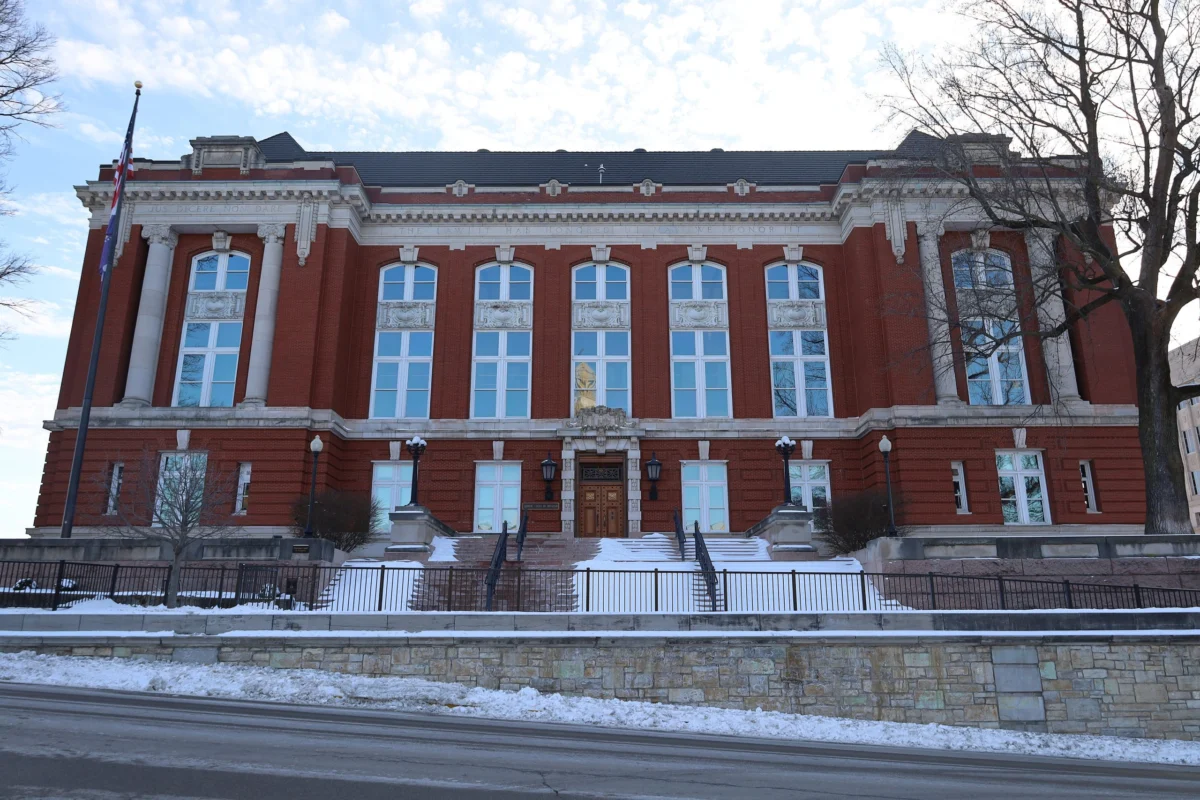
In a significant blow to Missouri’s Republican leadership, the U.S. Supreme Court has declined to intervene in the state’s high-stakes redistricting dispute, effectively barring the implementation of a controversial new congressional map for the upcoming midterm elections. Justice Brett Kavanaugh, acting on an emergency application, denied the request on Tuesday, leaving in place a unanimous ruling from the Missouri Supreme Court that effectively froze the state’s redistricting efforts.
The order, issued in Hoskins v. von Glahn, was delivered without a recorded dissent or an accompanying explanation. This decision preserves the status quo, mandating that Missouri conduct its November elections using the existing 2022 congressional district boundaries, thereby nullifying—at least for the present cycle—the mandates set forth in House Bill 1 (HB 1).
The Chronology of a Constitutional Conflict
The roots of this legal impasse stretch back to September 2025, when the Missouri General Assembly convened in a special legislative session. Driven by a desire to secure a more favorable electoral landscape, Republican legislators narrowly passed HB 1 in a 21-11 vote. The legislation, which received vocal support from former President Donald J. Trump, sought to dismantle long-standing electoral configurations, most notably by reconfiguring the Fifth Congressional District to bolster conservative prospects.
The legislative maneuver was met with immediate, fierce opposition. Representative Emanuel Cleaver, the incumbent Democrat representing the Fifth District, condemned the effort as an "unconstitutional gerrymander," signaling that the fight would move from the statehouse to the courtroom.
The legal resistance gained momentum through "People Not Politicians Missouri," an advocacy group spearheaded by Richard von Glahn. Following the passage of HB 1, the coalition organized a massive referendum drive. By December 2025, the group had submitted over 300,000 signatures to Secretary of State Denny Hoskins, invoking the Missouri Constitution’s provision that allows voters to suspend challenged legislation via a sufficient referendum petition until it can be ratified at the ballot box.
The conflict remained in a state of suspended animation until August 4, 2026—the day of the state’s primary election. Secretary of State Hoskins rejected the petition, arguing that the state constitution did not permit referendums on matters of congressional redistricting. The fallout was instantaneous. On September 3, 2026, the Missouri Supreme Court issued a stinging unanimous rebuke, declaring that HB 1 "is not the law and has never been the law." The court ordered the restoration of the 2022 maps and mandated that the question of redistricting be placed before voters as Proposition A in the November general election.
The Federal-State Collision: An Unprecedented Standoff
The Supreme Court’s refusal to grant an emergency stay has done little to resolve the fundamental friction between state and federal judicial authorities. As the high court declined the emergency application, a separate, parallel legal track has created a constitutional crisis.
Chief Judge Stephen Clark of the U.S. District Court had previously issued a temporary restraining order (TRO) that effectively required Missouri to conduct its upcoming elections under the HB 1 map. This created a direct, irreconcilable contradiction: the Missouri Supreme Court mandated the use of the 2022 map, while the federal district court order demanded the use of the 2026 HB 1 map.
Attorney General Catherine Hanaway, caught between these competing mandates, confirmed via social media that the state would move to ensure "full compliance" with Judge Clark’s federal order. This stance has set the stage for a period of extreme electoral uncertainty, as local election officials are left to navigate conflicting directives from the state’s highest court and the federal judiciary.
The Argument of "Self-Inflicted" Harm
In their emergency application to the U.S. Supreme Court, Missouri officials painted a dire picture of the consequences of the Missouri Supreme Court’s ruling. They argued that switching electoral maps after 1.2 million Missourians had already cast their ballots in the August primary under the new district lines would constitute a "federal-election-administration disaster."
The state argued that the potential for voter confusion, administrative error, and the massive logistical burden of retraining poll workers and reassigning voters to new precincts created a "catastrophic risk" to the integrity of the election.
However, the legal team representing the respondents, led by von Glahn, countered this narrative by pointing to the timing of the state’s own actions. In a scathing rebuttal, they highlighted that as early as January 2026, the Missouri Attorney General’s office had remarked that "delay works in our favor." Counsel for the respondents argued that the administrative crisis cited by the state was entirely self-inflicted—a result of the Secretary of State waiting until the very day of the primary election to reject the referendum petition, despite having the signatures in hand for months.
Implications for Missouri’s Electoral Landscape
The legal maneuvering over HB 1 is more than a technical dispute over administrative deadlines; it is a battle for the political soul of Missouri. The proposed map sought to shift the partisan balance of the state’s delegation, a move that would have likely cemented Republican dominance for the remainder of the decade.
By blocking the implementation of HB 1, the judiciary has effectively protected the 2022 map, which maintains a more competitive, albeit still lean-Republican, environment. The decision to keep the 2022 map in place ensures that incumbents like Representative Cleaver will face their constituents under the same boundaries that have defined their current terms.
However, the broader implications are profound. The current state-versus-federal conflict creates a precedent where local election administrators are essentially forced to choose which judicial authority to obey. Legal scholars suggest that the failure of the U.S. Supreme Court to step in and clarify the hierarchy of these orders leaves the door open for continued litigation well past the November elections.
The Road Ahead
As the November election approaches, the status of Missouri’s congressional districts remains in a state of precarious flux. While the U.S. Supreme Court’s denial of the stay is a win for those opposing the redrawn maps, it is not a final resolution on the merits of the redistricting plan itself.
The upcoming vote on "Proposition A" will serve as a referendum on the legislature’s redistricting power. Should voters approve the referendum, it would effectively codify the rejection of HB 1, potentially rendering the ongoing federal litigation moot. Conversely, if the political maneuvering continues to stall, the conflict between Judge Clark’s federal TRO and the Missouri Supreme Court’s ruling could trigger a wave of post-election litigation, potentially delaying the certification of congressional results.
For the voters of Missouri, the ordeal highlights the volatility of election law in a polarized political climate. The battle over HB 1 serves as a stark reminder that in the modern era, the lines drawn on a map are as much a subject of legal warfare as they are a tool of civic representation. As Missouri moves toward the November polls, the eyes of the nation remain fixed on the Show-Me State—a state currently struggling to define exactly which map will determine its future.
The legal skirmish is far from over. With the federal judiciary and state courts locked in a standoff that neither seems willing to yield, the only certainty is that Missouri’s path to the November midterm will be defined by the very litigation that was intended to clarify the electoral process. For now, the 2022 map holds, but the constitutional ramifications of this dispute will likely echo in the halls of justice long after the final ballot is cast.
