




Introduction
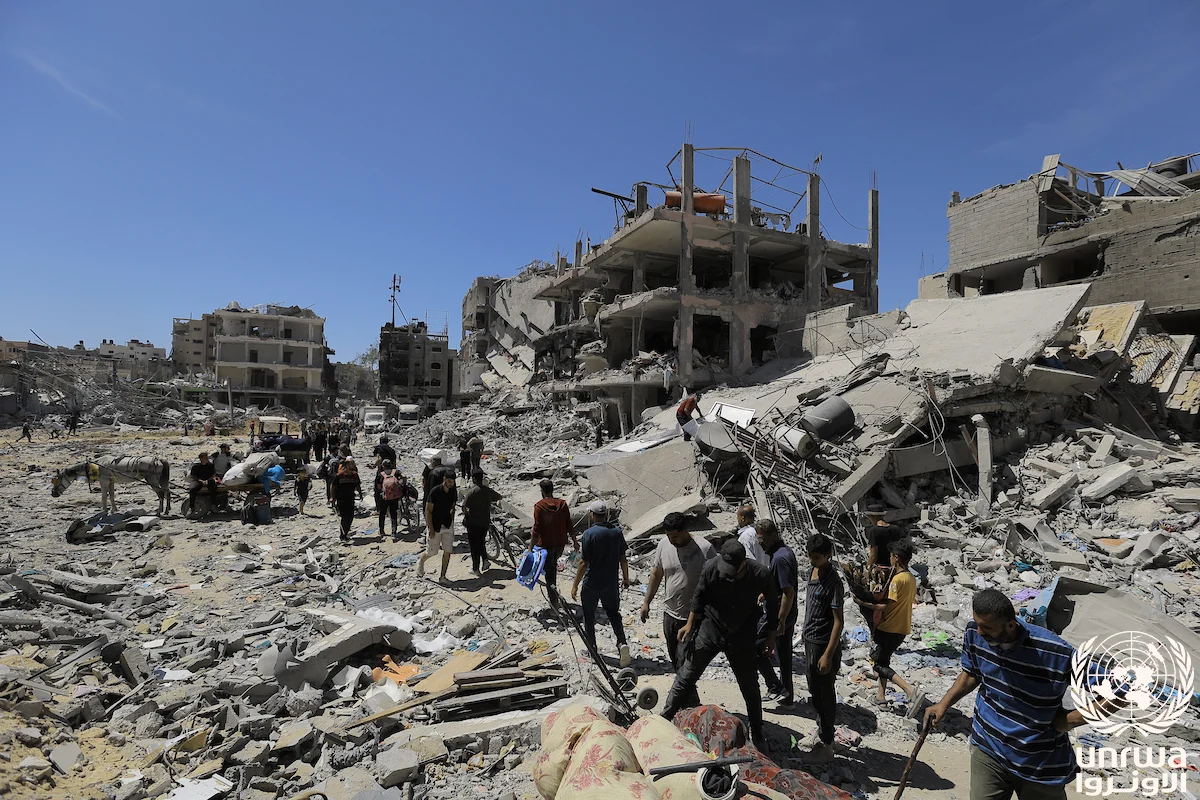
The ongoing conflict in the Gaza Strip has left the landscape transformed into a vast, industrial-scale graveyard. Amidst the persistent bombardment and the humanitarian crisis, a new, quieter threat to the pursuit of international justice has emerged: the systematic clearing of wartime rubble. On Monday, Francesca Albanese, the UN Special Rapporteur on the situation of human rights in the Palestinian territory occupied since 1967, issued a stark warning that Israel’s current methods of debris removal risk the permanent destruction of critical evidence needed to investigate potential atrocity crimes.
As the international community grapples with the legal complexities of the war, the physical remnants of destroyed homes and infrastructure have become more than just debris—they are the primary repository of forensic evidence regarding the deaths of an estimated 10,000 individuals still buried beneath the surface.
The Core Conflict: Forensic Integrity vs. Debris Removal
The tension lies between the practical necessity of clearing vital transport routes and residential areas and the legal imperative to preserve crime scenes. Albanese’s intervention highlights a fundamental concern: when heavy machinery is deployed to crush and relocate millions of tons of concrete, steel, and human remains, the chain of custody for potential evidence is irrevocably broken.
“It is vital that before decisions are made on displacement or crushing by the occupying army or its allies, the recovery and dignified identification of human remains, systematic documentation of sites and materials, preservation of potentially relevant evidence, and an unbroken chain of custody under independent oversight must take place,” Albanese stated.
The Special Rapporteur emphasized that the process must adhere strictly to the Minnesota Protocol on the Investigation of Potentially Unlawful Death. This international standard requires that death investigations be prompt, effective, thorough, independent, impartial, and transparent. Without such oversight, the rubble—which likely contains biological material, munitions fragments, and personal effects—becomes an untraceable mixture of industrial waste, effectively sanitizing the landscape of its historical and legal record.
Chronology of a Mounting Legal Crisis
- October 2023: The current phase of the conflict begins, leading to unprecedented levels of structural damage across the Gaza Strip.
- December 2023: The Republic of South Africa submits a landmark application to the International Court of Justice (ICJ), alleging that Israel’s actions in Gaza constitute genocide.
- January 2024: The ICJ issues a provisional measures order, explicitly directing Israel to take all measures within its power to prevent the commission of acts of genocide and to preserve evidence related to potential breaches of the Genocide Convention.
- August 2026: A rare success in recovery operations occurs as Palestinian teams manage to bury 112 individuals recovered from the rubble after a 17-day operation, underscoring the immense difficulty of the task.
- September 2026: Francesca Albanese issues a formal warning regarding the ongoing, unmonitored rubble-clearing operations, calling for an immediate halt to methods that threaten the integrity of forensic evidence.
The Legal Framework: The Genocide Convention and the ICJ
The urgency behind Albanese’s statement is rooted in the ongoing proceedings at the International Court of Justice. South Africa’s case hinges on the intersection of two distinct legal elements required to prove genocide under the 1948 Convention: dolus specialis (specific intent) and the physical commission of prohibited acts.
The Mental and Physical Elements
The "mental element" requires the prosecution to prove that the state acted with the specific intent to physically destroy, in whole or in part, a national, ethnical, racial, or religious group. The "physical element" is satisfied if any one of five acts is proven:
- Killing members of the group.
- Causing serious bodily or mental harm.
- Deliberately inflicting conditions of life calculated to bring about physical destruction.
- Imposing measures intended to prevent births.
- Forcibly transferring children of the group to another group.
By clearing the rubble without forensic documentation, the "physical evidence" of mass killings and the conditions inflicted upon the population is being actively erased. If the rubble is crushed and repurposed for road construction or land-fill, the ability to document the scale of these killings—and therefore the intent behind them—is severely diminished.
Supporting Data: The Scale of Destruction
The sheer volume of debris in Gaza is unprecedented in modern urban warfare. Estimates suggest that over 40 million tons of rubble cover the territory.
- The Missing: An estimated 10,000 individuals remain unaccounted for, believed to be trapped beneath collapsed multi-story buildings.
- Recovery Challenges: The August 2026 operation, which resulted in 112 burials, provides a sobering look at the reality of recovery. It took nearly three weeks of intensive labor, limited equipment, and constant danger to process a single site or group of sites.
- The Cost of Inaction: As the months stretch into years, the decomposition of remains and the mixing of debris make future identification increasingly unlikely, even if international forensic teams were granted access.
Implications for International Accountability
The implications of this situation extend far beyond the immediate humanitarian crisis. They strike at the heart of the "enforcement gap" in international law.
1. The Erasure of History
The rubble is a primary source of history. By removing it, the parties involved are effectively removing the physical record of the conflict’s impact on the civilian population. For future generations of Palestinians, this creates a "memory void" where the physical evidence of their displacement and loss is replaced by new, sanitized infrastructure.
2. The Erosion of ICJ Authority
The ICJ’s January 2024 order was intended to serve as a safeguard. If that order is ignored—or circumvented through "administrative" debris removal—the moral and legal authority of the world’s highest court is undermined. It sends a message that state actors can bypass international judicial oversight by altering the physical reality on the ground before a judgment can be rendered.
3. The Need for Independent Oversight
Albanese’s call for independent oversight is not merely a request for transparency; it is a request for the international community to take a stand on the preservation of justice. This would involve:
- Deployment of Forensic Experts: An international task force tasked with mapping and scanning sites before demolition.
- Chain of Custody Protocols: Implementing rigorous tagging and cataloging systems for debris removal.
- Suspension of Unvetted Clearing: Halting the use of heavy machinery in areas where mass graves or civilian death sites are suspected.
Official Responses and The Path Forward
To date, the response from the Israeli government regarding these specific concerns has been minimal, often citing the urgent need to restore basic infrastructure and prevent health hazards caused by the decay of bodies and the buildup of waste.
However, human rights organizations argue that the "health hazard" defense is secondary to the legal requirement to account for the dead. The silence from other major powers regarding the forensic preservation of the rubble has left Palestinians in a state of profound uncertainty. As the allegations brought forth by South Africa wind through the slow machinery of the ICJ, the physical evidence is disappearing in real-time.
Conclusion: A Test for International Law
The situation in Gaza serves as a grim litmus test for the international legal order. If the mechanisms designed to punish and prevent genocide are rendered impotent by the physical erasure of evidence, the very definition of "accountability" in the 21st century will be forced to undergo a painful and uncertain transformation.
The warning issued by Francesca Albanese is a final call for the international community to recognize that justice requires more than just a court order; it requires the protection of the truth, even when that truth lies buried beneath tons of concrete. Without a concerted effort to preserve these sites, the world may find itself in the position of investigating a crime long after the evidence has been permanently swept away.
