


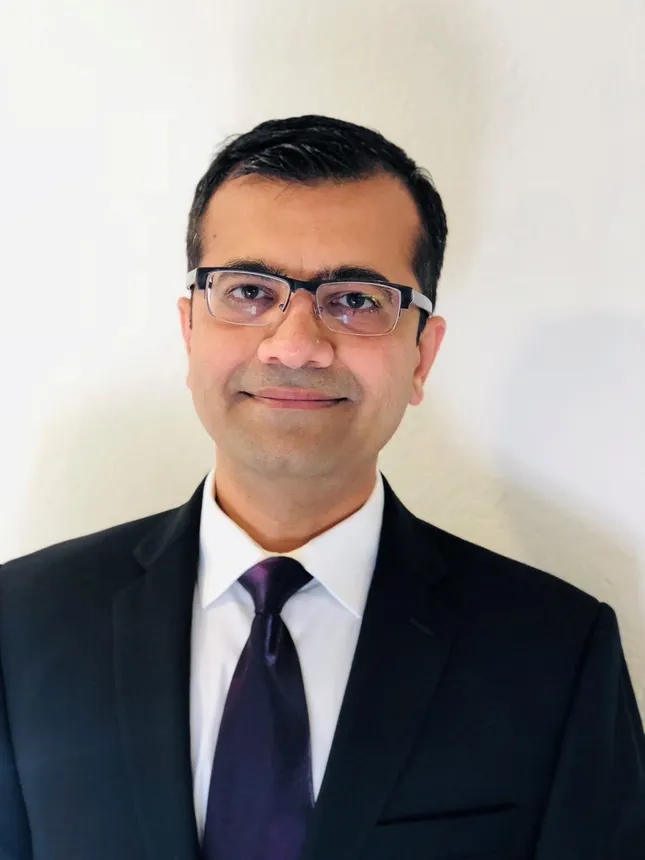
In a strategic move designed to navigate the increasingly complex landscape of modern retail, Munchkin—the renowned leader in innovative baby products—has officially appointed industry veteran Kunal Thakkar as its first-ever Chief Supply Chain Officer (CSCO). The appointment, announced on September 10, marks a significant turning point for the parent company, Why Brands, as it pivots toward a more robust, tech-enabled, and agile operational model.
Thakkar, who assumed his role last month, brings over two decades of supply chain expertise to the organization. His arrival signals Munchkin’s intent to fortify its global footprint, optimize its omnichannel distribution, and accelerate its direct-to-consumer (DTC) capabilities.
The Strategic Mandate: A New Operational Era
The creation of the Chief Supply Chain Officer position is not merely a title change but a fundamental shift in Munchkin’s corporate structure. CEO Steven Dunn, speaking on the reasoning behind the new executive appointment, highlighted that the move is a direct response to the "ever-changing requirements of omnichannel selling."
As retail environments evolve, the pressure on consumer product companies to maintain inventory precision, rapid shipping, and cost-effective sourcing has reached an all-time high. By centralizing operations under a dedicated CSCO, Munchkin is positioning itself to better harmonize its global manufacturing, demand planning, and logistical distribution.
Thakkar’s remit is extensive. He is now responsible for the oversight of:
- Global Operations and Sourcing: Streamlining the company’s manufacturing partnerships.
- Demand Planning and Analytics: Leveraging data to anticipate consumer trends.
- Order Management: Improving the efficiency of fulfillment cycles.
- Compliance and Program Management: Ensuring that the company’s rapid growth adheres to international quality and safety standards.
A Career Defined by Logistics Excellence: Chronology of Impact
To understand the weight of this appointment, one must examine the career trajectory of Kunal Thakkar, whose experience spans some of the world’s most demanding supply chain environments.
The Foundation (Early 2000s – 2015)
Thakkar’s early career was defined by high-volume, high-stakes environments. During his tenure at retail giants like Walmart and UPS, he developed a deep understanding of the "last mile" and the complexities of massive retail inventory systems. These formative years provided him with the logistical framework necessary to handle products at scale, a skill set that has become the hallmark of his professional reputation.
The Scaling Phase (2015 – 2022)
As the retail industry transitioned into the e-commerce era, Thakkar took on leadership roles at Newegg and Firstleaf, where he navigated the challenges of online subscription models and the rapid delivery expectations of digital-first consumers.
The Transformation Expert (2022 – 2024)
Most recently, Thakkar served as the CEO of Seair Global. During his two-year tenure, he spearheaded a major cultural and operational transformation, shifting the company from a traditional freight forwarder to a comprehensive logistics and technology services provider.
Prior to Seair, his work at Thasio serves as a benchmark for his current potential at Munchkin. At Thasio, which owns a portfolio of consumer e-commerce brands, Thakkar managed a spend of over $100 million. His most notable achievement there was a strategic reduction in inventory levels by nearly 50% over an 18-month period. By optimizing the supply chain, he proved that lean operations do not have to come at the expense of consumer availability.
Supporting Data: The Case for Operational Agility
Munchkin’s decision to hire Thakkar is backed by the current market realities of the baby products industry. Data from industry analysts suggests that the sector is currently experiencing a "volatility premium." Companies that can maintain high "in-stock" rates while minimizing capital tied up in slow-moving inventory are winning market share.
Thakkar’s track record demonstrates an ability to balance these competing interests. At Thasio, his inventory reduction strategy was not just a cost-cutting exercise; it was a refinement of the supply chain’s "heartbeat." By aligning sourcing with real-time demand, he successfully maintained customer service levels while freeing up liquidity for the company to invest in product innovation—a core value for Munchkin.
Official Perspectives: Aligning Vision with Execution
In the official press release, both the incoming executive and the CEO expressed a clear, unified vision for the future of the brand.
"Munchkin has built an extraordinary legacy of innovation and consumer loyalty," Thakkar stated. "I’m excited to help build the supply chain that supports its next chapter of growth. I look forward to partnering with teams across the organization to bring greater speed, resilience, and scale to how we serve our retail partners and the families who trust Munchkin every day."
Steven Dunn echoed this sentiment, emphasizing the technological aspect of the partnership. "Kunal’s experience scaling global, omnichannel supply chains will help Munchkin bring greater innovation, speed to market, resilience, and customer service to everything we do," Dunn noted. "He will be instrumental in strengthening the capabilities needed to scale our direct-to-consumer business across owned and third-party digital channels."
Implications for the Future of Munchkin
The implications of this appointment are already rippling through the organization. Following the announcement, Thakkar immediately signaled his intent to expand the internal supply chain team. He has publicly launched a search for a new Director of Global Sourcing and Costing.
1. The Focus on Cost Engineering
The call for a Director of Global Sourcing and Costing indicates that Munchkin is moving toward a model of "cost engineering." This involves working closer with manufacturing partners to understand the fundamental cost drivers of product development—from raw materials to shipping labor—rather than simply accepting market rates. This is a critical move to protect profit margins in an inflationary environment.
2. Omnichannel Integration
By creating a dedicated CSCO role, Munchkin is effectively signaling that its retail partners (such as Target, Walmart, and Amazon) and its own DTC website are no longer to be treated as separate logistical silos. A unified supply chain strategy will allow the company to fulfill orders from whichever location is most cost-effective and fastest, a strategy known as "distributed order management."
3. Strengthening Resilience
The term "resilience," used repeatedly by both Dunn and Thakkar, suggests that Munchkin is bracing for future global disruptions. Whether through geopolitical instability or raw material shortages, the company is clearly prioritizing the diversification of its supply base and the implementation of more sophisticated risk-management analytics.
Conclusion: A New Standard for the Baby Products Sector
Munchkin’s appointment of Kunal Thakkar is a bold affirmation of the company’s long-term growth ambitions. By bringing in a veteran with a track record of transforming logistics-heavy businesses into tech-forward, lean operations, Munchkin is clearly aiming to do more than just sell baby products—it is aiming to set the industry standard for how those products reach the home.
As the retail landscape becomes increasingly fragmented, the companies that thrive will be those that view their supply chain not as a back-office necessity, but as a competitive advantage. With Thakkar at the helm of its global operations, Munchkin is well-positioned to navigate the next decade with the speed, resilience, and innovation that its customers expect.
The recruitment of a Director of Global Sourcing and Costing is the first of many steps in this new chapter. For investors, retail partners, and families alike, the message is clear: Munchkin is professionalizing its operations to ensure that its legacy of innovation is supported by an infrastructure that is built to last.
