


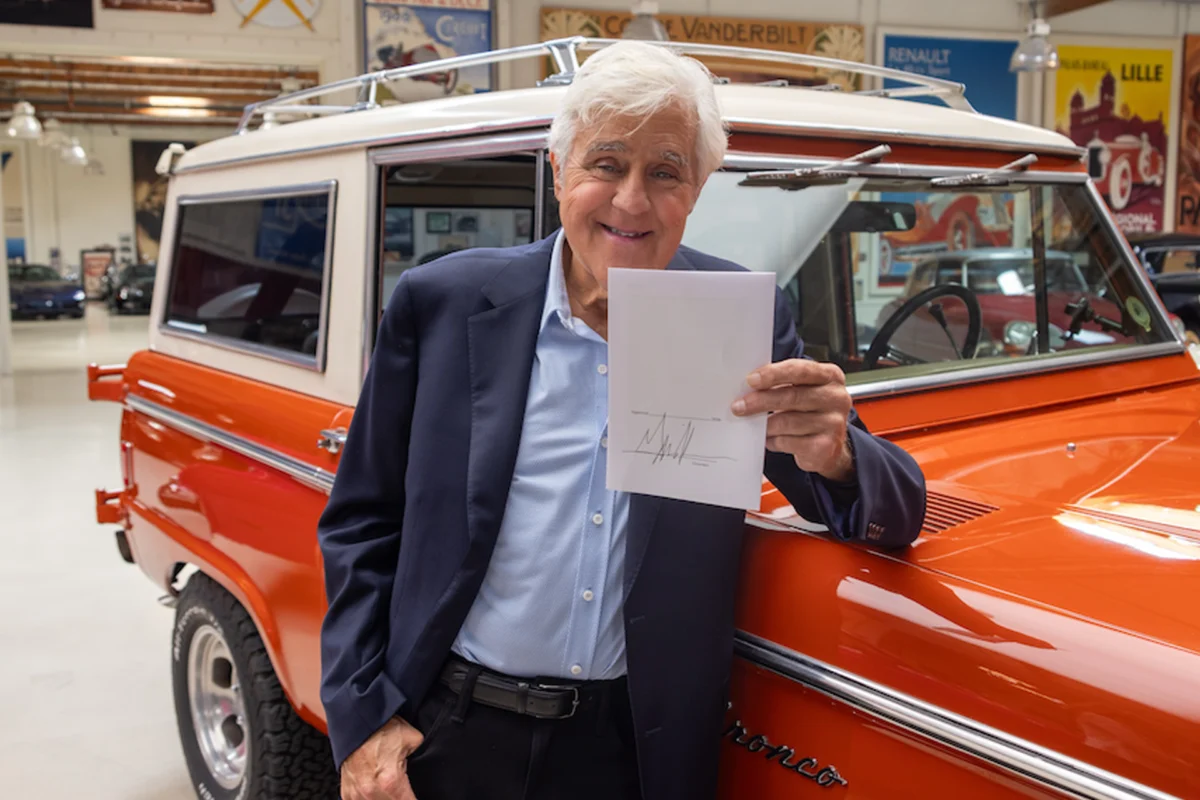
In a high-profile event that bridged the worlds of automotive passion and legislative governance, California Governor Gavin Newsom visited the legendary Burbank garage of Jay Leno to sign Senate Bill 1392 into law. Dubbed "Leno’s Law" in honor of the comedian’s long-standing advocacy for the hobbyist community, the legislation marks a significant—if measured—shift in how the Golden State treats its aging automotive heritage.
While the signing ceremony served as a celebratory acknowledgment of California’s deep-rooted car culture and its influence on the lowrider and collector communities, the reality of the bill is far more nuanced. For the thousands of enthusiasts who have spent years navigating the state’s notoriously complex emissions bureaucracy, SB 1392 offers a path toward regulatory relief. However, the path is narrow, strictly gated, and does not open until the start of 2028.
The Core Facts: What Does SB 1392 Change?
For decades, California has maintained a clear, if rigid, divide in its vehicle registration requirements. While the state notoriously lacks an annual safety inspection program, it imposes some of the most stringent emissions testing requirements in the world. Since the current regulations were established, the "cutoff" for smog exemptions has been fixed at the 1975 model year. Vehicles from 1976 and newer have, with few exceptions, been required to pass a biennial smog check to remain road-legal.
Leno’s Law introduces a phased-in exemption for "collector cars" spanning the 1976 through 1985 model years. To qualify under the new legislation, a vehicle must meet specific criteria that go beyond mere age. The law defines a qualifying collector car as one that is either:
- Insured as a collector vehicle, or
- Driven less than 1,000 miles per year, as verified by documentation.
This represents a notable concession from the state. By allowing for a "mileage-based" exemption, the legislature has provided an alternative for enthusiasts who may not meet the often-restrictive underwriting requirements of specialized classic car insurance providers (such as Hagerty or Grundy), which frequently dictate where and how a car can be stored.
A Long Road: The Chronology of the Fight
The passage of SB 1392 was not an overnight success; it was the culmination of an exhausting, multi-year lobbying effort led by grassroots activists and supported by key legislative allies.
Mike Frankovich, a central figure in the advocacy group Californians for Classic Car Smog Exemptions, noted that the journey spanned nearly eight years. During that time, activists faced repeated setbacks, including the expiration of previous legislative attempts. For years, the prevailing sentiment in Sacramento was that further smog exemptions were a non-starter, particularly given California’s aggressive climate goals.
The turning point arrived with the introduction of SB 1392, spearheaded by Senators Dave Cortese and Shannon Grove. Both lawmakers earned high praise from the Specialty Equipment Market Association (SEMA) for their persistence in navigating the bill through a legislative environment often hostile to easing emissions rules. By framing the bill as a preservation of cultural heritage—specifically mentioning the significance of the lowrider movement—the authors were able to build a coalition that ultimately convinced the Governor to sign the measure into law.
Phasing In: The Timeline of Eligibility
One of the most critical aspects of Leno’s Law is its staggered implementation. Owners of "eighties metal" should not expect an immediate reprieve at their next DMV renewal. The exemption is not based on a rolling 35-year age window, but rather a fixed model-year cutoff that advances incrementally:
- January 1, 2028: Vehicles manufactured before the 1977 model year become eligible for the exemption.
- January 1, 2029: Eligibility expands to vehicles manufactured before the 1978 model year.
- January 1, 2030: Eligibility expands to vehicles manufactured before the 1979 model year.
- January 1, 2031: Eligibility expands to vehicles manufactured before the 1980 model year.
- January 1, 2032: Eligibility expands to vehicles manufactured before the 1981 model year.
- January 1, 2033: The final phase concludes, allowing for the exemption of vehicles manufactured before the 1986 model year.
Crucially, the terminology "before the 1981 model year" refers to 1980 and older vehicles. This means that by the year 2033, the program will reach its ultimate ceiling at the 1985 model year. This leaves a vast swath of enthusiast-favorite vehicles from the late 1980s and 1990s—such as the E30 BMW 3-Series, the Fox-body Mustang, and the early Japanese sports car boom—entirely outside the scope of this legislation.
Implications for the Enthusiast Community
The implications of this law are double-edged. On one hand, it acknowledges that a small, well-maintained segment of the vehicle population is not responsible for the state’s broader air quality challenges. By targeting vehicles driven fewer than 1,000 miles per year, the law effectively filters for hobbyist cars that spend the vast majority of their time in a garage, rather than daily commuters.
However, the "1,000-mile limit" is a double-edged sword. While it provides a path for exemption, it also places a hard cap on the utility of these vehicles. Enthusiasts looking to take their classic cars on cross-state road trips or to major regional car shows will need to carefully track their odometer readings to ensure they remain within the legal threshold.
Furthermore, the requirement to prove mileage suggests an increased burden on the Department of Motor Vehicles (DMV) to manage a new stream of documentation. Critics of the bill have pointed out that without a robust verification process, the exemption could be ripe for abuse, though proponents argue that the small number of eligible vehicles makes the overall impact on air quality negligible.
The Reality of Classic Car Ownership in California
Even with the passage of Leno’s Law, the landscape for classic car owners remains daunting. For those who own vehicles outside the 1976–1985 bracket—or those who wish to drive their vehicles more than 1,000 miles a year—the old rules remain in full effect.
The most reliable path for the average enthusiast remains the acquisition of a vehicle from the 1975 model year or older, which remains permanently exempt from smog testing. For those who own newer "modern classics," the reality is that they must maintain original emissions equipment, often sourcing rare or "new-old-stock" parts at a premium.
As noted by industry observers, the best "mechanic" for a classic car in California is often the owner themselves. Finding a professional shop willing to work on 40-year-old vacuum lines, carburetors, and primitive catalytic converters is becoming increasingly difficult as shops shutter or pivot to servicing modern electric and hybrid vehicles.
Conclusion: A Small Step, Not a Panacea
Leno’s Law is undoubtedly a triumph for the advocacy groups that spent nearly a decade in the halls of the state capitol. It represents a rare instance where the government has acknowledged that the "one-size-fits-all" approach to emissions does not account for the cultural and historical value of the automotive hobby.
Yet, it is essential to temper expectations. This is not a broad deregulation of the state’s smog laws, nor is it a sign that California is abandoning its environmental mandates. It is a targeted, narrow, and cautious exemption designed to preserve a specific slice of history. For the owner of a 1982 collector car, the road to legal, stress-free driving is now visible—but they will still have to wait until 2033 for the full benefit of the law to manifest, and they must remain diligent in their record-keeping and insurance status throughout the journey.
As we look toward the future, the automotive community will likely continue to push for broader exemptions. For now, however, Leno’s Law serves as a reminder that even in the most regulated state in the union, persistence, organization, and a little bit of star power can still move the needle—one model year at a time.
