




By Robyn Griggs Lawrence | September 10, 2026
In an era defined by rapid urbanization, climate volatility, and widening socioeconomic disparities, the role of local government has shifted from simple service provision to proactive social innovation. Municipal leaders across the United States are increasingly tasked with solving complex, systemic problems with limited resources and aging infrastructure.
This year, Smart Cities Dive is proud to announce the winners of the 2026 Community Project Awards—a prestigious recognition program that continues the legacy of the American City & County Crown Communities Awards following their merger last year. From the streets of Minneapolis to the neighborhoods of Durham, these four initiatives represent the vanguard of civic ingenuity, proving that local government remains the most effective laboratory for meaningful, human-centric change.
The 2026 Award Winners: A Snapshot of Innovation
The four winning projects—hailing from Durham, North Carolina; Jacksonville, Florida; the Twin Cities of Minnesota; and Orlando, Florida—were selected for their foresight, scalability, and measurable impact on residents’ lives.
- Durham, NC: A groundbreaking participatory budgeting program that bridges the gap between the incarcerated population and civic decision-making.
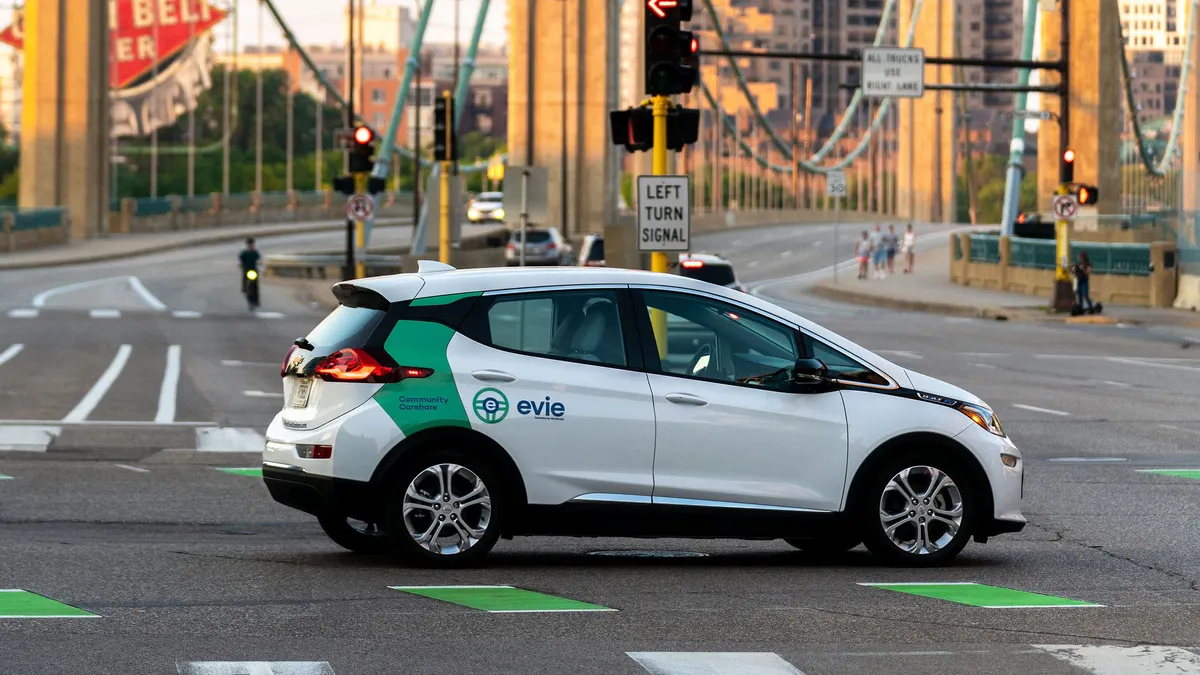
- Minneapolis & St. Paul, MN: The EV Spot Network, a municipally-supported electric vehicle car-sharing and public charging infrastructure project.
- Orlando, FL: A targeted energy-equity initiative providing portable solar and efficiency retrofits to low-income households.
- Jacksonville, FL: A strategic legal and administrative partnership to protect vulnerable homeowners from predatory institutional displacement.
Chronology: From Concept to Implementation
The success of these projects did not happen overnight. Each initiative followed a rigorous trajectory of community assessment, policy development, and cross-sector collaboration.
2022–2024: The Incubation Phase
The genesis of these projects often traces back to the post-pandemic recovery period. In Minneapolis and St. Paul, city planners recognized that the transition to green transportation was leaving low-income residents behind. The EV Spot Network began its planning phase in 2022, focusing on "transportation deserts" where public transit gaps were most acute. Similarly, Jacksonville’s initiative was born out of the 2023 housing market surge, where institutional investors began aggressively purchasing family-owned properties, threatening to dismantle the city’s established middle class.
2025: The Scaling and Integration Period
By early 2025, these programs moved from pilot status to full-scale implementation. Durham’s decision to include incarcerated residents in budget allocations was a bold step in democratic inclusion, requiring extensive coordination with the Sheriff’s Department and local civil rights advocacy groups. Orlando’s energy-saving program saw a massive rollout of portable solar equipment during the summer of 2025, timed to combat peak utility costs during the height of Florida’s heat season.
2026: Impact and Recognition
The 2026 awards serve as a benchmark. Each project has now completed a full cycle of performance data collection, allowing city leaders to verify that these investments have achieved their intended outcomes—whether that be a reduction in utility bills, an increase in EV usage, or a tangible shift in civic engagement metrics.
Supporting Data: Why These Projects Matter
To understand the efficacy of these initiatives, one must look at the data points driving them.
Energy Equity in Orlando:
In Orlando, energy burden—the percentage of household income spent on electricity—can be as high as 15% for low-income families, compared to the national average of roughly 3%. The city’s distribution of portable solar units and energy-efficient appliances has led to an average reduction of 22% in monthly utility costs for participants, providing families with a critical financial buffer.
Transportation in the Twin Cities:
The EV Spot Network addresses the "last mile" problem. Data from the first 18 months of operation shows that over 65% of users report using the service to reach essential services—such as grocery stores and medical facilities—that were previously inaccessible via public bus routes. By lowering the cost of ownership through shared access, the cities have successfully democratized green mobility.
Housing Stability in Jacksonville:
The partnership between the County Appraiser’s office and local nonprofits has successfully shielded over 400 properties from institutional acquisition in the last year alone. By providing "early warning" legal counsel to families at risk of foreclosure or predatory buyouts, the program has preserved local wealth and neighborhood stability.

Official Responses: Voices from the Front Lines
Local leaders emphasize that these awards are not just trophies; they are affirmations of a new philosophy of governance.
"We believe that a city is only as strong as its most vulnerable resident," said the Mayor of Orlando in a statement following the award announcement. "By providing portable solar energy, we aren’t just handing out equipment; we are building resilience into the foundation of our working-class neighborhoods. This award confirms that energy justice is a fundamental component of the modern city."
In Durham, the inclusion of incarcerated residents has been met with both national praise and local debate. The project lead noted: "Civic participation is a right, not a privilege contingent on one’s housing status. By allowing those in our jails to have a voice in budget priorities, we are teaching the value of civic engagement that will serve them well upon their re-entry into society."
Implications for Future Urban Policy
The success of these projects offers a blueprint for other municipalities, but it also underscores the challenges of scaling innovation in a decentralized government system.
The Challenge of Funding
While federal grants—such as those available through the Inflation Reduction Act or the Bipartisan Infrastructure Law—have been instrumental, the sustainability of these projects remains tied to local budget cycles. The winners demonstrate that successful projects often rely on "blended finance," combining municipal bonds, private philanthropic investment, and state-level environmental grants.
The Need for Inter-Agency Cooperation
A common thread among all four winners is the destruction of "siloed" government departments. Jacksonville’s success, for example, required the Appraiser’s office—traditionally a dry, administrative entity—to work hand-in-hand with housing advocacy groups. This level of cross-departmental agility is increasingly necessary as cities face problems that do not respect traditional bureaucratic boundaries.

Scalability and Adaptability
One of the core mandates of the Smart Cities Dive award committee is to identify projects that can be "exported" to other regions.
- The Durham Model is currently being studied by three other major metropolitan counties looking to expand their own participatory budgeting initiatives.
- The Twin Cities’ EV network is serving as the primary case study for the National League of Cities as they draft new guidelines for municipal car-sharing programs.
Conclusion: The Path Forward
The 2026 Smart Cities Dive Community Project Awards serve as a reminder that the most significant technological and social advancements are often those that go unnoticed by the general public until they are fully integrated into the fabric of daily life.
Whether it is the quiet hum of a shared electric car in St. Paul or the stability of a homeowner in Jacksonville, these initiatives provide a roadmap for the next decade of municipal governance. As these cities continue to refine their processes, they invite other local governments to look beyond the status quo.
The future of the smart city is not merely about sensors, data, and connectivity; it is about the resilience of communities, the inclusivity of democratic processes, and the commitment to ensuring that the benefits of modern urban life are shared by all. These four winners have set a high bar, and the progress made in Durham, Orlando, Jacksonville, and the Twin Cities proves that when cities commit to their residents, the possibilities for innovation are limitless.
As we look toward the 2027 award cycle, the question for every local leader remains: How will you turn your community’s most pressing challenge into its greatest triumph?
For more information on these projects, including technical implementation guides and contact information for the respective project offices, visit the Smart Cities Dive project repository online.
