





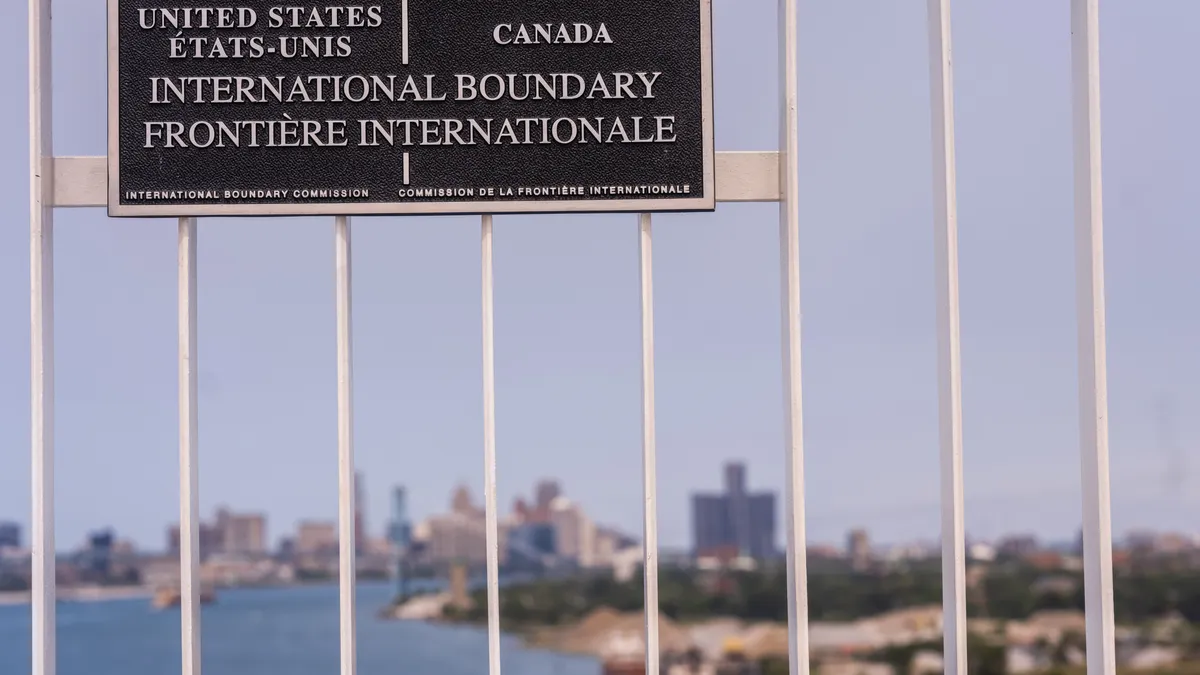
The rhythmic hum of the automotive supply chain—a complex, cross-border symphony of logistics—is being silenced by the friction of mounting trade protectionism. In Rochester Hills, Michigan, a city of 80,000 residents deeply entwined with the industrial heartbeat of North America, the message from local business owners is clear: the U.S.-Canada trade dispute has moved beyond political rhetoric and into the boardrooms and factory floors of Main Street.
As federal policies shift toward a more aggressive stance on tariffs, the ripple effects are paralyzing capital investment, halting hiring initiatives, and creating a climate of economic uncertainty that threatens the stability of the region’s largest industry.
Main Facts: A Supply Chain Under Siege
The economic reality in Rochester Hills mirrors that of its neighbor, Detroit. The city’s prosperity is inextricably linked to the automotive sector, where local businesses function as vital cogs in a machine that traverses national boundaries. These companies rely on a global flow of materials—sourced from Southeast Asia, Mexico, and beyond—to manufacture components for vehicles assembled in both the United States and Canada.
According to Mayor Bryan Barnett, approximately 80% of businesses in Rochester Hills are dependent on international supply chains. "Four out of five businesses in our city get something from somewhere else," Barnett told Smart Cities Dive. This reliance on imported raw materials and specialized parts makes the city uniquely vulnerable to the volatility of federal trade policy.
The core of the issue lies in the "massive uncertainty" surrounding tariff schedules. In an industry that operates on razor-thin margins and requires precise pricing models months, or even years, in advance, the current climate of retaliatory tariffs makes long-term planning an impossibility.
Chronology: The Escalation of Retaliation
The current economic strain is the culmination of a rapidly deteriorating trade environment between Washington and Ottawa. While the two nations have long enjoyed one of the most integrated trade relationships in the world, the events of 2026 have marked a significant turning point:
- Early 2026: Local business surveys in Rochester Hills begin to indicate a sharp decline in confidence as rumblings of new trade barriers reach the industrial sector.
- Mid-2026: Informal surveys of 40 to 50 key local businesses reveal that nearly 70% have slashed capital investment budgets for the remainder of the year.
- August 9, 2026: The completion and ongoing operations of the Gordie Howe International Bridge serve as a poignant reminder of the physical infrastructure connecting the two nations, even as the regulatory environment becomes increasingly fragmented.
- Late August 2026: The Canadian government formalizes a list of U.S. goods subject to counter-tariffs, effective September 8, 2026, in response to U.S. policy shifts.
- Late August 2026: The U.S. Conference of Mayors (USCM) formally issues a plea to both federal governments, calling for an immediate halt to the escalating cycle of retaliation.
Supporting Data: The Cost of Stagnation
The impact of these trade wars is quantifiable. In his recent assessment, Mayor Barnett highlighted that the uncertainty has effectively frozen the local economy’s growth engine. When nearly 70% of businesses cut capital expenditure, the downstream effects are immediate and severe:
- Hiring Freezes: Without the certainty of future demand or the ability to accurately forecast production costs, companies have ceased recruitment efforts.
- Infrastructure Stagnation: The "new line" or plant expansion—the lifeblood of a growing industrial municipality—has been shelved.
- Pricing Volatility: Manufacturers cannot accurately quote prices for parts destined for new vehicle models slated for production six to nine months down the line. In an industry where costs are calculated "to the penny," this is not just an inconvenience; it is a fundamental threat to business viability.
The proximity of Rochester Hills to the Canadian border—just 12 miles away—intensifies these pressures. For the residents of this region, the border is not a barrier but a bridge. "We have people who work on both sides of the border," Barnett explained. "We get Canadian TV. We’re in Canada as much as we’re in Ohio." This deep, personal, and professional integration makes the current federal friction feel like an affront to the local way of life.
Official Responses: A Call for Pragmatism
The U.S. Conference of Mayors has taken a leading role in attempting to bridge the gap between national rhetoric and local reality. USCM President and San Diego Mayor Todd Gloria emphasized that trade disputes are not abstract macroeconomic events; they are felt in the daily lives of citizens.
"Mayors across America know the consequences of trade disputes are felt directly at the local level," Gloria said in a recent statement. He pointed specifically to the higher costs for small businesses, the strain on municipal budgets—which rely on healthy local tax bases—and the direct financial squeeze felt by residents at the register and the gas pump.
Mayor Barnett, a Republican, has positioned himself as a bridge-builder, hoping to act as a conduit for information between the local business community and the White House. His objective is to illustrate that the "consternation and frustration" felt at the federal level does not align with the ground-level experience of municipalities that view Canada as a trusted ally and essential partner.
Implications: The Long-Term Outlook
The implications of this trade stalemate are profound, reaching far beyond the automotive industry. If the current trend of protectionism continues, several long-term risks emerge:

1. Erosion of Competitive Advantage
The North American automotive industry has thrived for decades on the strength of its integrated supply chain. By disrupting the flow of components, the U.S. risks forcing manufacturers to seek alternative, potentially less efficient, or more expensive, supply chains, which could ultimately lead to higher consumer prices and a loss of global competitiveness.
2. Diminishing Municipal Vitality
For cities like Rochester Hills, the local economy is the primary source of funding for public services, schools, and infrastructure. If businesses stop investing, the municipal tax base stagnates. This creates a cycle where cities are less equipped to support the very businesses that drive their growth.
3. Diplomatic Fissures
The "friend and ally" status that has defined U.S.-Canada relations for generations is being tested. As mayors and local leaders continue to speak out against the "cycle of tariffs and retaliation," the disconnect between local priorities and national agendas grows wider.
A Path Toward Resolution
As the September 8, 2026, effective date for Canadian counter-tariffs approaches, the plea from local leaders is for a return to predictability. Business leaders and mayors alike are not necessarily asking for the absence of regulation, but for the absence of volatility.
"Our sincere hope is Washington and Ottawa will come together and solve this quickly for the betterment of both nations," Barnett concluded. The resolution to this conflict may require a shift in perspective—moving away from the view of trade as a zero-sum game and toward the realization that, in the integrated landscape of modern industry, the success of a factory in Ontario is often the direct precursor to the success of a business in Michigan.
Until such a compromise is reached, the industrial heartland remains in a state of suspended animation, waiting for the clarity required to build, hire, and grow once again.
