





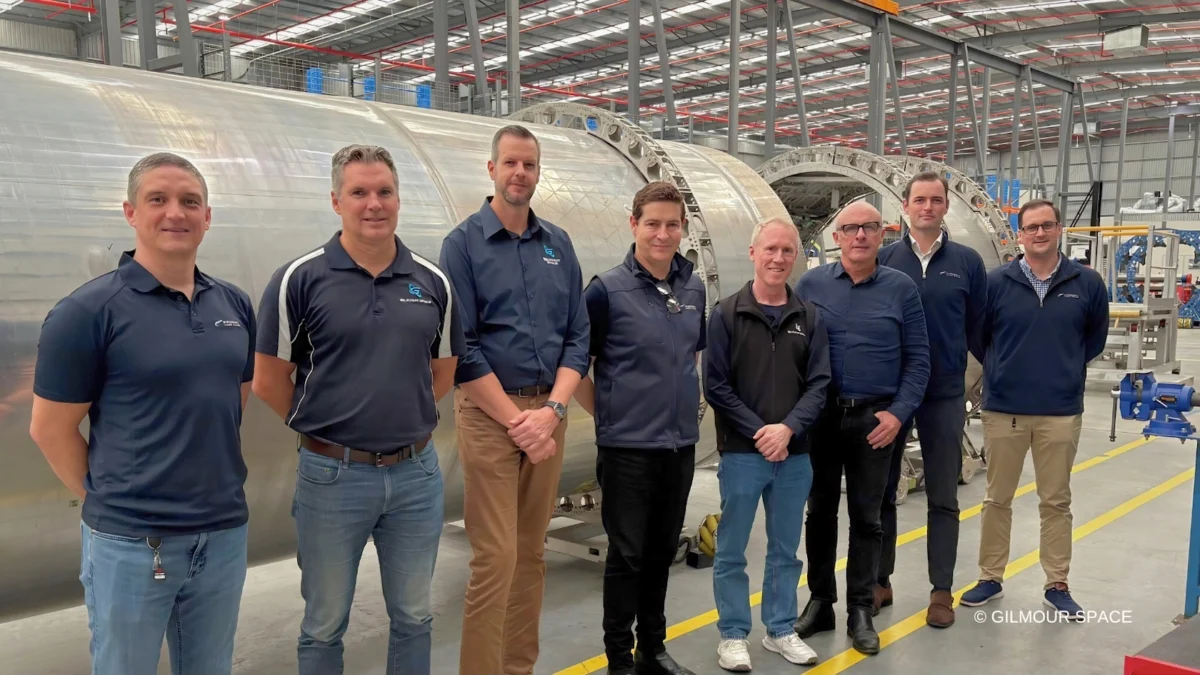
In a landmark development for the Australian aerospace sector, two of Queensland’s most prominent scaleups—Gilmour Space Technologies and Hypersonix Launch Systems—have announced a strategic partnership to revolutionize the testing of hypersonic flight. By integrating Gilmour Space’s robust rocket launch capabilities with Hypersonix’s proprietary scramjet technology, the two companies aim to provide a high-frequency, cost-effective testing platform for defense and commercial clients operating at speeds exceeding Mach 5.
This collaboration marks a significant maturation of the Australian sovereign space industry, signaling a transition from theoretical research to tangible, flight-proven hypersonic applications.
The Main Facts: Fusing Rockets with Scramjets
At the core of this partnership is the technical integration of two distinct propulsion philosophies. Hypersonic flight, defined as movement at speeds of Mach 5 or greater—roughly 6,100 km/h—presents immense challenges in thermal management, aerodynamics, and propulsion efficiency.
Gilmour Space, best known for its development of the Eris orbital launch vehicle, brings a high-thrust rocket capability to the table. Scramjets (supersonic combustion ramjets), the specialty of Hypersonix, require an initial boost to reach the high subsonic or supersonic speeds necessary for their air-breathing engines to ignite. By using Gilmour Space’s rockets as a "booster" to get the Hypersonix scramjet platform into the thin upper atmosphere at sufficient speeds, the duo creates a "cradle-to-flight" test environment that has previously been difficult to access.
This synergy allows for the rapid deployment of payloads, sensors, and experimental materials that require real-world flight data in the hypersonic regime, a domain that has historically been the exclusive preserve of superpowers with massive military budgets.
A Brief Chronology: From Concept to Collaboration
To understand the magnitude of this partnership, one must look at the trajectories of the two companies involved:
- 2012–2015: Foundations of Innovation. Gilmour Space Technologies is established with a focus on hybrid rocket engines, while early research into scramjet propulsion in Australia gains momentum through academic-industrial partnerships.
- 2019: The Rise of Hypersonix. Hypersonix Launch Systems is incorporated, focusing on high-speed, reusable, and hydrogen-powered scramjet technology.
- 2021–2023: Testing Milestones. Both companies achieve critical milestones. Gilmour Space begins advanced engine testing for its Eris launch vehicle, while Hypersonix gains international attention for its DART series of hypersonic vehicles.
- 2024: Sovereign Capability Focus. The Australian Defence Force (ADF) and the federal government increase their emphasis on the AUKUS Pillar II technology sharing agreements, which specifically target hypersonic capabilities.
- 2026: The Partnership Announcement. Gilmour Space and Hypersonix formalize their collaboration, signaling a shift toward commercializing "hypersonic-as-a-service" for the Indo-Pacific region.
Supporting Data: Why Mach 5 Matters
To understand the technical hurdle, one must look at the history of high-speed flight. The legendary Lockheed SR-71 Blackbird, which retired in 1999, reached a top speed of Mach 3.3. While an engineering marvel of the 20th century, the SR-71 operated in the supersonic realm. Hypersonic flight (Mach 5+) introduces the "thermal barrier," where air friction generates temperatures capable of melting standard aerospace-grade aluminum and titanium.
The Hypersonic Environment:
- Speed: Mach 5 (approx. 6,100 km/h).
- Thermal Load: Leading edges can experience temperatures exceeding 2,000°C.
- The Scramjet Advantage: Unlike traditional rockets that must carry both fuel and heavy oxidizer, a scramjet "breathes" oxygen from the atmosphere. This makes the vehicles lighter, more efficient, and capable of sustained flight within the atmosphere.
- Strategic Need: Modern guidance systems, communications, and heat-resistant materials require testing at speed. Current ground-based wind tunnels, while effective, cannot perfectly replicate the complex fluid dynamics of high-altitude, high-speed flight.
Official Responses and Strategic Vision
Adam Gilmour, CEO and co-founder of Gilmour Space Technologies, emphasized that the current geopolitical climate is driving a massive surge in demand for hypersonic testing infrastructure.
"Australia is developing serious expertise in rockets, scramjets, and hypersonic flight," Gilmour stated during the announcement. "There is a growing demand for hypersonic testing as new tech—such as advanced sensors, communications, guidance systems, and high-temperature materials—comes into play. Our agreement with Hypersonix means more options to develop, test, and demonstrate these advanced technologies at a greater frequency."
The leadership at Hypersonix echoed these sentiments, noting that their proprietary green-hydrogen-powered scramjet engines offer a sustainable and efficient path forward. "The partnership allows us to focus on what we do best—scramjet flight—while leveraging the flight-proven booster technology that Gilmour Space has spent years perfecting," a company spokesperson added.
Implications: A New Era for Defence and Industry
The partnership between Gilmour Space and Hypersonix carries profound implications for Australia’s strategic positioning.
1. Accelerating AUKUS Pillar II
Under the AUKUS agreement, Australia, the UK, and the US are committed to accelerating the development of hypersonic technologies. By providing a domestic, high-cadence testing platform, this collaboration directly supports the integration of these nations’ defense technologies. It transforms Australia from a consumer of hypersonic research into a vital testing hub for the Western alliance.
2. Commercial Opportunities
Beyond defense, the commercial applications are vast. The ability to test high-temperature materials and guidance systems at Mach 5 is essential for the next generation of space launch vehicles. As companies look to reduce the cost of reaching orbit, reusable scramjet-powered first or second stages could fundamentally lower the price per kilogram of payload.
3. Economic Impact on Queensland
The "Queensland Aerospace Cluster" is quickly becoming a global competitor. By localizing the entire supply chain—from rocket manufacturing to scramjet development—the state is fostering a high-tech ecosystem that attracts international investment, creates high-value engineering jobs, and retains intellectual property within Australia.
4. Technological Sovereignty
Perhaps most importantly, this partnership secures Australia’s technological sovereignty. In an era where supply chain disruptions can paralyze defense readiness, having an indigenous capability to test and validate hypersonic systems ensures that Australia is not reliant on foreign entities for its strategic security needs.
Conclusion: Looking to the Horizon
As the world enters a new phase of the "space race"—one focused on speed and agility—the collaboration between Gilmour Space and Hypersonix represents a pragmatic, high-impact solution to a complex engineering challenge. By marrying the raw power of rockets with the elegance of air-breathing scramjets, these Queensland innovators are not just chasing Mach 5; they are defining the future of flight.
The success of this partnership will likely be measured in the frequency of upcoming test flights, but the broader success is already evident: Australia has signaled to the world that it is a serious player in the hypersonic domain. With the backing of robust commercial interest and the strategic requirements of national defense, the skies over the Australian Outback are set to become the world’s most important laboratory for the next great leap in aerospace engineering.
