





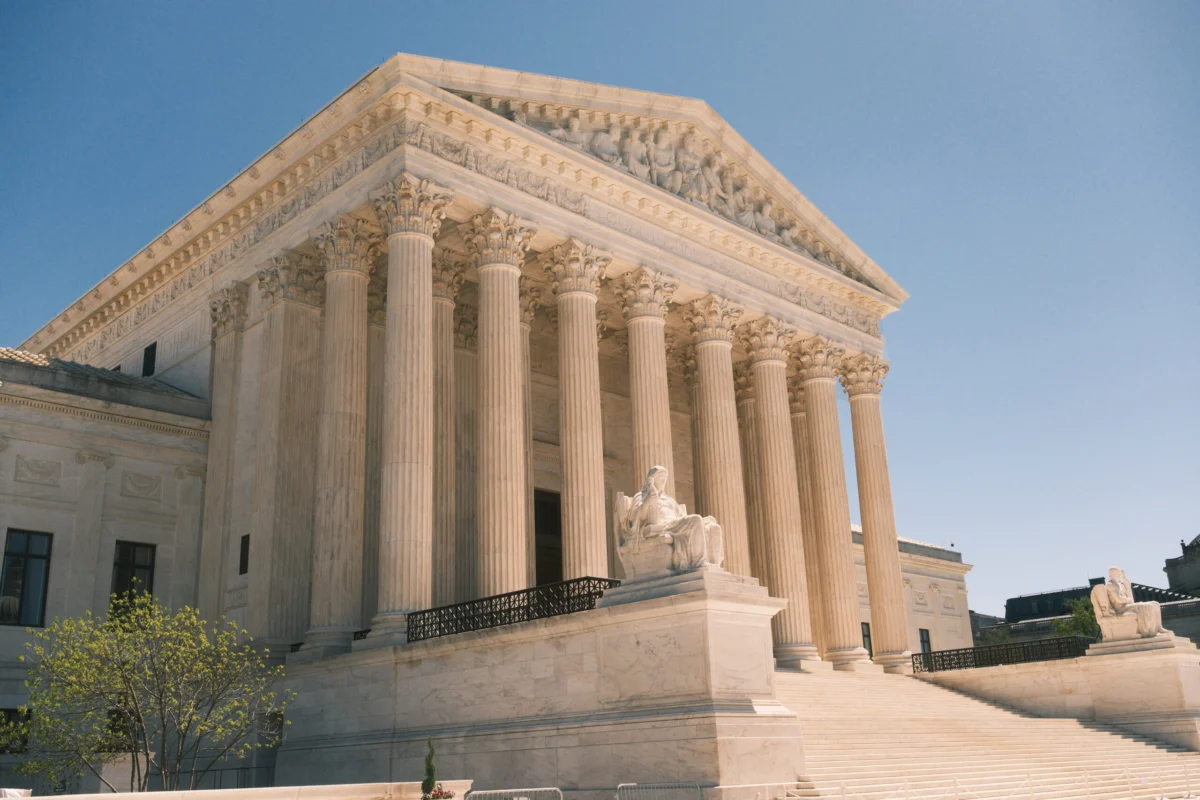
In a landmark decision that has sent shockwaves through the legal and preservationist communities, the United States Supreme Court issued a 5-4 ruling on Monday that clears the way for the completion of a massive 90,000-square-foot ballroom at the White House. The decision effectively overturns a lower court injunction that had temporarily halted construction, citing the National Trust for Historic Preservation’s (NTHP) lack of legal standing to challenge the project.
While the majority opinion side-stepped the fundamental question of whether the construction is inherently legal, the ruling represents a significant victory for the Trump administration, which has argued that the project is essential for both national security and executive operational needs.
The Core Facts: A Legal and Architectural Clash
The conflict centers on the demolition of the historic East Wing of the White House, which began in December 2025 under the direct orders of President Donald Trump. The project—a sprawling five-story underground structure rising 70 feet above ground—has been described by the administration as a necessary evolution of the Executive Mansion.
The National Trust for Historic Preservation (NTHP) had sought to block the development, arguing that the government bypassed mandated environmental and historic review processes, including essential public comment periods required under federal preservation law. The Supreme Court’s decision, however, focused on the procedural hurdle of "standing." By ruling that the NTHP lacked the necessary legal footing to bring the suit, the Court effectively neutralized the most significant hurdle currently facing the construction crew.
The project is currently reported to be 65 percent complete. With the legal stay lifted, the administration has signaled its intent to accelerate the timeline, aiming for the framework to be finalized by November, the facade completed by next April, and the entire ballroom operational by August 2028.
Chronology of a Constitutional Standoff
The path to this week’s Supreme Court ruling was paved with a series of contentious legal battles that highlighted the growing friction between the executive branch and the judiciary.
- December 2025: The Trump administration initiates the demolition of the White House East Wing, citing the need for space for a state-of-the-art ballroom and secure subterranean facilities.
- Late December 2025: The NTHP files a formal lawsuit in the US District Court for the District of Columbia, demanding an immediate halt to construction until proper federal reviews are conducted.
- March 2026: The District Court grants an injunction, stalling the project and forcing the administration to defend the legality of the unilateral expansion.
- August 7, 2026: The US Court of Appeals for the DC Circuit affirms the injunction. In a stinging rebuke, the appellate court ruled that the ballroom construction required explicit congressional authorization, which had not been granted.
- August 14, 2026: President Trump files an emergency appeal to the Supreme Court, pivoting from preservation arguments to national security concerns.
- Current Date: The Supreme Court reverses the lower court’s injunction, citing a lack of standing for the plaintiffs and accepting the government’s arguments regarding the structural progress and security requirements of the site.
Supporting Data: Security and Sunk Costs
The administration’s defense of the ballroom has evolved significantly over the past year. Initially framed as an architectural upgrade, the project is now presented by the Department of Justice (DOJ) as a critical national security asset.
The National Security Argument
The DOJ has explicitly linked the construction of the ballroom—and the extensive military installations hidden beneath its foundation—to the volatile security climate surrounding the President. The government cited several high-profile incidents as evidence that the current White House security perimeter is inadequate:
- The incident involving the President’s forced return from Europe on a cargo plane rather than Air Force One.
- Alleged plots to disrupt a UFC event hosted on White House grounds.
- The shooting at the White House Correspondents’ Association dinner.
- The July 2024 assassination attempt in Butler, Pennsylvania, and the subsequent attempted attack near the President’s Florida golf course in 2026.
The DOJ contends that these events, which officials classify as direct assassination attempts, necessitate the reinforced subterranean structure now being built beneath the ballroom floor.
The "Sunk Cost" Defense
Beyond security, the DOJ successfully argued that the project has reached a point of "no return." With the structure already five stories deep and 70 feet tall, the government asserted that halting construction at this stage would be financially irresponsible and structurally dangerous, potentially compromising the integrity of the existing White House complex.
Official Responses: A House Divided
The 5-4 split in the Supreme Court reflects a deep ideological divide regarding the extent of presidential authority.
The Dissent
Chief Justice John Roberts, in a rare and pointed dissent joined by Justices Sonia Sotomayor, Elena Kagan, and Ketanji Brown Jackson, voiced grave concerns about the precedent set by the ruling. Roberts did not mince words, stating: "Construction is likely unlawful… The White House is not just any building. Today’s decision is no victory for the separation of powers."
The dissenters argued that the Court had essentially granted the executive branch a blank check, allowing it to bypass congressional oversight by prioritizing "security" and "completion progress" over established law.
The Administration’s Position
The White House has lauded the ruling as a victory for the safety of the institution of the presidency. A spokesperson for the administration stated, "This ballroom is not merely for social gatherings; it is a fortified command center designed for the modern era. The Supreme Court has correctly recognized that the security of the President and the integrity of our national operations outweigh the bureaucratic obstacles raised by non-governmental groups."
Implications: The Future of the White House and Executive Power
The consequences of this ruling extend far beyond the construction of a single ballroom. Legal experts are already debating the long-term impact on the doctrine of separation of powers.
Impact on Preservation Law
For historic preservationists, the ruling is a devastating blow. By dismissing the NTHP’s standing, the Court has effectively signaled that historic structures under federal control may be subject to executive whims without the requirement of public oversight or traditional environmental and historic impact reviews. This could pave the way for further, potentially more intrusive, modifications to national monuments and historic government buildings.
The Expansion of Executive Power
Perhaps most significant is the precedent regarding "national security justifications." By accepting the DOJ’s arguments, the Court has allowed the administration to shield a public works project from judicial scrutiny by labeling it a security imperative. This "security-first" legal strategy may become a blueprint for future administrations to circumvent congressional funding and approval processes.
Congressional Recourse
While the Supreme Court has cleared the way for construction, the legislative branch remains in an awkward position. With the project 65 percent complete and the Court refusing to intervene on the merits of the legality of the project, Congress is left with few options to claw back control over the Executive Mansion’s footprint. Some legislators have suggested they may attempt to withhold future funding for the maintenance of the ballroom, but given the current political climate, such a move faces an uphill battle.
As the steel framework rises against the Washington skyline, the debate over the White House ballroom remains a microcosm of a larger national struggle: the tension between the modern requirements of executive security and the foundational principles of institutional accountability and historic stewardship. For now, the construction continues, and with it, the transformation of the most iconic house in America.
