





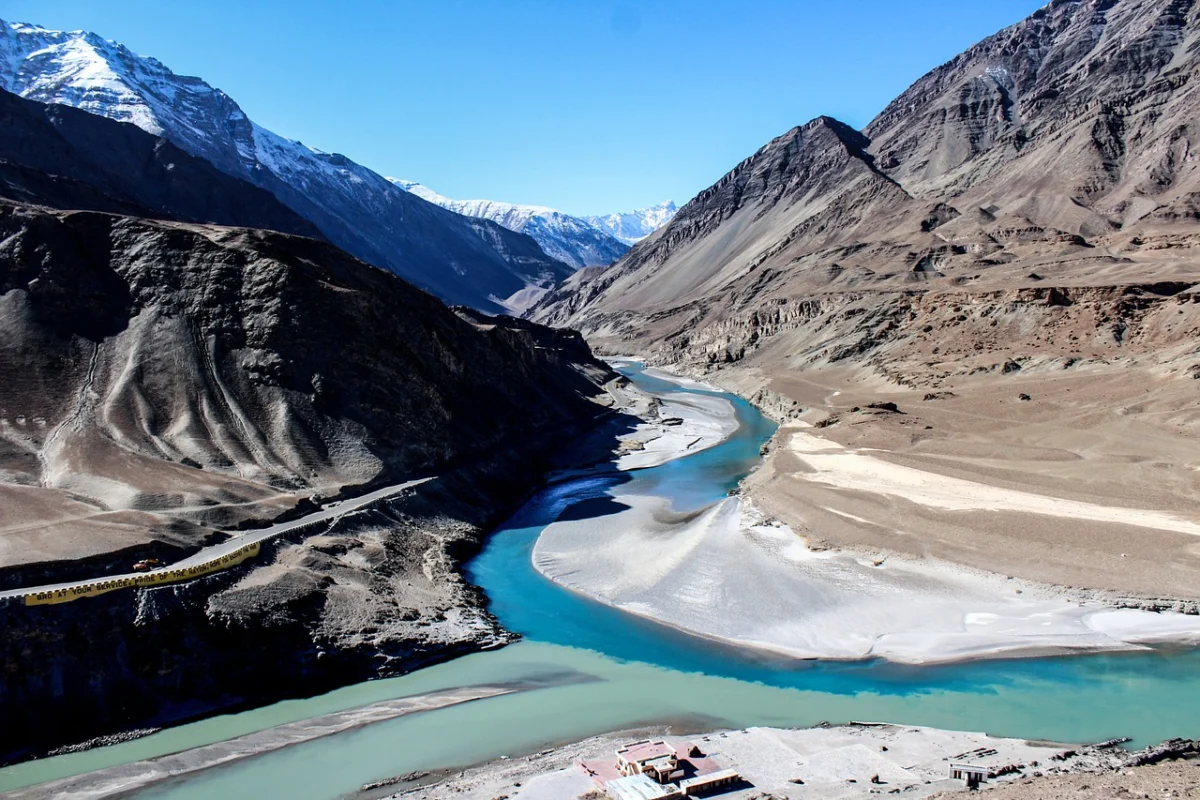
In a decision of profound geopolitical significance, the Permanent Court of Arbitration (PCA) at The Hague has delivered a landmark ruling affirming that the 1960 Indus Waters Treaty (IWT) remains a legally binding instrument that neither India nor Pakistan can unilaterally suspend or terminate. The ruling, issued on Monday, represents a major diplomatic victory for Islamabad, effectively curbing India’s ambitions to alter the water-sharing architecture of the Indus river basin.
The PCA’s ruling strikes at the heart of an escalating dispute regarding the Ratle Hydro-Electric Plant on the Chenab River and the Kishanganga plant on the Jhelum River. By ordering India to cease immediate construction on the Ratle project and imposing strict limitations on the dam’s elevation, the court has prioritized the sanctity of international treaty obligations over domestic infrastructure agendas.
The Core Mandate: Upholding a 70-Year-Old Agreement
The Indus Waters Treaty, facilitated by the World Bank in 1960, is widely regarded as one of the most resilient water-sharing agreements in history. It divides the Indus system into two: the eastern rivers (Ravi, Sutlej, and Beas) are allocated to India, while the western rivers (Indus, Jhelum, and Chenab) are allocated primarily to Pakistan.
In its recent findings, the PCA rejected India’s attempt to place the treaty "in abeyance"—a move New Delhi justified citing the 2025 security crisis in Indian-administered Jammu and Kashmir. The court was unequivocal in its language: the treaty contains no provisions allowing for the suspension of obligations based on regional security incidents. Consequently, the court ruled that any attempt by India to unilaterally halt treaty adherence constitutes a breach of international law.
Chronology of the Dispute: From Negotiation to Litigation
The friction over water rights is not a recent phenomenon, but the legal battle at the PCA is the culmination of nearly a decade of institutional deadlock.
- 1960: The Indus Waters Treaty is signed in Karachi, establishing a unique legal framework for the management of the Indus basin.
- August 2016: Pakistan formally requests arbitration under the IWT, citing India’s designs for the Ratle and Kishanganga plants as violations of the "run-of-the-river" constraints stipulated in the treaty.
- 2023–2024: Diplomatic tensions rise as India asserts that its hydroelectric projects are essential for energy security, while Pakistan argues these projects grant India the capacity to manipulate water flows to Pakistan’s detriment.
- November 2025: A major security incident in Jammu and Kashmir leads India to declare the treaty "in abeyance," a move that triggers international legal scrutiny.
- August 2026: The Permanent Court of Arbitration issues its definitive ruling, rejecting the "abeyance" argument and placing strict injunctions on the Ratle Hydro-Electric Plant.
Technical Constraints and Hydroelectric Governance
At the center of the legal debate is the interpretation of "hydroelectric use." Under the IWT, India is permitted to generate power on the western rivers, provided its designs strictly adhere to specific parameters regarding water storage and flow.
The PCA’s ruling emphasizes that the treaty was designed to prevent India from attaining "hydro-hegemony." The court’s prohibition against concreting the Ratle dam above a specified level is a technical safeguard meant to prevent the creation of reservoir capacities that could be used for tactical water control. By requiring India to notify both Pakistan and a neutral presiding expert of any construction schedule adjustments, the court has introduced a new layer of mandatory transparency into the process.
Official Responses and Diplomatic Fallout
The View from Islamabad
For the Islamic Republic of Pakistan, the ruling is an essential vindication of its reliance on international law to protect its agricultural and economic base. Officials in Islamabad have framed the decision as a triumph of diplomacy over unilateralism. Pakistan’s legal counsel emphasized that the IWT is not merely a bilateral agreement but a cornerstone of regional stability that prevents the weaponization of water.
The View from New Delhi
India has consistently maintained that the PCA lacks the jurisdiction to hear these specific disputes, preferring instead the appointment of a "neutral expert" under the World Bank’s framework. The Indian government has characterized the PCA’s involvement as an overreach, arguing that security concerns in Jammu and Kashmir necessitate a re-evaluation of its treaty commitments. However, with the PCA’s latest ruling, New Delhi faces significant international pressure to realign its construction projects with the 1960 mandate.
Implications for South Asian Regional Stability
The implications of this ruling extend far beyond the technical specifications of dam construction.
1. The Precedent of Treaty Sanctity
The court has effectively signaled that international water treaties are "living" legal instruments that cannot be shelved due to political or security fluctuations. This sets a significant precedent for other transboundary water disputes globally, reinforcing the principle that natural resources must remain insulated from the volatile ebbs and flows of state-to-state conflict.
2. Constraints on Indian Hydro-Hegemony
The ruling acts as a major check on India’s infrastructure-led regional strategy. By limiting the design and construction of hydroelectric plants, the court has effectively neutralized the potential for India to use water as a geopolitical lever. This ensures that the downstream flow to Pakistan remains predictable, a vital necessity for Pakistan’s agrarian economy, which supports millions of livelihoods.
3. The Future of the Indus Waters Treaty
While the ruling is a victory for the legal framework of the IWT, it also highlights the precarious nature of the agreement. The tension between the need for sustainable energy generation in India and the survival of downstream water systems in Pakistan remains a flashpoint. Experts suggest that if the IWT is to survive the next 70 years, both nations must move toward a collaborative management framework that incorporates climate change projections, rather than remaining locked in a cycle of litigation.
Conclusion: A Call for Compliance
The PCA’s decision is a stern reminder that international law remains the final arbiter in the management of vital natural resources. By ordering India to halt construction and maintain the treaty’s integrity, the court has provided a roadmap for de-escalation.
As the international community watches, the onus now shifts to the diplomatic channels in New Delhi and Islamabad. The challenge ahead is to transition from a relationship defined by legal combat to one characterized by institutional cooperation. For now, the 1960 Indus Waters Treaty remains intact, serving as a fragile but essential barrier against the further erosion of regional peace. Whether this ruling leads to a lasting resolution or merely delays the next phase of the conflict depends entirely on the willingness of both nations to prioritize the long-term sustainability of the Indus basin over the short-term gains of regional power projection.
