





For decades, the image of a professional race car driver has been inextricably linked to the gear they wear. From the sleek lines of a carbon-fiber helmet to the complex, protruding appendages—chin spoilers, wicker bills, and rear stabilizers—that adorn modern racing headgear, the aesthetic is undeniably aggressive. It signals speed, precision, and a relentless pursuit of every millisecond.
But for the amateur racer or the track-day enthusiast, these aerodynamic add-ons often represent a point of contention. Do they actually provide a competitive advantage, or are they merely the "go-faster stripes" of the helmet world? A recent deep dive by aerodynamic analyst and YouTuber Oskar Savicki suggests that the truth is far more nuanced than marketing departments would have you believe. While these spoilers may not be the silver bullet for drag reduction that many racers hope for, their impact on driver stability and physical fatigue is, perhaps, even more critical.
Main Facts: Dispelling the Drag Myth
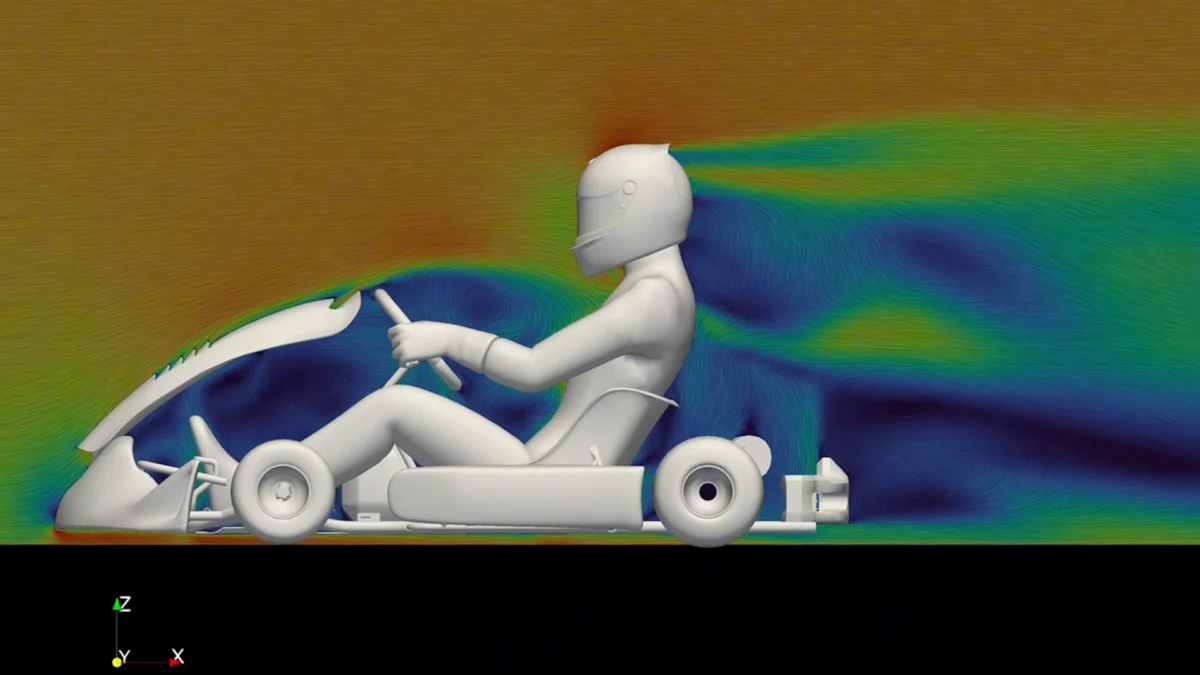
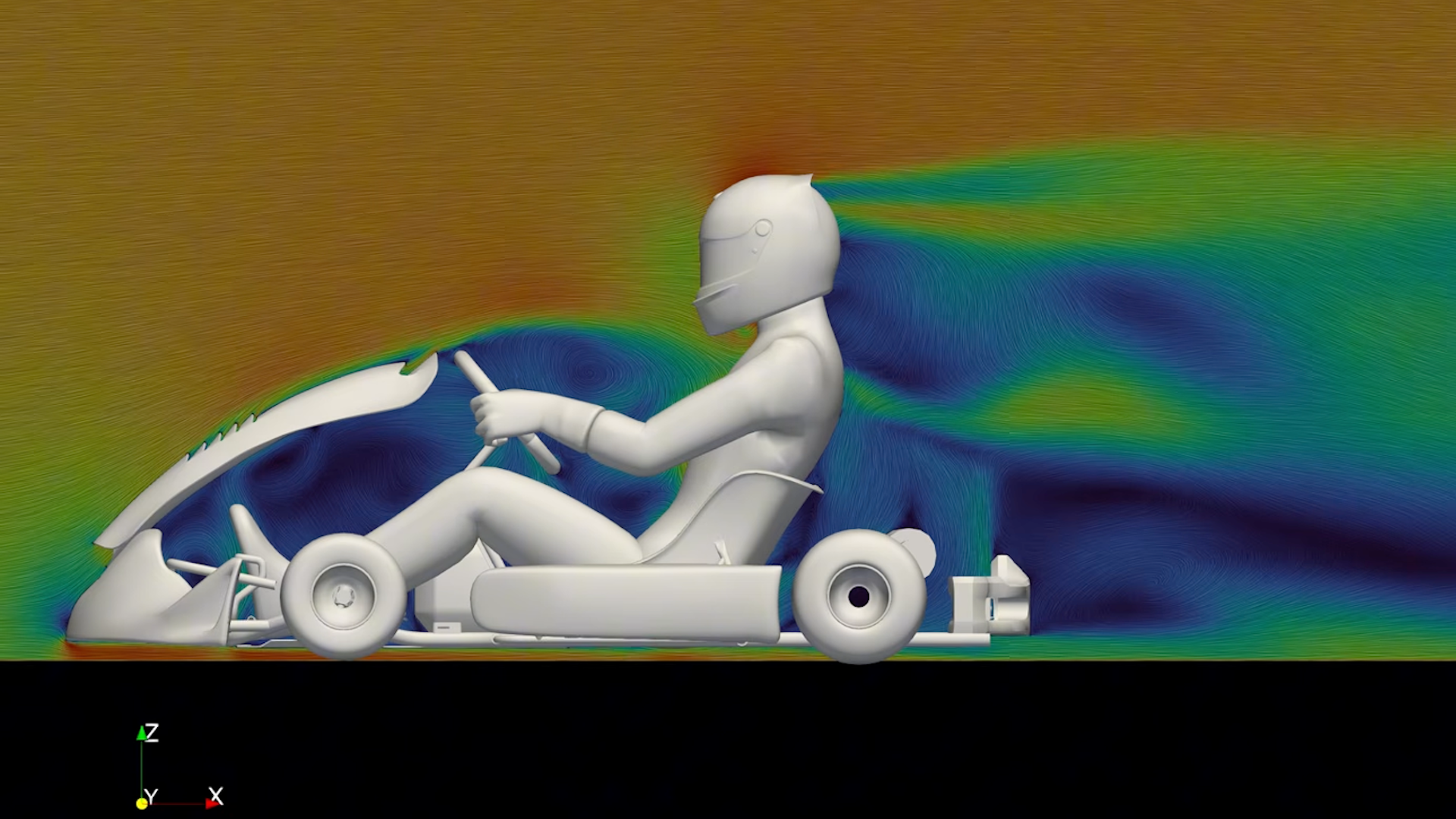
The prevailing myth in the paddock is that a "fully loaded" helmet—equipped with every available aerodynamic accessory—will punch a smaller hole in the air, thereby reducing drag and increasing top-end speed. Savicki’s analysis, backed by computational fluid dynamics (CFD) simulations, suggests that this is largely incorrect.
In the world of fluid dynamics, drag is a measure of the resistance an object experiences as it moves through a fluid, such as air. When a helmet is stripped of its aftermarket accessories, the air flows around it in a relatively chaotic manner. Adding spoilers and lips creates new surfaces for the air to interact with, which, while beneficial for pressure management, does little to lower the overall coefficient of drag (Cd).
The primary fact established by Savicki’s research is that these aero kits are not designed for straight-line speed efficiency in the way an F1 car’s rear wing is. Instead, they are designed to solve a problem that every open-cockpit racer understands intimately: lift. At high speeds—particularly in categories like shifter karts or formula cars where the driver’s head is fully exposed to the airstream—the helmet acts like a giant, poorly shaped airfoil. If left unmanaged, the air pressure differentials around the helmet can generate significant lift, essentially trying to pull the driver’s head upward or backward.
Chronology: The Evolution of Helmet Aero
The journey toward "aero-conscious" headgear has been a slow evolution, mirroring the broader trends in automotive engineering.
The Early Days: Protection Above All
In the mid-20th century, the priority for helmet design was purely impact protection. Aerodynamics were an afterthought, with helmets resembling simple, smooth spheres. As speeds increased, drivers began to notice the physical toll of wind blast, leading to the first crude attempts at stabilization.
The 1980s and 90s: The Rise of the Spoiler
As the importance of downforce was better understood in car design, helmet manufacturers began to experiment with rear stabilizers. These were initially small, integrated ridges designed to prevent "buffeting"—the rapid, oscillating movement of the helmet caused by unstable airflow.
The Modern Era: CFD and Precision
Today, companies like Bell, Arai, and Stilo utilize advanced CFD software to sculpt helmets. The modern "aero kit" is no longer an afterthought; it is a tuned component. The integration of chin spoilers (which manage air entering under the chin) and rear spoilers (which manage wake turbulence) has become standard for top-tier racing, with the goal being to create a "stable" platform for the driver’s eyes.
Supporting Data: Why "Lift" is the Real Enemy
Savicki’s simulations provide a fascinating look at the pressure maps of a helmet in motion. When a driver reaches speeds upwards of 100 mph, the air rushing over the crown of the helmet creates a low-pressure zone. Simultaneously, the air pushing against the front of the helmet creates a high-pressure zone.
This pressure differential generates lift. If you have ever felt your helmet trying to "float" or lift off your shoulders during a high-speed straight, you are feeling that pressure differential in action.
The Role of the Chin Spoiler
The chin spoiler is perhaps the most misunderstood component. Its job is not to cut through the air, but to redirect it. By forcing the air to move around the front of the helmet rather than allowing it to rush underneath, the chin spoiler prevents the helmet from acting like a parachute. This significantly reduces the amount of "neck strain" experienced by the driver.
The Synergy of the Rear Spoiler
The rear spoiler works in tandem with the chin spoiler. By managing the separation point of the air at the back of the helmet, the spoiler helps to smooth out the "wake"—the turbulent air trailing behind the head. By controlling where the air detaches from the helmet, the manufacturer can effectively minimize the buffeting that leads to blurred vision.
Official Responses and Industry Standards
While manufacturers are often hesitant to publish specific drag-reduction percentages—knowing that track conditions, head angle, and cockpit enclosures change the variables—the consensus among professional teams is clear: stability is speed.
In a sport where a driver must process information at high speeds, a vibrating or lifting helmet is a massive liability. If a driver’s head is constantly shifting due to aerodynamic instability, their focus is diverted from the apexes and braking markers to simply keeping their head steady.
"We aren’t looking for a lower drag coefficient," noted one anonymous veteran race engineer. "We are looking for a stable platform. If the helmet moves, the eyes move. If the eyes move, the driver loses confidence. The spoiler isn’t there to make the car faster; it’s there to make the driver faster."
Implications: Is the Investment Worth It?
For the average enthusiast, the decision to purchase an aero-enhanced helmet comes down to a cost-benefit analysis of comfort versus expense.
Physical Fatigue
One of the most significant implications of using proper aero spoilers is the reduction of physical fatigue. During an hour-long race, the constant strain of fighting wind resistance can cause significant neck and shoulder pain. By reducing the lift force acting on the helmet, these components allow the driver to maintain focus for longer periods.
Safety and Vision
Stability equals clarity. A helmet that is prone to buffeting will vibrate at high frequencies, which can cause the driver’s vision to blur—a phenomenon known as "high-speed oscillation." By smoothing the airflow, spoilers help keep the helmet planted, ensuring that the driver’s vision remains sharp, which is undeniably a safety feature.
The Psychological Aspect
There is also a psychological component. When a driver feels that their equipment is optimized, their confidence increases. If a driver knows their head will remain stable at 130 mph, they are more likely to commit to high-speed corners.
Final Verdict
If you are racing in an open-cockpit environment, the data suggests that these aerodynamic accessories are far from being "just for looks." While you should not expect to see a massive jump in your straight-line speed, you should expect a more stable, comfortable, and controlled experience.
In racing, speed is the sum of many small parts. While a helmet spoiler might not be the aerodynamic "magic bullet" that turns a back-marker into a champion, it is an essential tool for ensuring that the most important part of the car—the driver—is comfortable, focused, and able to perform at the limit. As Savicki’s analysis proves, the true power of aerodynamics lies not in the numbers on a stopwatch, but in the confidence behind the wheel.
