




At first glance, an underground power line—even one spanning hundreds of miles—might seem like a mundane piece of industrial infrastructure. Yet, the Champlain Hudson Power Express (CHPE), affectionately dubbed “Chippy” by industry insiders, represents one of the most ambitious energy projects in North American history. Designed to bridge the gap between Quebec’s vast renewable energy resources and the insatiable power demands of New York City, the project promises to reshape the regional grid. However, as it navigates a rocky, outage-prone launch, the CHPE serves as a high-stakes case study in the complexities of the green energy transition.
The line is designed to deliver up to 20% of New York City’s electricity demand, primarily utilizing abundant, carbon-free hydropower from Quebec. But as the project grapples with early technical failures and long-term concerns regarding climate-induced drought, experts are questioning how much the state can truly rely on this multibillion-dollar artery.
A Legacy of Planning: The Road to the CHPE
The vision for the CHPE did not manifest overnight. The planning phase for the project began 15 years ago, with the formal permitting process initiating in March 2010. For over a decade, developers and regulators navigated the labyrinthine legal and environmental hurdles required to connect the power grids of Quebec and southern New York.
The strategic rationale was clear: Quebec operates on a nearly 100% renewable grid. Over 99% of the province’s electricity is generated from renewable sources, dominated by massive hydroelectric reservoirs, with an increasingly significant contribution from wind energy. In contrast, while New York boasts its own hydroelectric, nuclear, and wind assets, the state remains tethered to fossil fuels for a substantial portion of its baseline energy generation. The CHPE was conceived as the mechanism to bridge this disparity, effectively “importing” a cleaner energy future.
The project is a partnership between Transmission Developers—a firm owned by the alternative asset management giant Blackstone—and Hydro-Québec, the province’s state-owned electricity manager. Construction began in earnest in late 2022 and was completed earlier this year at a staggering private investment cost of $6 billion.
Engineering the Impossible: A Feat of Construction
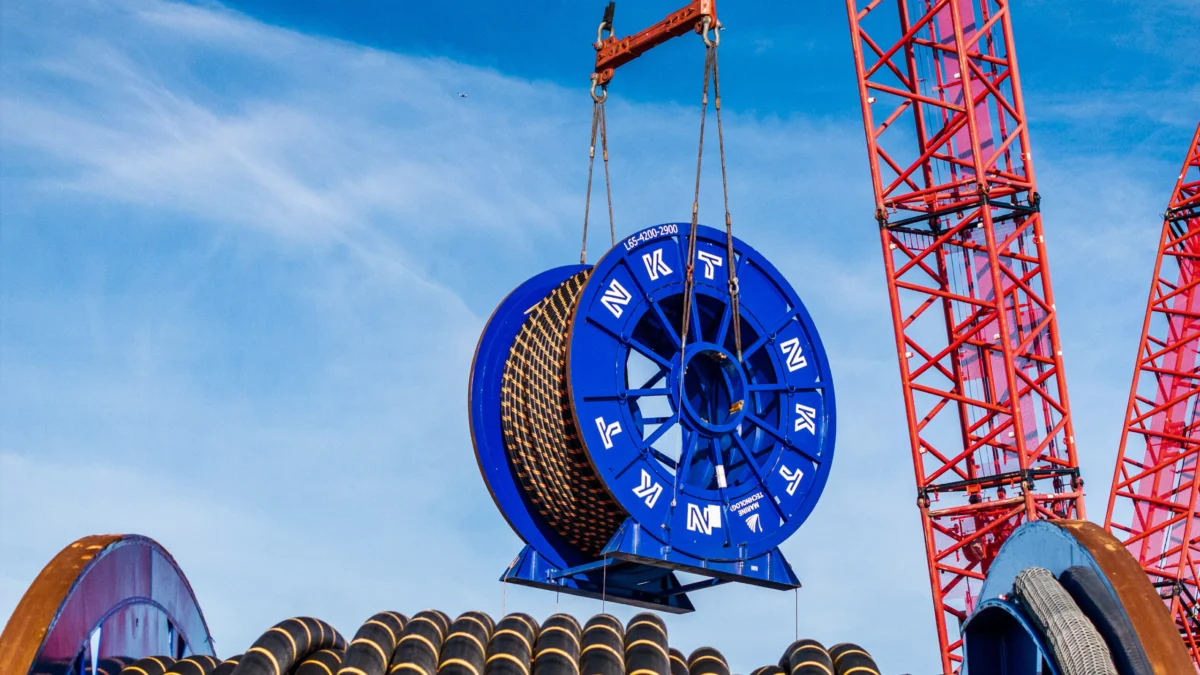
The physical reality of the CHPE is a triumph of modern engineering. The line consists of a bundle of two high-voltage direct-current (HVDC) power cables, each roughly five inches in diameter. Unlike traditional overhead transmission lines that often face public opposition due to their visual impact, the CHPE was intentionally buried to minimize its footprint.
The installation process was a logistical marathon. The cable bundle was buried underground or submerged underwater across the entirety of its length through New York State. A significant portion of the line sits at the bottom of the Hudson River. To achieve this, specialized vessels were deployed to shoot high-pressure water jets into the riverbed, carving out trenches deep enough to house the cables securely within the sediment. This “invisible” infrastructure was designed to provide a resilient, protected path for energy to flow into the heart of the nation’s largest city.
Chronology of a Rocky Start
Despite the meticulous engineering, the CHPE’s operational life has been marked by early turbulence. As of late July 2026, the line has experienced two significant outages that have sidelined it for much of the month.
- July 1: The first disruption occurred, reportedly triggered by a technical fault at a converter station on the Canadian side of the border.
- July 4: A second, more persistent outage began. As of the morning of July 22, the line remained out of commission.
- Mid-to-Late July: Investigations by the cable’s manufacturer identified a damaged section of the cable on the U.S. side of the border.
These setbacks have drawn scrutiny, but industry experts caution against premature pessimism. Normand Mousseau, a physics professor at the Université de Montréal, noted that such "teething problems" are common in large-scale infrastructure projects. According to Mousseau, the equipment often faces its first true stress test only after it is fully operational. The inherent complexity of integrating two distinct national grids means that minor synchronization issues or hardware faults are, while frustrating, perhaps statistically expected.
The Data: Why Interconnection Matters
The fundamental argument for projects like the CHPE is grounded in the economic and environmental benefits of grid interconnection. Research consistently demonstrates that the ability to move electricity from regions of surplus to regions of high demand can dramatically accelerate the transition away from fossil fuels.
By optimizing the flow of electrons, grid operators can avoid the need to build redundant, carbon-intensive "peaker plants" that only run during periods of high demand. Studies published in journals like Nature have highlighted that regional interconnection is a primary lever for cutting systemic emissions. Furthermore, the Pacific Northwest National Laboratory (PNNL) has long argued that increased transmission capacity lowers system costs and significantly boosts grid reliability. By allowing New York to tap into Quebec’s hydro, the state theoretically gains a "battery" of massive proportions, capable of smoothing out the intermittency of local wind and solar assets.
Official Responses and Reliability Planning
In the face of the recent outages, grid operators in New York have adopted a stance of cautious preparedness. Kevin Lanahan, a spokesperson for the New York Independent System Operator (NYISO), emphasized that the state’s energy strategy does not rely on the CHPE’s immediate availability.
"Our planning studies did not assume CHPE would be available this summer," Lanahan stated. "That was one reason the grid performed reliably during the heat wave earlier this month. A core principle of reliability planning is not relying on any single project."
This conservative approach is standard practice in grid management. By treating the CHPE as a "bonus" rather than a foundational pillar during its initial startup phase, the NYISO has ensured that the lights stay on even when new infrastructure stumbles. However, there is immense pressure for the project to stabilize. As the state moves toward its aggressive 2040 clean energy goals, the CHPE will eventually need to be a reliable workhorse rather than an experimental variable.
The Looming Threat: Climate-Induced Drought
Perhaps the most significant long-term challenge facing the CHPE is not technical, but environmental. The project’s viability rests on the assumption that Quebec will have a surplus of hydropower to export. However, the region has been battered by intense drought for the past three years.
Hydropower generation is directly tied to reservoir levels; if water levels drop, the amount of electricity Hydro-Québec can produce—and subsequently sell—diminishes. Even if the transmission line is fully functional, it cannot transmit power that does not exist. This creates a secondary vulnerability: the project is susceptible to the very climate change it is intended to help mitigate. If the drying trend in Northern Quebec persists, the CHPE could find itself operating at diminished capacity during the very heat waves when New York needs it most.
Implications for the Future
The story of the CHPE is not just about a power line; it is a barometer for the North American energy transition. Similar projects, such as the New England Clean Energy Connect line—which stretches 145 miles from Quebec to Maine—have also faced significant delays, outages, and legal battles.
The "Chippy" project represents a shift in how we think about energy geography. It challenges the notion that states should be energy-independent, proposing instead a deeply integrated, continental approach to power. But the road to this integration is paved with technical risks and environmental uncertainties.
For now, the focus remains on the immediate repair. Hydro-Québec spokesperson Lynn St-Laurent has confirmed that the damaged section has been removed and replaced, with post-repair testing expected to conclude by the end of the week. Once the line is re-energized, it will undergo a period of rigorous testing that will ultimately determine whether this $6 billion investment is the master key to New York’s green transition or a cautionary tale about the perils of massive, centralized energy infrastructure.
As the grid moves forward, observers will be watching the CHPE not just for its ability to deliver power, but for its resilience in an era of climate instability. The success of the "Chippy" is vital—not only because of the capital involved but because the energy transition requires us to build bigger, faster, and more collaboratively than ever before. Whether the project overcomes its current growing pains will serve as a bellwether for the future of the North American grid.
