




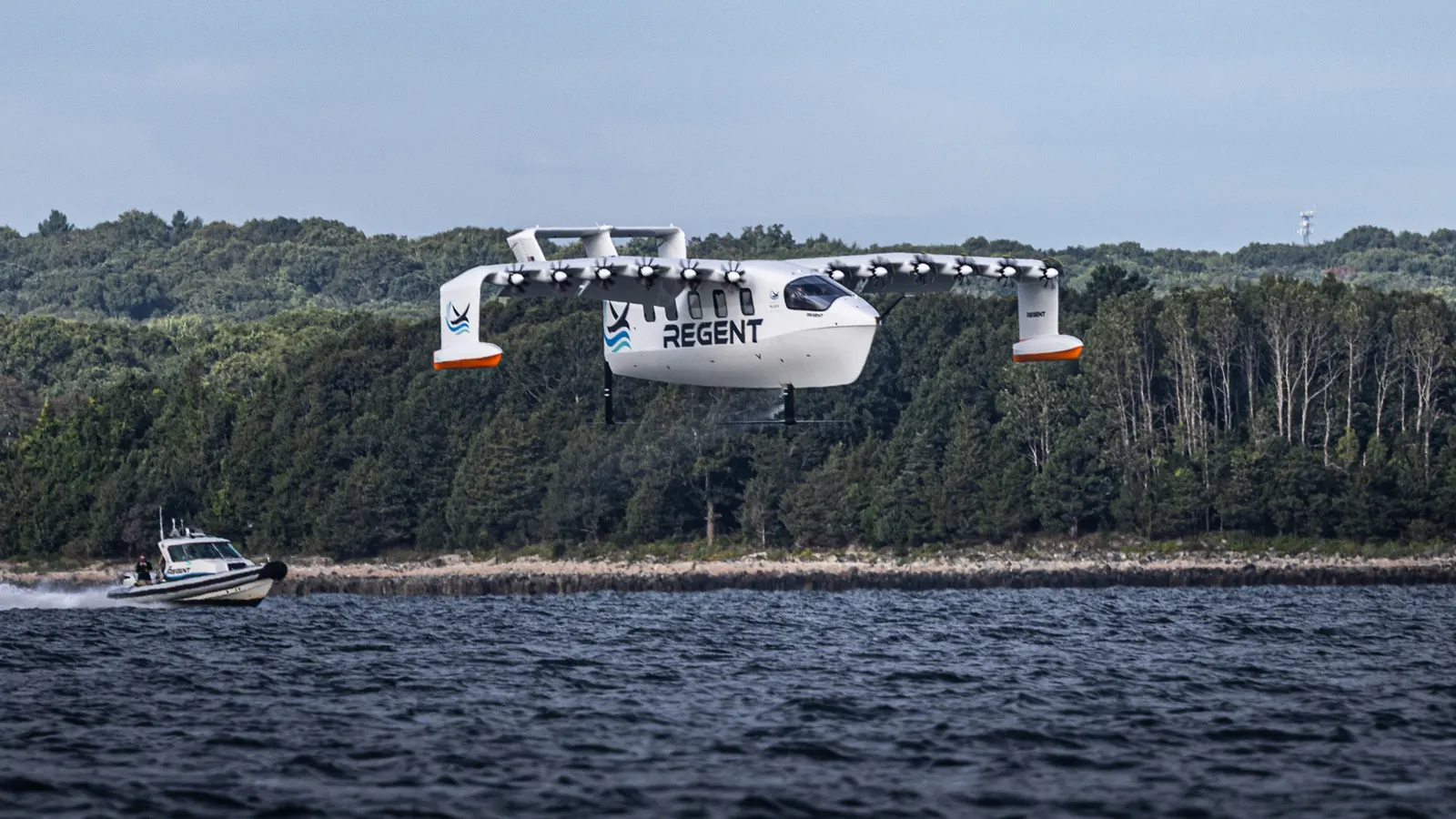
In a breakthrough for regional transportation, Rhode Island-based Regent Craft has officially taken to the skies—and the seas—with its "Viceroy" Seaglider. On September 2, 2026, the vessel successfully completed a test flight over Narragansett Bay, hovering 33 feet above the water for a distance of nearly 2,000 feet. This milestone marks more than just a successful engineering trial; it represents the birth of an entirely new category of transit that merges the efficiency of aviation with the accessibility of maritime travel.
As coastal communities face increasing congestion and the limitations of aging ferry infrastructure, the Seaglider arrives as a high-speed, electric alternative. Billed by Regent CEO Billy Thalheimer as a "fundamentally new mode of transportation," the vehicle is designed to act as an "air taxi" for the water, promising to bridge the gap between regional hubs with unprecedented speed and zero emissions.
Main Facts: How the Seaglider Works
The Seaglider is a marvel of biomimetic engineering, designed to operate in three distinct phases that allow it to bypass the traditional drawbacks of marine travel.
The Three Operational Modes
- Floating Mode: At dockside or low speeds, the Seaglider functions like a standard vessel, sitting on the surface of the water.
- Hydrofoil Transition: As the craft accelerates, it utilizes retractable hydrofoils—underwater wings—to lift the hull above the surface. This minimizes drag and allows the vessel to navigate choppy waters with ease.
- Wing-in-Ground (WIG) Effect: At higher speeds, the craft transitions into full flight. By hovering just above the surface—no higher than its own wingspan—the vessel exploits the "ground effect." This aerodynamic phenomenon occurs when air pressure becomes trapped between the wings and the surface, creating a high-pressure cushion that significantly increases lift and aerodynamic efficiency.
Unlike traditional aircraft that must climb to thousands of feet, the Seaglider stays within the "ground effect" zone, allowing it to move at high speeds while consuming a fraction of the energy required for traditional flight.
Chronology: From Concept to Coastal Reality
Regent’s trajectory has been rapid, moving from a 2020 startup concept to a pre-production powerhouse in under six years.

- 2020: Regent Craft is founded with the goal of decarbonizing coastal transportation.
- Early Development: The company begins testing a quarter-scale prototype. This small-scale version proved so effective that it was spun off into a separate product line: an autonomous, long-range drone for military and defense surveillance applications.
- June 2026: Regent announces a landmark partnership with "The Twenty Five," a luxury coastal travel operator. The deal includes an order for up to 60 vessels to serve high-demand routes, including NYC to the Hamptons and Miami to the Caribbean.
- September 2, 2026: The full-scale "Viceroy" Seaglider completes its maiden flight over Narragansett Bay, proving the viability of the flight control systems and the ground-effect stabilization.
Supporting Data and Technical Specifications
The engineering behind the Seaglider focuses on safety, efficiency, and integration into existing maritime law.
Speed and Performance
While the vessel is designed to cruise at speeds between 20 mph and 50 mph in busy waterways, it is capable of hitting speeds up to 180 mph in open, unobstructed areas. This performance capability allows it to outpace traditional high-speed ferries by a wide margin, potentially cutting commute times for coastal residents by 60% to 70%.
Safety and Redundancy
The safety architecture is arguably the most critical aspect of the Seaglider’s regulatory compliance.
- Triple Redundancy: The vessel employs a triple-redundant digital control system, ensuring that if one computer fails, two others remain operational.
- Energy Reserves: The battery architecture is designed with built-in redundancies, ensuring the vessel maintains propulsion even in the event of a partial battery failure.
- Situational Awareness: Regent is currently integrating advanced computer vision technology. This sensor suite provides captains with "maritime situational awareness," allowing for safe navigation in low-visibility conditions and even nighttime operations.
Regulatory Oversight
A common question regarding WIG vehicles is their classification: are they boats or planes? Regent has worked closely with the U.S. Coast Guard, which serves as the primary regulator for the vessel. By operating primarily as a marine vessel that happens to lift off the water, the Seaglider avoids the complex and restrictive regulatory hurdles faced by urban air mobility (UAM) vertical take-off and landing (eVTOL) aircraft.
Official Responses and Strategic Partnerships
The enthusiasm from the private sector suggests that the market for "water-based air taxis" is ready to scale. The partnership with The Twenty Five is a bellwether for the industry. By focusing on premium routes—Boston to Nantucket, and the Florida coast—the company is building a financial runway to eventually lower costs for broader public transit applications.

"We have two years of backlogged orders," Thalheimer noted during a recent briefing. The demand isn’t just coming from the luxury sector; Regent’s ongoing defense contracts highlight the versatility of the technology. Whether it is moving personnel, cargo, or high-end passengers, the Seaglider provides a utility that neither a boat nor a plane can replicate at the same price point.
Implications: A New Era for Urban and Coastal Planning
The deployment of the Seaglider could fundamentally alter the geography of modern work and living.
Decarbonizing the Coast
Coastal transportation has historically relied on fossil-fuel-burning ferries. As a fully electric platform, the Seaglider offers a path to zero-emission regional travel. By utilizing existing maritime infrastructure—docks and piers—rather than requiring the massive capital expenditure of airports or vertiports, Regent’s craft can be deployed with minimal urban disruption.
Redefining the Commuter Radius
If a commute from the Hamptons to New York City or from a Caribbean island to a central hub can be reduced to a 30-minute glide, the "effective" radius of a city expands significantly. This has massive implications for real estate, regional economic development, and the ability of workers to live in more affordable coastal areas while maintaining access to urban job markets.
The Challenge Ahead
Despite the successful flight in Rhode Island, challenges remain. Scaling manufacturing to meet a 60-vessel order while maintaining the highest safety standards is a significant hurdle. Furthermore, the vessel must navigate the "last mile" of maritime traffic—coordinating with traditional commercial shipping, recreational boaters, and harbor authorities in some of the world’s most congested waterways.

However, if Regent can successfully integrate into the existing maritime traffic management systems, the Seaglider may well become the standard-bearer for a new, quieter, and cleaner era of transportation. As Thalheimer emphasizes, the Seaglider is not just a replacement for a ferry; it is a new mode of movement that leverages the physics of the ocean to conquer the friction of the commute.
As of late 2026, the eyes of the aerospace and maritime worlds remain fixed on Narragansett Bay, where the future of travel is currently hovering just above the waves.
