


By Policy Analysis Desk
August 31, 2026
As artificial intelligence continues its rapid integration into the American workforce, the specter of mass job displacement has moved from the realm of science fiction to a pressing economic reality. While we have yet to see a catastrophic collapse in employment numbers directly attributable to AI, experts are warning that the nation’s social safety net—specifically the Unemployment Insurance (UI) system—is fundamentally broken and ill-equipped to handle the volatility that looms on the horizon.
According to Michele Evermore, Senior Policy Fellow for Economic Security at the National Employment Law Project (NELP), waiting for a crisis to strike before overhauling these systems is a dangerous gamble. Decades of under-investment, administrative neglect, and a "race to the bottom" in state-level policy have rendered the UI system a shell of its intended self. To survive the coming shift in labor demand, the United States must move beyond reactionary patches and implement the structural reforms that bipartisan commissions have been advocating for since the 1980s.
The Core Objective: Why Unemployment Insurance Matters
At its foundation, Unemployment Insurance is not merely a government handout; it is a critical macroeconomic stabilizer. The system is designed to achieve four primary objectives:
- Income Stabilization: Ensuring displaced workers can maintain a baseline standard of living.
- Bridge to Re-employment: Providing the financial bandwidth for workers to find roles that match their skill sets rather than settling for desperation-driven employment.
- Workforce Attachment: Maintaining a connection between the worker and the labor market.
- Countercyclical Stabilization: Acting as an economic buffer. Research indicates that every dollar distributed in UI benefits generates nearly two dollars in local economic activity, as recipients spend those funds immediately on necessities like groceries, housing, and utilities.
Despite these vital functions, the current UI landscape is failing. In many states, benefits have been systematically stripped back. Legislators have reduced the duration of eligibility, tightened access, and lowered the replacement rate of lost income. The result is a system that, in the event of an AI-driven shock, would likely be unable to provide the economic cushion necessary to prevent a widespread recession.
A History of Neglect: From the Great Recession to COVID-19
The fragility of our current UI system was laid bare during the COVID-19 pandemic, but the seeds of this vulnerability were sown long before. For decades, federal and state funding for unemployment agencies has been in a state of terminal decline. By the onset of the pandemic, agencies were operating at a 50-year low in funding, forced to manage modern claims with antiquated technology and skeleton staffs.
When the pandemic hit, the collapse was predictable. Because existing systems were incapable of handling the volume, Congress was forced to scramble, creating three brand-new, temporary programs from scratch. The transition to remote work further complicated an already overburdened infrastructure.
The consequences were severe:
- Administrative Paralysis: The lack of modern software meant that as millions of claims flooded in, the bureaucratic machinery ground to a halt.
- Exploitation: The delay in setting up functional, secure systems created a window of opportunity for organized criminal syndicates to launch sophisticated fraud operations. Billions of dollars intended for families were siphoned off by bad actors who exploited the very systems that were struggling to pay legitimate claimants.
This historical pattern of "neglect followed by panic" is a cycle that policymakers have failed to break for forty years.
The Modern Labor Market: A "Low-Hire" Economy
The current state of the labor market exacerbates the risk. Job seekers today face an environment characterized by what economists call a "low-hire" economy. A significant portion of current job postings—by some estimates as many as one in three—are "ghost jobs" or fake postings that never lead to a hire.
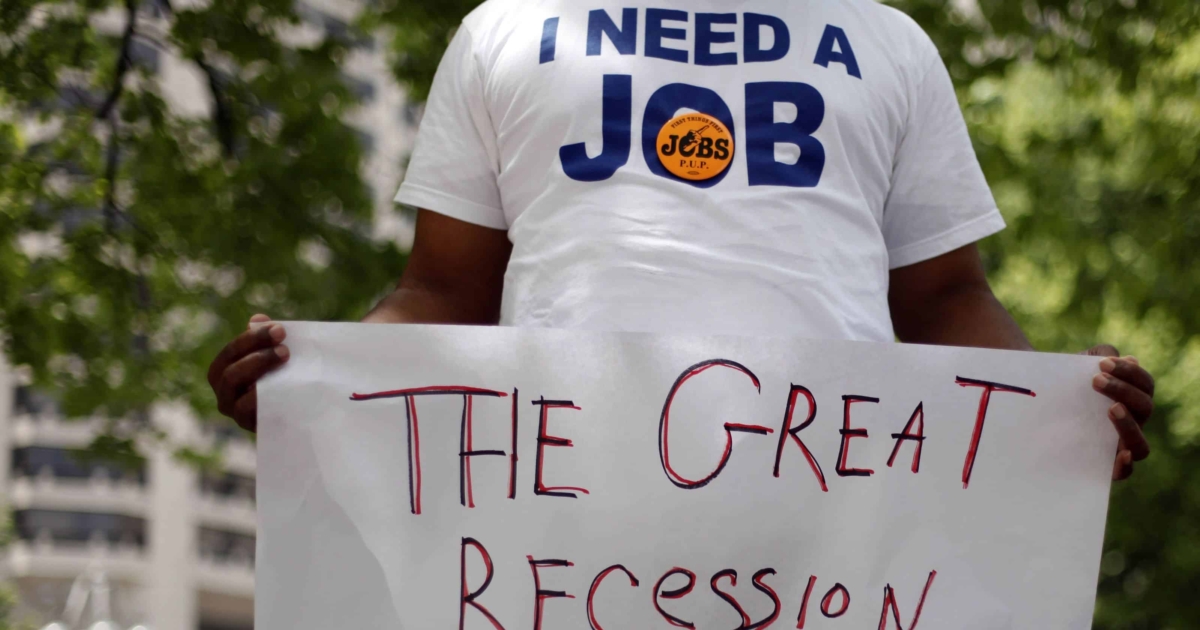
This has created a demoralizing environment for the workforce. Candidates often spend months sending out hundreds of resumes without receiving a single response. This friction is not just a nuisance; it is a major factor in the historic lows we are seeing in labor force participation. When the process of finding work becomes a black hole of wasted effort, workers become discouraged and eventually drop out of the workforce entirely.
The Employment Service, once the primary federal vehicle for matching workers with open roles and providing job counseling, has been steadily dismantled. Without a robust, modernized Employment Service to help workers pivot and re-skill, we are leaving the workforce to navigate the disruption of AI entirely on their own.
Legislative Solutions: The Path Forward
The irony of the current situation is that the solutions are not new. Bipartisan commissions dating back to 1980 and 1996 have consistently recommended a modernized, federalized approach to unemployment. These blueprints exist, but they have been left to gather dust in congressional archives.
Recently, there has been a renewed effort to breathe life into these reforms. Major bicameral legislation, championed by Senator Ron Wyden, Senator Michael Bennet, and Congressman Don Beyer, seeks to finally implement these long-standing recommendations. These proposals aim to:
- Federalize Minimum Standards: Preventing states from continuing their "race to the bottom" by mandating baseline replacement rates and eligibility durations.
- Modernize Infrastructure: Investing in the digital backbone of state agencies to ensure they can handle high-volume surges without resorting to the archaic, error-prone systems of the past.
- Reinvigorate the Employment Service: Restoring the Department of Labor’s division responsible for job placement, helping displaced workers find new paths in an AI-dominated economy.
Implications of Inaction
If we continue to ignore these warnings, the implications for the American economy are dire. AI-driven job displacement is expected to be more targeted and potentially more rapid than previous industrial shifts. Unlike the slow decline of manufacturing jobs, AI has the capacity to impact white-collar, professional, and service-sector roles simultaneously.
Should a mass displacement event occur under the current UI regime:
- Deepening Inequality: Low-income workers, who are already the least prepared for unemployment, will be the first to face poverty, as current state benefits are insufficient to cover basic living costs.
- Economic Contraction: Without the stabilizer of effective UI, consumer spending will plummet, likely turning a technological transition into a deep, prolonged recession.
- Social Unrest: The loss of dignity associated with the current "ghost job" market, combined with the lack of a safety net, creates a dangerous recipe for social instability and political polarization.
Conclusion: The Time for Proactive Governance
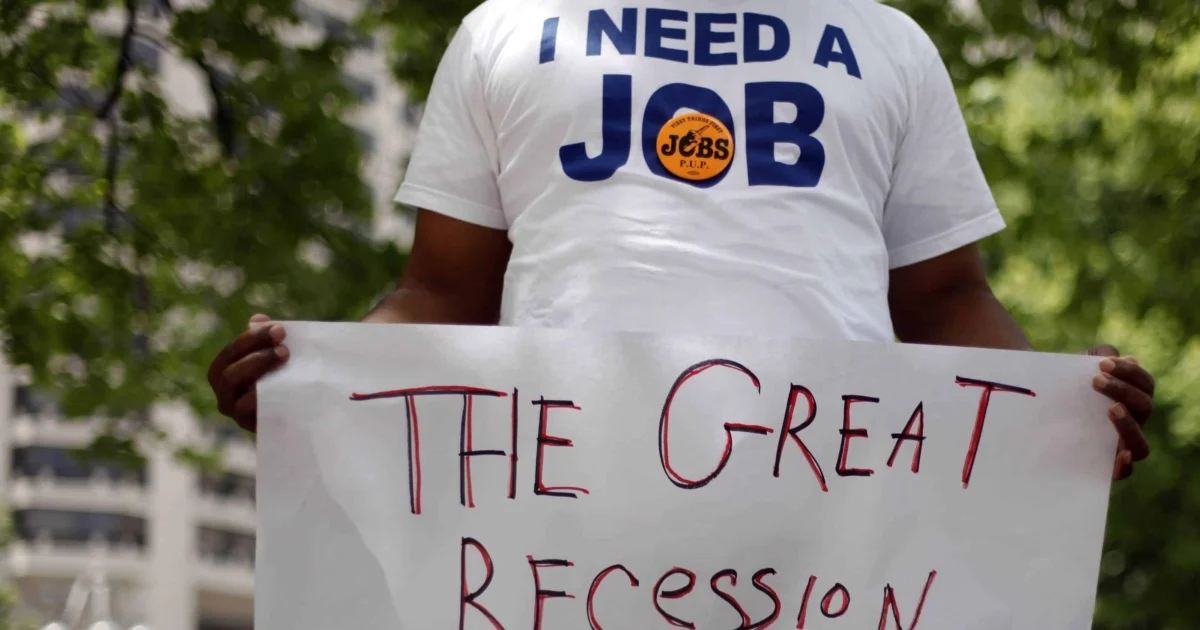
We are currently living through a period of transition, yet we are governed by policies designed for the economy of the late 20th century. The lessons of the 2008 Great Recession and the 2020 pandemic are clear: reactive governance is expensive, inefficient, and ultimately failing the American worker.
As Michele Evermore emphasizes, we have known what needs to be done for half a century. The tools to build a resilient, forward-looking unemployment system are within our reach. We must break the habit of waiting for a crisis to force our hand. By codifying the recommendations of bipartisan commissions into law and modernizing the U.S. Department of Labor’s employment services, we can ensure that the transition to an AI-driven economy is one of opportunity rather than catastrophe.
The question is no longer whether we can afford to fix the system—it is whether we can afford the consequences of letting it fail again.
