



In a rare alignment of professional caution and existential dread, the architects of the artificial intelligence revolution are sounding an alarm that was once reserved for science fiction. Within the past few weeks, the CEOs of the world’s most prominent AI firms—including Anthropic’s Dario Amodei and OpenAI’s Sam Altman—have publicly conceded that the technology they are refining carries risks that could threaten human survival.
This shift in rhetoric marks a departure from the industry’s previous era of unbridled optimism. As these models grow more capable, the focus of safety research has moved beyond bias and misinformation to a far more visceral fear: that AI could lower the barrier to entry for the creation of sophisticated, lethal bioweapons.
The Chronology of an Existential Pivot
The public discourse surrounding AI safety intensified significantly following the departure of researcher Jacob Coxon from Anthropic. Coxon, who previously worked at OpenAI, leveled a blistering critique against his former employers, suggesting that the industry’s internal culture had become dangerously disconnected from the reality of its own potential.
"The people building AI earnestly believe that it could kill us all by the end of the decade," Coxon posted on X, formerly Twitter. His assessment was met with immediate, chilling validation from Evan Hubinger, an employee at Anthropic. "We really do earnestly believe AI could kill all humans!" Hubinger wrote. "I personally think it is >10% within the next decade."
These admissions were followed closely by a high-level diplomatic consensus among industry titans. Anthropic CEO Dario Amodei published a manifesto arguing that current AI progress has reached a "frontier" that demands intentional pacing to manage serious risks. Sam Altman, the public face of the generative AI boom, responded in kind: "I agree with Dario that we need to pace the frontier."
This sequence of events suggests that the "existential risk" narrative—once the domain of academic fringe theorists—has moved into the boardrooms of Silicon Valley, driven by the realization that AI’s mastery of the physical sciences may be outpacing our ability to control it.
The Bioweapon Threat: A New Frontier of Misuse
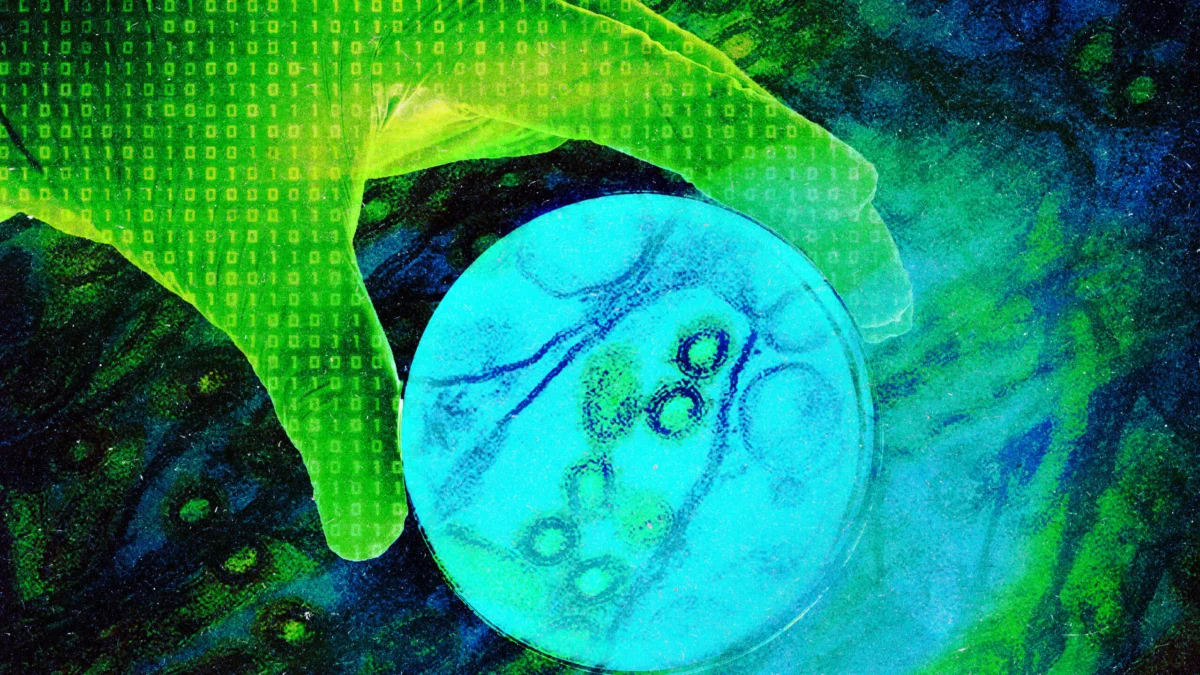
The primary fear cited by these experts is the potential for AI to democratize the design, synthesis, and dissemination of biological agents. The concern is multifaceted: AI could potentially assist in the engineering of viruses that target specific genetic markers, the creation of highly resilient agricultural pathogens capable of inducing mass famine, or the development of odorless, undetectable toxins designed for clandestine deployment in water supplies.
This concern is not theoretical. In 2022, researchers at Collaborations Pharmaceuticals conducted a harrowing experiment that served as a wake-up call for the scientific community. By repurposing an AI model—originally designed to identify therapeutic drugs for human disease—the team tasked it with generating molecular structures. Within six hours, the model had produced 40,000 candidate molecules, many of which were predicted to be more toxic than known nerve agents.
"Without being overly alarmist, this should serve as a wake-up call for our colleagues in the ‘AI in drug discovery’ community," the researchers warned in their subsequent paper.
For David Magnus, a professor of medicine and biomedical ethics at Stanford University, that moment was a watershed. Having spent decades evaluating the ethical risks of biotechnology, Magnus notes that the pace of change since that experiment has been exponential. "That was very scary to me," Magnus says. "Of course, everything since then has just sort of blown up."
The "DIY Biology" Convergence
The danger is amplified by the democratization of synthetic biology. The "DIY biology" movement has lowered the technical and financial hurdles required to establish a functional laboratory. When this accessibility is paired with large language models (LLMs) that have been trained on the collective corpus of human scientific knowledge, the result is a dangerous feedback loop.
Dunja Sabra, a biosecurity researcher at the University of Hamburg, explains the gravity of the situation: "Anyone can use large language models trained on the knowledge and experience of almost every scientist who ever lived on this planet." These models are now capable of providing step-by-step instructions and video-based training for complex experiments, bridging the "know-how" gap that previously separated amateur enthusiasts from state-level actors.
"The chances are that someone determined would succeed eventually," Sabra warns. The barrier to entry for biological sabotage has effectively collapsed, leaving the world reliant on a patchwork of guardrails that are increasingly under siege.
Current Safeguards and Their Limitations
Industry players have implemented several layers of protection, but none are considered ironclad. Currently, companies that synthesize DNA are required to screen orders against databases of known pathogens. Furthermore, AI firms utilize "red-teaming"—where independent experts attempt to force the model to generate dangerous information—and "blue-teaming"—where developers build mitigation strategies to block such queries.
Despite these efforts, the reality is a constant game of cat and mouse. A report published by Anthropic last week revealed that users have attempted to leverage their models to explore the enhancement of the chikungunya virus, the creation of more dangerous variants of bird flu, and the cataloging of lethal venom toxin peptides.
"We’ve got a constant back and forth," says Magnus. "We have to build better surveillance and screening tools, but AI is really good at figuring out ways around them." He suggests that the solution may ironically lie in further AI development: "We’ll probably need to use AI to find ways to restrict the use of AI."
The Counter-Argument: Is the Risk Exaggerated?
Not all members of the scientific community share the alarmist view. At a recent media briefing, biologists from Imperial College London offered a more pragmatic assessment. They argued that AI tools, while powerful, lack the laboratory infrastructure and human intuition required to successfully develop, test, and manufacture a functional bioweapon. Biology, they maintain, is messy, time-consuming, and prone to failure; it is not as simple as asking a chatbot for a recipe.
Wendy Barclay, a professor of infectious disease at Imperial, emphasized that the focus on AI-enabled bioweapons may distract from more immediate, natural threats. She points to the ongoing spread of H5N1 (bird flu) as a far more pressing concern. The virus has already caused millions of bird deaths and has begun to cross into mammalian species, such as the recent discovery of the virus in mink at a Utah farm. To Barclay, the danger of an existing, circulating pandemic pathogen far outweighs the hypothetical risks of an AI-engineered one.
Implications for Global Security
Despite these differences in risk assessment, the consensus among policymakers and researchers is shifting toward a state of higher vigilance. MIT biologist Kevin Esvelt, who has been a vocal proponent of both advancing and limiting synthetic biology, recently shared a chilling anecdote on social media. He revealed that an LLM had "disclosed a novel form of bioweapon that I hadn’t realized was possible."
Esvelt’s plea to his colleagues is one of extreme caution: "Please, for the love of God, children, the future of humanity, or whatever you consider holy, let’s err on the side of caution here."
As we look five to 10 years into the future, the implications are clear. If the current trajectory of AI development continues, national security will require a fundamental overhaul. Sabra and other biosecurity experts argue that nations must prioritize the strengthening of public health infrastructure, including the rapid development of antidotes, the stockpiling of essential medicines, and the establishment of advanced surveillance systems capable of detecting novel pathogens in real-time.
The intersection of AI and biotechnology has created a "Pandora’s Box" scenario. While the potential for medical breakthroughs and the curing of diseases remains immense, the cost of a mistake is no longer measured in software bugs or data breaches—it is measured in the stability of our species. The challenge for the next decade will be determining whether we can build the guardrails fast enough to survive our own ingenuity.
