





By Editorial Staff
August 31, 2026
While the American economy has yet to experience the cataclysmic job losses once predicted by early artificial intelligence skeptics, the structural weaknesses of the U.S. social safety net remain a ticking time bomb. According to a new analysis by Michele Evermore, Senior Policy Fellow for Economic Security at the National Employment Law Project (NELP), the nation’s unemployment insurance (UI) system is currently ill-equipped to handle even minor economic shocks, let alone the potential displacement of millions of workers due to rapid automation.
As the labor market shifts toward an era defined by AI integration, policymakers are being urged to abandon the reactive governance that defined the COVID-19 era and instead pursue systemic, proactive reforms that have been gathering dust in Washington for nearly half a century.
The Core Problem: A Safety Net in Tatters
The unemployment insurance system was designed with four primary objectives: to stabilize individual income, to provide a financial cushion that allows workers to seek high-quality job matches, to maintain labor force attachment, and to serve as a countercyclical stabilizer for the broader economy.
Economists have long lauded the efficiency of these programs; for every dollar injected into the UI system, approximately two dollars of economic activity are generated within local communities. Yet, the current reality is a far cry from this ideal. Since the Great Recession, a "race to the bottom" has permeated state-level UI programs. Many states have slashed benefit durations, lowered income replacement rates, and tightened eligibility requirements so severely that the system fails to perform its intended functions.
"We have yet to see widespread job loss due to artificial intelligence, but we should not wait until a crisis hits to act," writes Evermore. "The policy ideas to fix this have been staring us in the face since 1980."
A Chronology of Neglect
The degradation of the American unemployment infrastructure is not a recent development, but rather the result of decades of systematic under-investment.
- 1980–1996: Bipartisan commissions are established to study the modernization of UI. Both groups produce robust, actionable recommendations to bolster the safety net, yet these reports are largely ignored by legislative bodies prioritizing austerity over preparedness.
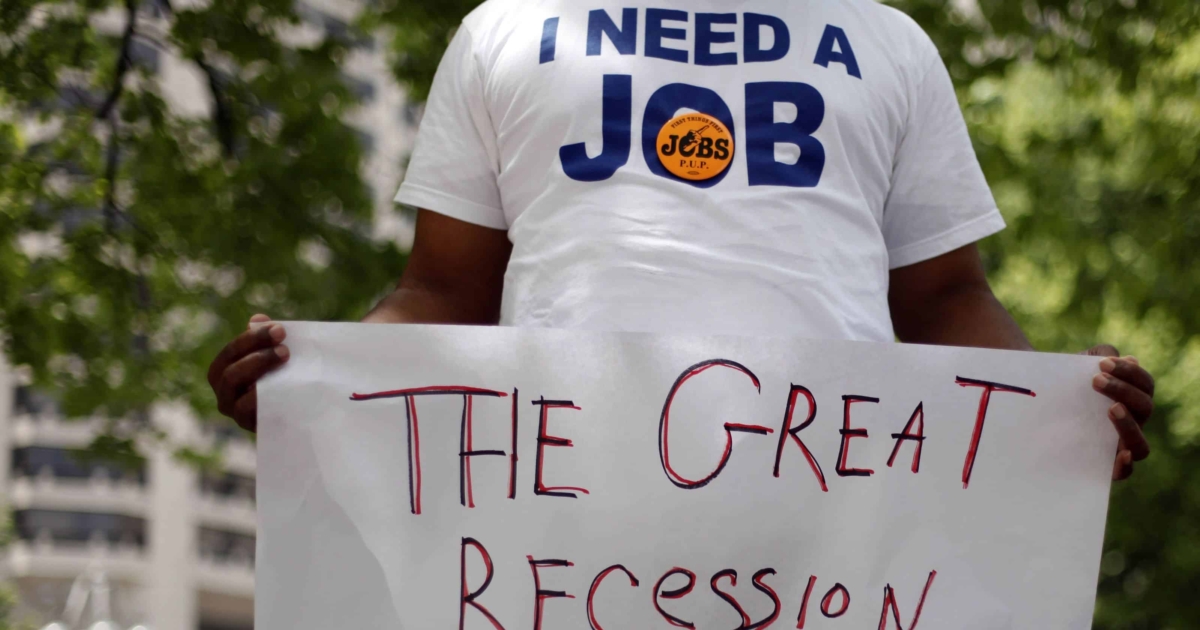
- 2008–2009: The Great Recession exposes significant gaps in UI coverage, triggering a period where states begin to aggressively restrict access to benefits to lower tax burdens on employers.
- 2020: The COVID-19 pandemic strikes. The U.S. labor market collapses overnight. Because the underlying UI infrastructure was left to rot for decades, Congress is forced to scramble, creating three brand-new, emergency-only programs to handle the influx of claims.
- 2022: A House report reveals that UI agencies are operating at a 50-year funding low. Antiquated technology—some systems running on COBOL-based software from the 1970s—coupled with a skeleton staff, results in massive delays and allows organized crime syndicates to exploit the system through sophisticated fraud.
- 2025–2026: Legislators, including Senators Ron Wyden and Michael Bennet, reintroduce comprehensive bills intended to overhaul the UI system, finally attempting to codify the recommendations made in the 1980s and 1990s.
The Modern Labor Landscape: Ghost Jobs and Discouragement
The challenges facing today’s jobseekers are unprecedented. Beyond the looming threat of AI-driven automation, the mechanics of the labor market have become increasingly opaque. A staggering one in three job postings currently listed online is estimated to be "fake"—listings that do not lead to actual hires but instead serve to signal growth to shareholders or build talent pools for future, hypothetical needs.
For the unemployed, this environment is demoralizing. Workers are sending out hundreds of resumes without receiving a single response, leading to a steady increase in long-term unemployment and record-low labor force participation rates. The "Employment Service"—a once-robust federal initiative designed to help workers find new roles and bridge the gap between industries—has been steadily dismantled. Without this institutional support, the burden of finding work has shifted entirely onto the individual, often with diminishing returns.
Supporting Data: Why Reform is Non-Negotiable
The economic arguments for reform are backed by historical evidence. During the pandemic, the inability of states to process claims efficiently resulted in billions of dollars in lost support for families and billions more in fraudulent losses.
Data from the Department of Labor suggests that administrative underfunding is the primary culprit. When agencies are starved of the budget to modernize their IT infrastructure, they cannot implement the fraud-detection tools necessary to protect the system. Furthermore, when benefits are too low—or too difficult to access—workers are forced to take the first job available, regardless of whether it matches their skill set. This "mismatch" leads to lower productivity and higher turnover, which ultimately harms the national economy.
Official Responses and Legislative Solutions
The push for change has reached the halls of Congress, where bipartisan frustration with the status quo is beginning to boil over. The legislation championed by Senator Ron Wyden (D-OR), Senator Michael Bennet (D-CO), and Congressman Don Beyer (D-VA) seeks to standardize UI across the country.
The proposed reforms aim to:
- Establish Federal Minimums: Ensuring that no state can "race to the bottom" by gutting essential benefits.
- Modernize IT Infrastructure: Creating a federal grant program to upgrade state unemployment systems, replacing antiquated systems with secure, cloud-based architecture.
- Restore the Employment Service: Reinvigorating local Department of Labor offices to provide career counseling, training, and direct placement assistance.
"We had solutions that would address AI and mass unemployment 50 years ago, but we ignored them," Evermore notes. "Congress needs to act now to codify these bipartisan recommendations into law."
The Implications of Inaction
The danger of failing to act is not merely theoretical. If the U.S. waits until an AI-driven displacement event occurs, the system will face a "perfect storm."
If millions of workers are displaced simultaneously, the current UI infrastructure—which struggles to handle routine economic fluctuations—will collapse. The result would be a massive spike in poverty, a significant drag on GDP as consumer spending plummets, and a permanent alienation of a large segment of the workforce.
Furthermore, the lack of a reliable safety net is likely to foster political instability. When citizens lose their livelihoods to automation and the state proves incapable of providing a basic, dignified transition, public trust in democratic institutions further erodes.
Conclusion: A Call for Proactive Governance
The lesson of the last fifty years is clear: the United States cannot afford to manage its economic safety net through emergency crisis response. The tools for reform exist, the legislative frameworks have been drafted, and the economic rationale for investment is indisputable.
As AI continues to reshape the landscape of work, the unemployment insurance system must evolve from a fragmented, underfunded relic into a robust pillar of economic security. Breaking the habit of waiting for a crisis to act is no longer just a policy recommendation—it is a fundamental necessity for the stability and prosperity of the American workforce in the 21st century.
