





Date: June 30, 2026
Location: Los Angeles, California
Reporting: Global Desk
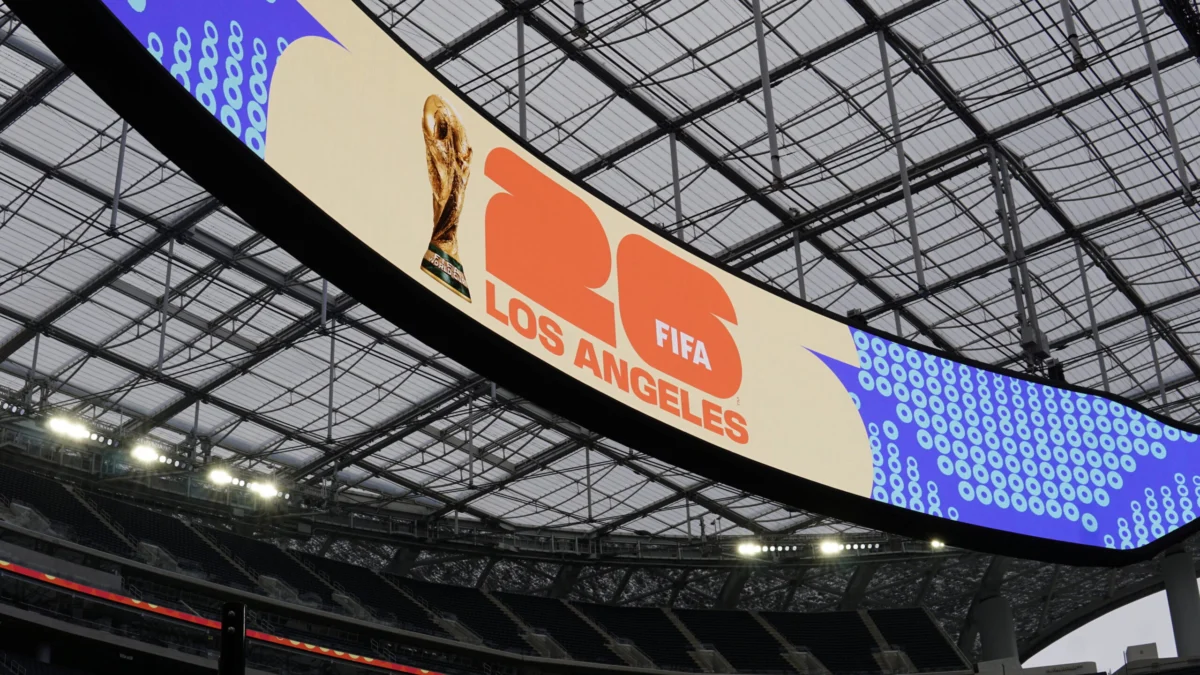
As the world’s eyes turn to the sprawling metropolis of Los Angeles for the 2026 FIFA World Cup, the city is doing more than just hosting a premier sporting event. For city planners, climate scientists, and transit authorities, the tournament represents a massive, real-world stress test. With eight matches scheduled at the state-of-the-art SoFi Stadium, Los Angeles is currently navigating the intersection of global tourism, extreme heat, and the logistical nightmare of moving millions through a car-centric landscape.
This trial run is critical. The successes—and failures—of the next few weeks will provide the blueprint for the 2028 Summer Olympic Games, serving as a litmus test for whether a city built for the automobile can successfully transition toward a sustainable, climate-resilient future.
Main Facts: A City Under the Microscope
The 2026 FIFA World Cup has brought an unprecedented influx of visitors to Southern California, putting the city’s infrastructure under the most intense scrutiny it has faced in decades.
- The Venue: SoFi Stadium, a multi-billion-dollar architectural marvel, is hosting eight matches, including critical group-stage games and knockout rounds.
- The Climate Challenge: Los Angeles is currently experiencing a record-breaking summer. The "heat island" effect, exacerbated by the city’s concrete density, poses a significant threat to fan safety and operational efficiency.
- The Transit Trial: The city is attempting to manage unprecedented foot traffic and public transit usage, aiming to prove that its multi-billion dollar investment in light rail and bus rapid transit can handle the strain.
- The Olympic Connection: Mayor Karen Bass and city officials have explicitly stated that the World Cup serves as a "dress rehearsal" for the 2028 Olympics. Lessons learned this summer regarding waste management, crowd control, and emergency heat responses will be codified into Olympic policy.
Chronology: The Road to the Pitch
The journey to the 2026 World Cup has been a decade in the making, defined by aggressive urban planning and political maneuvering.
2018–2020: The Bid Phase
Following the successful bid to co-host the tournament with Mexico and Canada, Los Angeles began aligning its long-term development goals with the demands of international sporting bodies. The focus was initially on stadium upgrades and security.
2023: The Climate Pivot
Realizing that rising temperatures could jeopardize the tournament, the City Council shifted its focus toward "Heat Mitigation Strategies." New urban canopy initiatives and cooling stations were fast-tracked.
2025: The Transit Sprint
With only a year remaining, the city pushed for the completion of the "D Line" subway extension and the expansion of the Metro Rail network, hoping to create a "fan corridor" to SoFi Stadium.
June 2026: The Kick-Off
The tournament begins. The city enters a period of high alert, with emergency services operating at 150% capacity and heat response teams stationed at every fan zone across the county.
Supporting Data: Infrastructure and Environment
The logistical demands of hosting eight World Cup matches are staggering. Understanding the data behind the operation reveals the scope of the challenge.
Transit Capacity
Before the tournament, Los Angeles averaged roughly 800,000 weekday boardings on its rail network. During the World Cup, officials estimate that demand for the rail lines serving the Inglewood area (home to SoFi Stadium) has tripled. The "shuttle-to-stadium" model is being put to the test, with hundreds of zero-emission buses deployed to bridge the "last mile" gap.
The Thermal Map
Data from the National Weather Service indicates that the areas surrounding the stadium can be up to 10 degrees Fahrenheit hotter than the surrounding suburban coastline due to the prevalence of asphalt. The city has installed over 50 "Cooling Hubs" within a two-mile radius of the stadium, equipped with high-capacity misters and solar-powered air filtration systems.
Carbon Footprint
Despite the commitment to a "Green World Cup," the sheer volume of air travel required to move fans between Los Angeles, New York, and Mexico City remains a point of contention. Early estimates suggest that the carbon offset programs currently in place will only account for 30% of the total event-related emissions, highlighting a significant gap between sustainability rhetoric and operational reality.
Official Responses: Balancing Ambition and Reality
The rhetoric from city hall has been one of cautious optimism. Mayor Karen Bass recently addressed the press, emphasizing the "transformative" nature of the event. "We are not just hosting a game; we are demonstrating that Los Angeles can be a leader in sustainable urban living," she stated.
However, the local environmental advocacy community remains skeptical. Sarah Jenkins, a lead analyst for the Climate Action Network of Los Angeles, argues that the city is prioritizing image over structural change. "The infrastructure improvements we see today are temporary fixes for a long-term problem," Jenkins said. "While it’s great to have solar-powered fans at the stadium, we need a permanent overhaul of our energy grid and a radical reduction in private vehicle reliance."
FIFA officials, meanwhile, have praised the city’s responsiveness. "We have never seen a host city integrate climate data into their event management software to this degree," a FIFA spokesperson remarked. "Los Angeles is setting a new standard for how we organize major events in a warming world."
Implications: A Blueprint for the Future
The implications of this summer’s performance will ripple far beyond the final whistle of the World Cup.
1. The Olympic Legacy
If the transport systems hold, the city will have the political capital to push for even more ambitious infrastructure projects before 2028. If the system collapses, it could lead to a re-evaluation of how Los Angeles approaches large-scale events, potentially resulting in more decentralized "fan zones" to spread the load.
2. Climate Adaptation as Economic Strategy
Los Angeles is attempting to prove that climate-resilient cities are better equipped for economic growth. By mitigating the heat island effect, the city hopes to protect its tourism industry from the risks of a warming climate. This "Climate-Proofing" strategy is being watched closely by other major urban centers in the Sun Belt, such as Phoenix and Dallas, who face similar environmental challenges.
3. Social Equity and Displacement
There is an ongoing debate regarding the "gentrification effect" of these large-scale investments. Critics point out that the transit upgrades are primarily focused on corridors leading to the stadium, while lower-income neighborhoods in South Los Angeles continue to suffer from inadequate bus service. The long-term implication is a city that is highly functional for the affluent tourist, but still struggling to provide basic mobility for its permanent residents.
4. A Shift in Urban Identity
Perhaps the most profound implication is the psychological shift. For decades, Los Angeles has been defined by the freeway. Through the World Cup and the looming shadow of the Olympics, the city is forced to experiment with a different identity—one where walking, cycling, and mass transit are not just alternatives, but the primary means of navigating the metropolis.
Conclusion: Two Years to the Torch
As the World Cup matches proceed, the "complex web of challenges" mentioned by local observers becomes increasingly apparent. There are missed opportunities—specifically, the city’s failure to fully decouple the event from private vehicle reliance—yet the progress is undeniable.
The city is currently in a state of suspended animation, waiting to see if the current climate and transit strategies will hold up under the pressure of the knockout rounds. If the city survives the heat and the traffic, it will have gained a crucial two-year window of breathing room to refine its approach before the Olympic torch arrives in 2028.
Ultimately, the 2026 World Cup is a story of a city in transition. Whether that transition leads to a sustainable, modern urban center or simply masks deeper systemic issues remains to be seen. For now, the world is watching, and Los Angeles is playing for more than just a trophy—it is playing for its future.
