





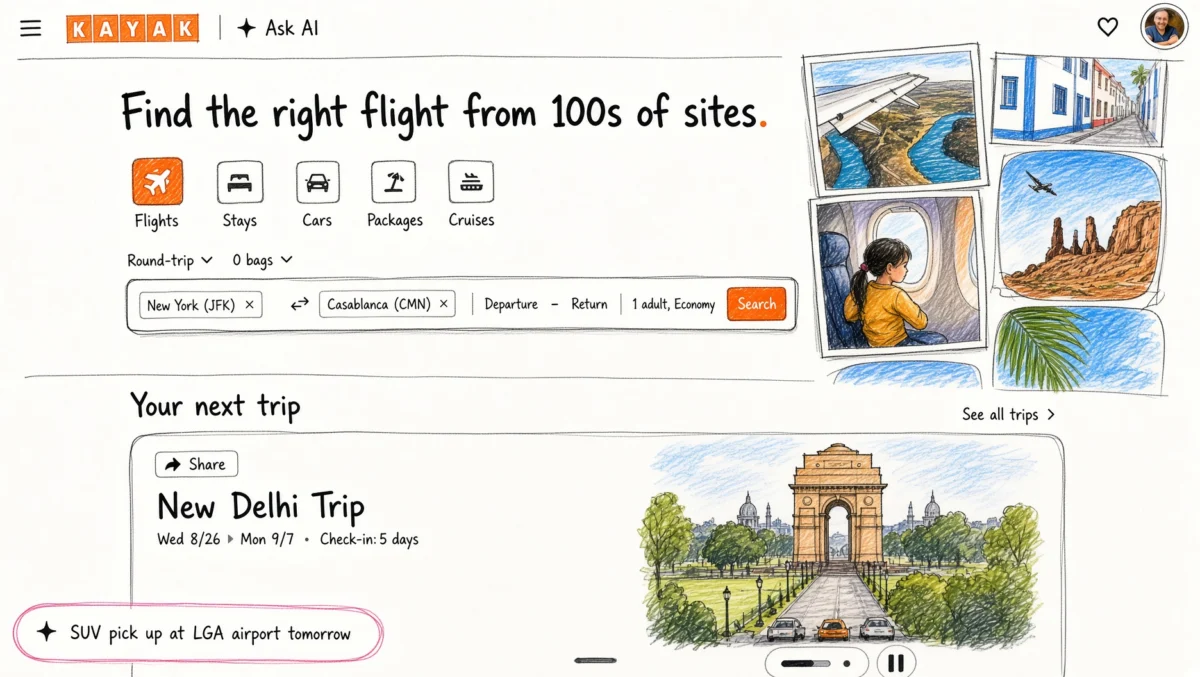
For over two decades, the digital travel landscape has been defined by the persistent presence of Kayak. For millions of travelers, the ritual of booking a trip begins with a familiar interface—the clean, efficient search engine that revolutionized how we compare flights, hotels, and rental cars. Since its launch in February 2005, Kayak has maintained a reputation for having the widest inventory, the most competitive pricing, and a user experience that remains, for many, the gold standard.
Yet, beneath this facade of long-term success, a significant corporate drama is unfolding. Despite its enduring popularity among users, Kayak is currently navigating a period of profound transition, marked by executive departures, significant financial write-downs, and a strategic pivot that leaves its long-term future within the Booking Holdings ecosystem in question. As the industry grapples with the transformative potential of artificial intelligence, Kayak stands as a case study in the tension between legacy business models and the next generation of travel technology.
Chronology: The Evolution of a Travel Giant
The story of Kayak is rooted in a fundamental dissatisfaction with the status quo. In late 2003, Steve Hafner, a key architect behind the launch of Orbitz, met for dinner with Terry Jones, the visionary founder of Travelocity. By their own admission during that seminal meeting, the two men—who had essentially built the first generation of online travel agencies (OTAs)—realized they did not actually enjoy using their own platforms. They recognized that the existing systems were clunky, inefficient, and prioritized the needs of the vendors over the needs of the travelers.
- 2004–2005: Kayak is founded with the goal of creating a meta-search engine that aggregates results from across the web. It officially launches to the public in February 2005, quickly gaining traction for its speed and comprehensive results.
- 2012: Kayak goes public, marking a major milestone for the travel-tech sector.
- 2013: In a massive industry consolidation, Booking Holdings (then known as The Priceline Group) acquires Kayak for approximately $1.8 billion.
- 2013–2022: Kayak operates as a subsidiary of Booking Holdings, maintaining its brand autonomy while integrating into the larger conglomerate’s portfolio.
- October 2023: Booking Holdings announces a staggering $457 million write-down related to Kayak, signaling a revaluation of the brand’s intangible assets and market position.
- February 2024: Steve Hafner, the CEO who guided the company for 22 years, steps down, marking the end of an era for the organization.
- May 2024: Skift reports that Booking Holdings is shifting its primary AI-driven travel innovation efforts to a new project helmed by Kayak’s founders, effectively signaling a departure from Kayak as the primary vehicle for future growth.
Supporting Data: The Financial and Market Reality
The $457 million write-down recorded by Booking Holdings in late 2023 is the most significant indicator that the traditional meta-search model is under pressure. While Kayak remains a top-tier performer in terms of user traffic and brand loyalty, the financial reality reflects a shift in advertising spend and consumer behavior.
The meta-search business model relies heavily on a "referral" economy. When a user clicks a link on Kayak to book a flight on an airline’s website, Kayak earns a commission. However, as major airlines and hotel chains have aggressively pursued "direct-booking" strategies to avoid commissions, the margins for meta-search platforms have tightened.
Furthermore, the rise of "walled gardens"—where platforms like Google provide flight and hotel information directly within the search results page—has cannibalized the traffic that once flowed through sites like Kayak. Data from industry analysts suggests that while Kayak’s user interface remains superior, the cost of customer acquisition has risen while the conversion revenue per user has remained stagnant or declined.
Official Responses and Strategic Shifts
The departure of Steve Hafner and the subsequent pivot of the founding team toward a new, AI-centric project represents a major strategic gamble by Booking Holdings. When questioned about the future of Kayak, spokespeople for Booking Holdings have emphasized the platform’s role as a "top-of-funnel" asset—a gateway that introduces millions of travelers to the broader Booking ecosystem.
However, the internal shift is telling. By tasking Kayak’s founders with building the next generation of AI-travel tools under a new umbrella, Booking is acknowledging that the current Kayak infrastructure may not be the ideal foundation for the AI-first travel future.
"We are constantly evaluating how we deploy our technology and talent to meet the evolving needs of the global traveler," a representative from Booking Holdings noted in a recent briefing. "While Kayak remains a vital part of our portfolio, our investment in generative AI requires a focus on platforms that can be built from the ground up to handle conversational search and hyper-personalized itineraries."
The AI Conflict: A Product People Want vs. A Model That Is Declining
The central tension at the heart of this story is the difference between a product that users enjoy and a business model that is sustainable in the age of generative AI.
Kayak’s interface is, by most accounts, excellent. It is clean, fast, and, as the author notes, still the first place many travelers go to begin their search. It is a "product people want." However, the business model—the commission-based referral system—is increasingly fragile.
Artificial Intelligence threatens to disrupt the meta-search model in two ways:
- Disintermediation: If an AI assistant can book a flight directly for a user within a chat interface, the need to visit a meta-search engine to compare prices disappears.
- The Shift to Conversations: Current search engines are based on filtering and sorting lists. AI is based on conversational synthesis. Converting the Kayak database—which is built to display lists—into a platform that can have a "travel planning conversation" is a massive technical hurdle.
Implications for the Future of Travel
What does this mean for the average traveler? In the short term, very little. Kayak will likely continue to function as a reliable tool for comparing prices and checking availability. But in the long term, the brand’s identity is at a crossroads.
1. The Death of the "Comparison" Era
For two decades, the consumer’s role in travel was to act as an amateur travel agent: comparing prices, reading reviews, and piecing together itineraries. The AI era promises a shift toward the "Agent" model, where the traveler expresses an intent—"I want a quiet, luxury beach vacation in Southeast Asia for under $3,000 in November"—and the software handles the complexity. If Kayak cannot adapt its engine to support this type of intent-based booking, it risks becoming a legacy utility rather than a central travel hub.
2. Consolidation of Data
Booking Holdings is currently caught in a dilemma: do they cannibalize their own successful meta-search business to compete with the emerging AI travel agents, or do they protect the cash flow of Kayak while simultaneously building a new, potentially competing AI product? The decision to move the founders to a new project suggests that they have chosen the latter, betting on a new "AI-native" platform while keeping Kayak as a stable, legacy revenue generator.
3. The Human Element in Travel Tech
The departure of the original founders of Kayak from the day-to-day operations of the brand marks a symbolic transition. The "startup" energy that defined the 2005–2015 era of travel tech has been replaced by the "scale" and "efficiency" requirements of a massive public corporation.
Conclusion: The Final Frontier
Kayak is not going away tomorrow. Its brand equity is too high, and its interface remains superior to almost anything else on the market. However, the $457 million write-down and the shift of its founders toward new AI projects serve as a warning: in the tech world, popularity is not the same as longevity.
For Booking Holdings, the challenge is clear. They have a product that people love (Kayak) and a business model that is being challenged by the very technology they are now trying to build. If they can successfully transition the trust and data that Kayak has accumulated over 21 years into the next generation of AI-driven travel, they may maintain their dominance. If not, they risk being remembered as the company that held onto a 2005 business model while the rest of the world moved on to the conversational future.
For now, the traveler continues to open the Kayak tab first. But the tools they find there may look very different a few years from now—or, perhaps, they will be using something else entirely.
