





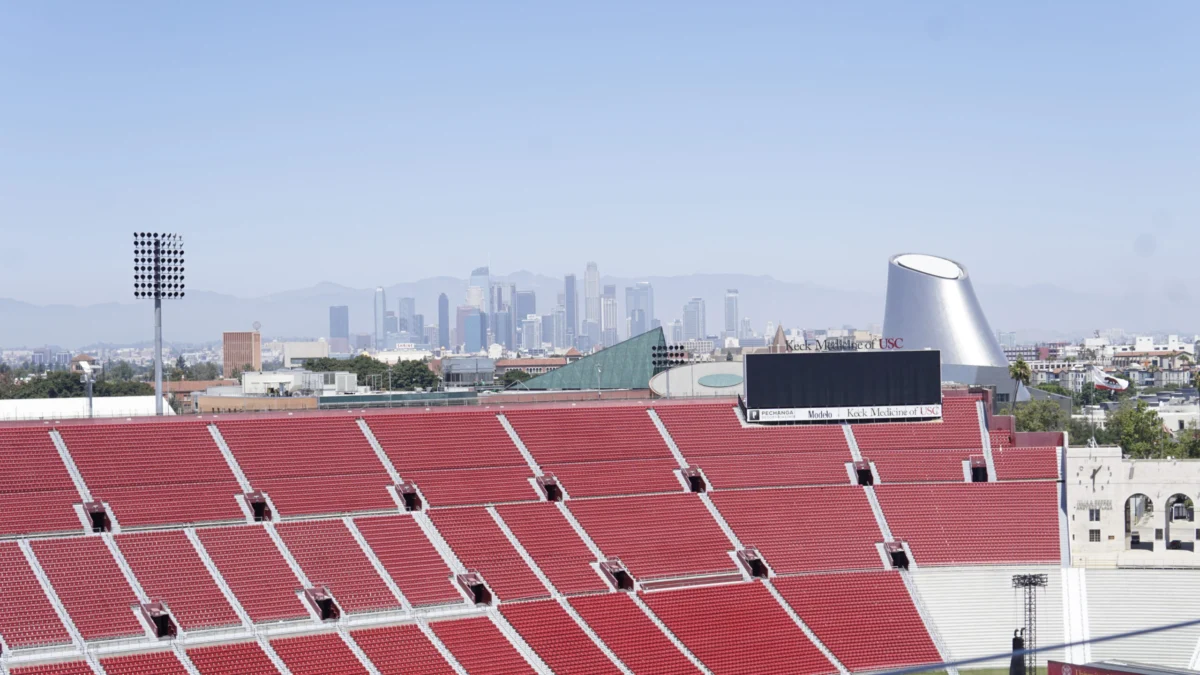
With an estimated global audience of over five billion people, the 2028 Olympic Games in Los Angeles stand as the world’s premier stage for human achievement. Yet, behind the spectacle of athletic prowess and international unity, a darker narrative is unfolding. Los Angeles, a city currently grappling with the scars of devastating wildfires and the persistent threat of climate instability, is attempting to reinvent the blueprint for the modern mega-event.
As part of London Climate Action Week, an upcoming webinar scheduled for June 23, 2026, will convene experts to address a pivotal question: Can the Olympic Games serve as a catalyst for urban resilience and sustainable policy, or are they an inherently unsustainable relic of a bygone era?
Main Facts: The Sustainability Pledge
The Los Angeles 2028 Organizing Committee has made a series of ambitious, high-stakes commitments aimed at decoupling the Olympic Games from the massive carbon footprint typically associated with mega-events.
The primary pillar of the LA28 sustainability strategy is the "no-build" mandate. Unlike previous hosts who poured billions into the construction of purpose-built stadiums that often became "white elephants," LA28 has pledged to use exclusively existing or temporary venues. This strategy aims to curb the massive carbon emissions associated with cement and steel production—a major contributor to global greenhouse gas emissions.
Furthermore, the committee has committed to a "car-free" Games. In a city defined by its freeway culture, the promise to minimize private vehicle usage in favor of enhanced public transit represents a radical shift in urban planning. The goal is to leverage the influx of Olympic visitors to permanently alter the mobility patterns of Los Angeles residents, pushing the city toward a more electrified and efficient future.
Chronology: A City in Transition
The path to 2028 is not merely a logistical timeline; it is a race against the accelerating effects of climate change.
- 2020–2024: Los Angeles experiences a series of record-breaking heat waves and wildfire seasons that test the city’s emergency infrastructure. These events force a re-evaluation of urban resilience.
- 2026 (June 23): The upcoming London Climate Action Week webinar will serve as a critical checkpoint, bringing together urban planners, climate scientists, and sports policymakers to interrogate the feasibility of the LA28 goals.
- 2026–2027: The final phase of venue retrofitting and infrastructure improvements. This period will be critical for determining whether the city’s transit upgrades are permanent or temporary patches.
- 2028 (July–August): The Games are scheduled to take place. The world will watch not only the athletes but also the efficacy of the sustainability measures under the intense pressure of a global event.
- Post-2028: The long-term legacy phase, where the success of the "sustainable model" will be judged by whether the mobility shifts and resilience measures remain integrated into the city’s fabric.
Supporting Data: The Cost of Mega-Events
To understand the gravity of the LA28 challenge, one must look at the data. Historically, the carbon footprint of the Olympics is vast.
- Construction Emissions: Approximately 70–80% of a mega-event’s carbon footprint is derived from the construction of new infrastructure. By opting for existing venues, LA28 is theoretically eliminating the largest source of their potential impact.
- The Mobility Gap: Los Angeles currently has one of the lowest rates of public transit utilization for a city of its size. The 2028 plan proposes an unprecedented "Olympic Transit Strategy," requiring thousands of additional buses and the optimization of existing light rail lines.
- Climate Risks: According to recent climate modeling, the Southern California region faces a 15–20% increase in "extreme heat days" by 2030. These conditions pose a direct threat to the safety of outdoor events and the health of spectators and athletes alike.
Official Responses and Stakeholder Perspectives
The organizing committee maintains that the Olympics can serve as a "model for what a more sustainable global event can look like." Officials emphasize that the partnership between the city government and the International Olympic Committee (IOC) is built on the necessity of environmental adaptation.
However, skepticism remains high. Environmental activists argue that "sustainability" in the context of a mega-event is often an oxymoron. Critics point to the fact that even a "green" Olympics draws hundreds of thousands of international travelers, the vast majority of whom arrive via long-haul aviation, which remains a carbon-intensive industry currently lacking a scalable, green alternative.
Urban policy experts are also watching closely to see how wildfire recovery efforts interact with the pressure to host the Games. "There is a tension between the immediate needs of a community recovering from climate disasters and the massive allocation of resources toward a two-week event," noted an analyst familiar with the LA28 proposal. "The question is whether the Olympics will leave behind a city that is safer and more resilient, or if it will divert focus from the necessary, long-term investments in wildfire mitigation and climate adaptation."
Implications: A New Era for Sport?
The implications of the Los Angeles Games extend far beyond the borders of California. If the 2028 experiment succeeds, it could set a new international standard for all future hosts. If it fails, or if the sustainability metrics prove to be largely performative, it could mark the beginning of a decline in the public’s appetite for hosting such events.
1. Urban Policy and Mobility
The push for a "car-free" Olympics is arguably the most significant urban policy experiment in the city’s modern history. Should the city successfully implement these transit patterns, it would prove that even the most car-dependent metropolis can adapt. Conversely, if the system collapses under the weight of the Games, it may permanently damage public trust in transit-oriented development.
2. Resilience vs. Spectacle
The interplay between wildfire recovery and the Olympic show is perhaps the most delicate aspect of the 2028 preparation. Can the city balance the need for rapid infrastructure improvements to support the Games with the slower, more complex work of ecological restoration and wildfire-resistant urban design?
3. The Future of the Olympic Brand
The IOC is facing a crisis of legitimacy. With fewer cities bidding to host the Games, the "sustainable model" is not just a moral preference; it is an existential necessity for the Olympic movement. The 2028 Games are effectively a test case for whether the Olympic brand can survive in a world that is increasingly skeptical of mass-consumption spectacles.
Conclusion: Join the Conversation
The path to 2028 is paved with both promise and peril. As the world approaches the London Climate Action Week webinar on June 23, 2026, the discussion will move beyond the theoretical. It will demand an honest look at the limitations of current policy and the hard choices that must be made to ensure that the spectacle of athletic excellence does not come at the cost of our collective future.
Will Los Angeles be the city that finally proves that mega-events can be compatible with a warming planet? Or will it serve as a cautionary tale for the limitations of green-branding in the face of environmental collapse? The world will be watching, and for the sake of the planet, the stakes have never been higher.
Event Details:
- Topic: The Sustainability of the 2028 Olympic Games
- Date: 23 June 2026
- Time: 16.00-17.00 CEST / 15.00-16.00 BST
- Format: Webinar
- Participation: Open to all interested stakeholders, climate advocates, and citizens.
