


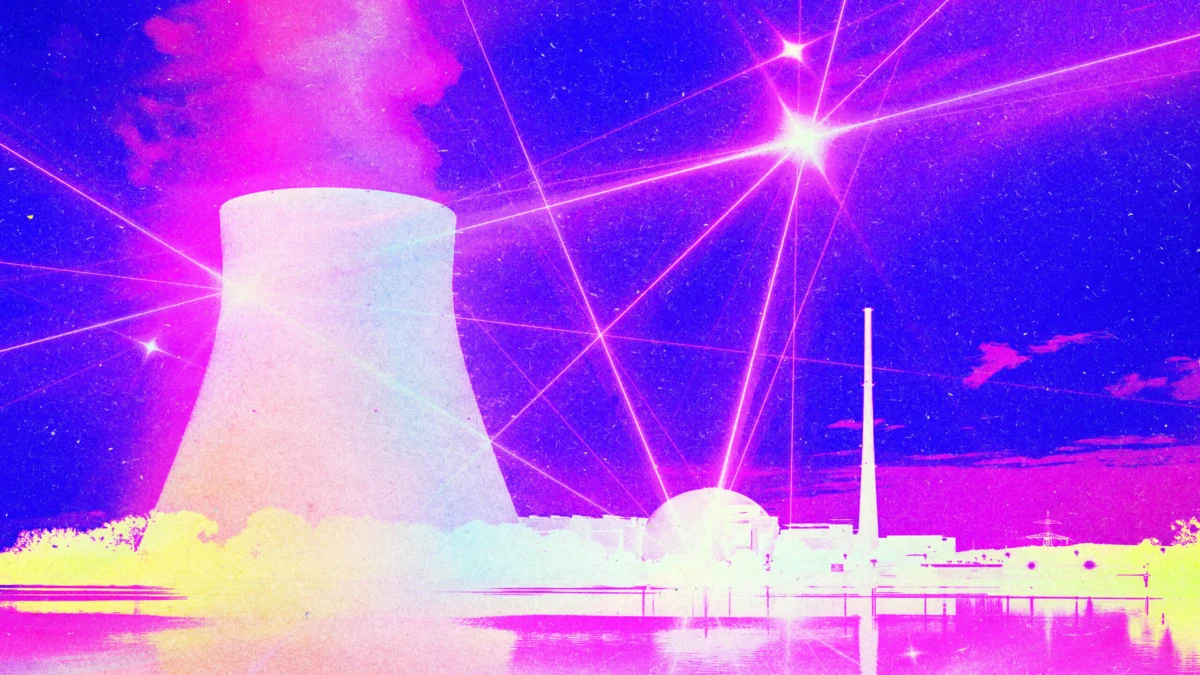
Outside the quiet, rural landscape of Paducah, Kentucky, sits a massive, overlooked treasure: thousands of storage cylinders containing the discarded legacy of the Cold War. These containers are filled with depleted uranium "tails"—the byproduct of decades of nuclear enrichment. While once considered industrial waste, this material is now the focal point of a high-stakes energy revolution. A company called Global Laser Enrichment (GLE) is spearheading an effort to tap into this dormant supply, employing a cutting-edge technology that promises to change the physics of the nuclear fuel cycle: laser enrichment.
As the world pivots toward nuclear energy to meet climate goals, the geopolitical landscape of fuel supply has been upended. With conventional centrifuge technology nearing its physical limits and global demand surging, lasers may provide the efficiency, sustainability, and independence required for the next generation of reactors.
The Science of Light: Precision at the Atomic Scale
To understand the promise of laser enrichment, one must first understand the fundamental challenge of nuclear fuel. Naturally occurring uranium is composed of two primary isotopes: uranium-238 (over 99%) and the fissile uranium-235 (about 0.7%). Nuclear reactors require a higher concentration of U-235 to sustain a fission chain reaction. Conventional reactors typically demand fuel enriched to about 5% U-235, while advanced, next-generation reactors may require "High-Assay Low-Enriched Uranium" (HALEU), which can reach concentrations of up to 20%.
For decades, the standard method for achieving this has been gas centrifugation. Imagine a kitchen centrifuge separating heavy cream from milk; in an enrichment plant, thousands of cylinders spin at supersonic speeds, forcing the heavier U-238 to the outer edges while the slightly lighter U-235 collects near the center. It is an energy-intensive, mechanically complex process that requires massive infrastructure.
Laser enrichment, however, operates on the principles of quantum mechanics. Every molecule vibrates and rotates in ways specific to its composition. Because different isotopes possess distinct atomic "fingerprints," a laser can be tuned to a frequency so precise that it interacts exclusively with U-235 atoms. By selectively exciting these specific isotopes, the laser imparts enough energy to change their physical or chemical behavior, allowing them to be separated from the mixture with unprecedented selectivity.
While the specific proprietary mechanisms used by companies like GLE remain classified, the theoretical advantage is clear: a process that targets the isotope directly, rather than relying on the brute-force mechanical separation of spinning masses.
A Chronology of Innovation and Opportunity
The pursuit of laser-based isotope separation is not new. Research into this field has been underway since the late 20th century, but early iterations were hampered by the limitations of laser hardware. "In their early days, lasers tended to be high-maintenance, unstable, and difficult to operate," explains Charles Forsberg, a principal research scientist in nuclear science and engineering at MIT.
The turning point arrived with the rapid maturation of laser technology in the 21st century. High-power, reliable lasers have transformed a theoretical curiosity into a viable industrial prospect.
- 2023: LIS Technologies is founded in the United States, signaling a new wave of private-sector interest in domestic enrichment. The company subsequently secures a 200-acre site in Oak Ridge, Tennessee, and begins the pre-application process with the U.S. Nuclear Regulatory Commission (NRC).
- Fall 2025: GLE completes a successful demonstration pilot at its Wilmington, North Carolina facility, processing several hundred kilograms of uranium. This milestone proves that the technology can move beyond the laboratory bench.
- Present Day: GLE is currently constructing a new, larger-scale demonstration system designed to mirror the workflow of a commercial plant. Simultaneously, the company is deep into the licensing process for its Paducah site.
- 2027 (Projected): Final NRC approval for the Paducah facility is expected, clearing the path for full-scale construction.
- 2030 (Projected): GLE aims to commence commercial-scale processing of waste materials at the Paducah site, effectively turning a legacy liability into a national energy asset.
Geopolitical Shifts and the "Russian Problem"
The impetus for these technological advancements is as much geopolitical as it is scientific. For decades, Russia maintained a dominant grip on the global uranium enrichment market. "Nobody in the West was going to build a new enrichment plant while the Russians flooded the world with enriched uranium," notes Forsberg.
The invasion of Ukraine in 2022 fundamentally broke this paradigm. Western nations, led by the United States and the United Kingdom, have moved to decouple their energy grids from Russian supply chains. This has created a critical vacuum in the fuel market. With countries like China and the U.S. aggressively planning new reactor fleets, the gap between supply and demand is widening.
"The gap is just becoming bigger and bigger, and this technology is right in the middle," says Christo Liebenberg, president of LIS Technologies. By localizing enrichment capabilities, these companies are not just offering a cheaper product; they are offering energy sovereignty.
Two Paths: Waste Rehabilitation vs. New Feedstock
The industry is currently splitting into two distinct business models, exemplified by the different approaches taken by GLE and LIS Technologies.
The "Aboveground Mine" (GLE)
GLE has secured a contract with the U.S. Department of Energy (DOE) to process the "tails" at the Paducah site. This material contains approximately 0.25% to 0.35% U-235—remnants left behind by previous enrichment cycles. GLE intends to use laser technology to boost this concentration back up to 0.7%, matching the concentration of natural, freshly mined uranium.
"It’s kind of like a large aboveground uranium mine for us," says Nima Ashkeboussi, GLE’s vice president of government relations. By recycling this waste, GLE is effectively unlocking a massive, existing supply of uranium that was previously considered too low-grade to bother with, bypassing the environmental and political costs of opening new mines.
The New Frontier (LIS Technologies)
Conversely, LIS Technologies is focusing on processing natural-grade uranium to reach the 5% concentration required for conventional fuel, with long-term aspirations to produce higher-assay material for advanced reactors. Their focus is on building a scalable, efficient alternative to the massive, multi-billion-dollar centrifuge complexes that currently define the industry.
Economic and Operational Implications
The primary argument in favor of laser enrichment is efficiency. According to Stephen Long, CEO of GLE, the footprint of a laser plant is significantly smaller than that of a centrifuge facility. While individual laser units are complex and carry a higher price tag than a single centrifuge, the total number of units required is orders of magnitude lower.
A traditional enrichment plant relies on thousands of centrifuges functioning in concert, consuming vast amounts of electricity. A laser-based facility, by contrast, requires fewer than a thousand units to achieve equivalent output. This translates to lower up-front capital expenditure (CapEx) and significantly reduced operational expenditure (OpEx), as the laser process is far less energy-intensive.
However, the industry remains cautious. Stephen Greene, a senior fellow at the Nuclear Innovation Alliance, warns that while the economic projections are promising, scaling remains the ultimate test. "You don’t really know until you try to build one," Greene observes. The transition from a pilot program to a full-scale industrial facility involves engineering hurdles that often defy early projections.
Conclusion: A More Secure Energy Future
The promise of laser enrichment lies at the intersection of environmental remediation and energy security. By rehabilitating the discarded uranium of the 20th century, companies like GLE are creating a circular economy for nuclear fuel. By developing new, high-efficiency enrichment methods, companies like LIS Technologies are helping to decouple the Western power grid from volatile global markets.
As the NRC evaluates these new applications and demonstration projects move toward commercial reality, the nuclear industry stands on the precipice of a significant transformation. While the path to 2030 is filled with regulatory and technical challenges, the success of laser enrichment could ensure that the next generation of reactors—and the carbon-free electricity they provide—is fueled by a more stable, domestic, and sustainable supply chain. The "mustard bottle" physics of the centrifuge may soon be replaced by the precise, quiet power of the laser, illuminating a new path for global energy.
