



In the high-stakes world of scientific discovery, the difference between a breakthrough and a failure often lies in the details. Yet, for decades, researchers have struggled with the "knowledge decay" of the laboratory: the fleeting observations, the subtle adjustments to experimental protocols, and the unspoken methodologies that disappear as soon as a scientist steps away from the bench.
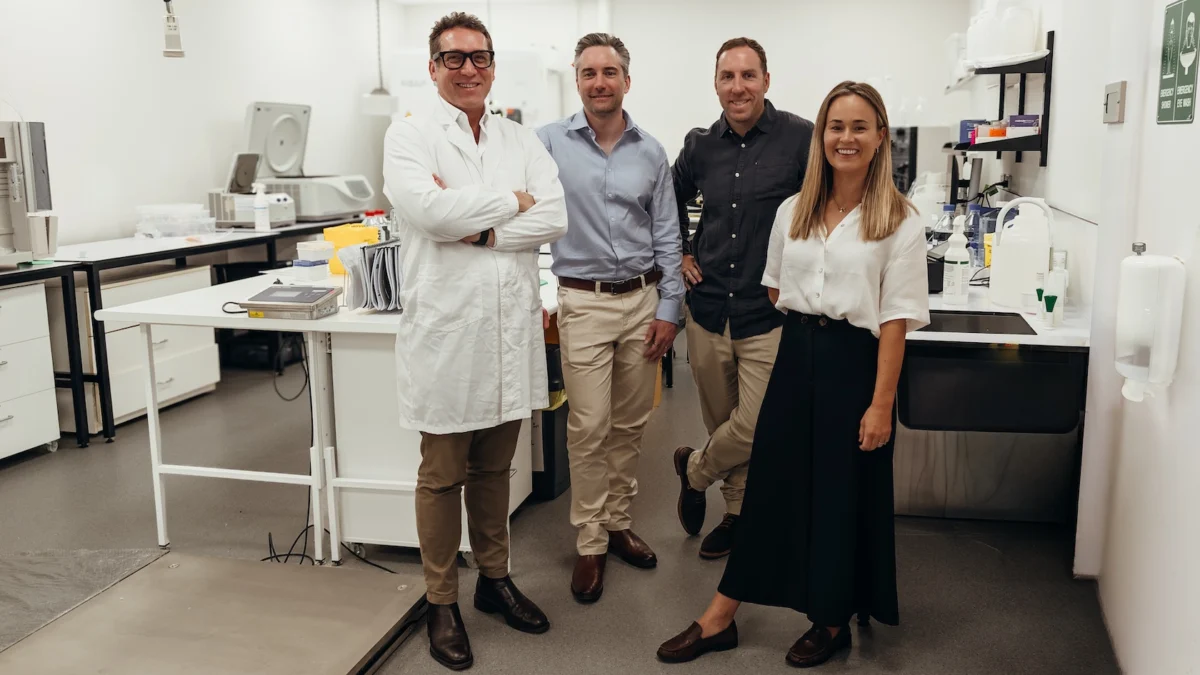
Gold Coast-based startup Bower is setting out to solve this persistent inefficiency, announcing today that it has successfully raised $2 million in pre-Seed funding. By integrating advanced wearable technology with a sophisticated AI-driven "operating system for research," the startup is poised to fundamentally change how scientific experiments are documented, analyzed, and replicated.
The Core Innovation: Capturing the Invisible
At the heart of Bower’s value proposition is a simple but transformative concept: the lab coat pocket is no longer the place for scientific records. Instead, Bower utilizes smart glasses to act as a silent, intelligent partner for the scientist.
The system functions as a comprehensive research assistant, capturing everything a scientist sees, says, and does during an experiment. By recording visual data, auditory observations, and real-time procedural changes, Bower’s AI ensures that no data point is lost to the chaos of the laboratory environment. This "operating system for research" effectively creates a digital twin of the experimental process, allowing for unprecedented levels of transparency and reproducibility.
Chronology: From Concept to Capital
The journey of Bower, while in its nascent stages, reflects the growing trend of Australian startups tackling "hard tech" problems.
- The Conceptual Phase: The founders identified that in many life science and chemical engineering laboratories, documentation remains analog or fragmented. Scientists often spend as much time recording data as they do performing the actual science, leading to burnout and data integrity issues.
- The Prototype Development: The team focused on the intersection of computer vision, Natural Language Processing (NLP), and hardware integration. By selecting wearable smart glasses, they removed the physical barrier of computers or tablets that usually clutter lab benches.
- The Funding Round: The pre-Seed round, which saw significant interest from the venture capital community, was led by Brisbane-based VC firm TEN13.
- Strategic Expansion: The $2 million infusion will be utilized to refine the AI models, scale the hardware deployment, and expand the team to meet the growing demand from research institutions eager to digitize their workflows.
Supporting Data and the Market Landscape
The "Reproducibility Crisis" in science is well-documented. According to industry studies, more than 70% of researchers have tried and failed to reproduce another scientist’s experiments, and more than half have failed to reproduce their own. The cost of these failed experiments runs into the billions of dollars annually, affecting pharmaceutical development, material science, and biotechnology sectors.
Bower’s solution addresses three specific failure points:
- Documentation Lag: Capturing data in real-time prevents the "memory bias" that occurs when scientists document their findings hours after an experiment concludes.
- Unstructured Knowledge: Much of what a scientist knows is "tacit knowledge"—the nuance of how to handle a specific piece of equipment or the subtle signs of a reaction starting. Bower’s video-based AI captures these nuances.
- Collaborative Friction: With a centralized "OS," research teams can share real-time insights, reducing the silos that often inhibit cross-departmental collaboration.
Investor Perspectives and Official Backing
The funding round was a significant vote of confidence in the Gold Coast tech ecosystem. TEN13, known for its disciplined approach to early-stage investing, led the charge.
"Bower is bridging the gap between human intuition and machine precision," said a spokesperson for the investment group. "By providing an AI layer that lives in the researcher’s field of view, they are essentially future-proofing the scientific method."
The round also saw participation from a robust group of strategic investors, including:
- Admiralty Capital Group
- Edale Capital
- Yu Liu: CTO of Heidi Health, bringing significant expertise in AI-driven healthcare solutions.
- Dean Kelly, Harry Uffindell, and Emma Ferrier: Key angel investors with experience in scaling high-growth ventures.
- Bernhard Hans Weigl: Serving as a strategic advisor, providing the necessary scientific grounding to ensure the technology meets the rigorous demands of laboratory environments.
The Implications: A New Paradigm for Research
The implications of Bower’s technology extend far beyond the laboratory bench. If successful, this platform could shorten the time-to-market for life-saving drugs by accelerating the R&D process.
Enhancing Reproducibility
The primary implication is the stabilization of scientific results. By having a persistent, searchable video and data record of every action taken during an experiment, Bower makes it significantly easier for peer reviewers and other scientists to verify results. This could set a new "gold standard" for research documentation, potentially becoming a requirement for grant-funded institutions.
The Evolution of the "AI Scientist"
As the AI gathers more data, it will move from a passive recording device to an active assistant. Imagine a scenario where the Bower OS alerts a researcher if they have deviated from a standard operating procedure (SOP) or suggests a more efficient method based on historical data from similar experiments. This is the ultimate goal: a symbiotic relationship where the AI augments human expertise, allowing scientists to focus on innovation rather than administration.
Industry Adoption and Scaling
The challenge for Bower will be adoption. Scientific culture is notoriously conservative, and integrating hardware into established workflows requires not just technical excellence but also significant cultural change management. The company will need to prove that the glasses are comfortable for long-term wear and that the software provides immediate value that outweighs the cost of the hardware.
Future Outlook: Beyond the Lab
While the current focus is on scientific laboratories, the technology has obvious applications in manufacturing, surgical training, and field engineering. By "capturing" human expertise through visual AI, Bower is effectively building a knowledge bank that can be used for training, troubleshooting, and process optimization.
As the company moves into its next phase of growth, the tech community will be watching closely. If Bower can successfully demonstrate that an "AI operating system" can solve the reproducibility crisis, it will not only secure its place as a market leader but also contribute to a fundamental shift in how humanity conducts scientific inquiry.
In an era where the speed of innovation is accelerating, Bower’s ability to turn the laboratory into a data-rich environment may prove to be one of the most important developments in modern research technology. The $2 million raise is just the beginning; the real test will be how quickly this Gold Coast startup can scale its vision from the bench to the global scientific stage.
