





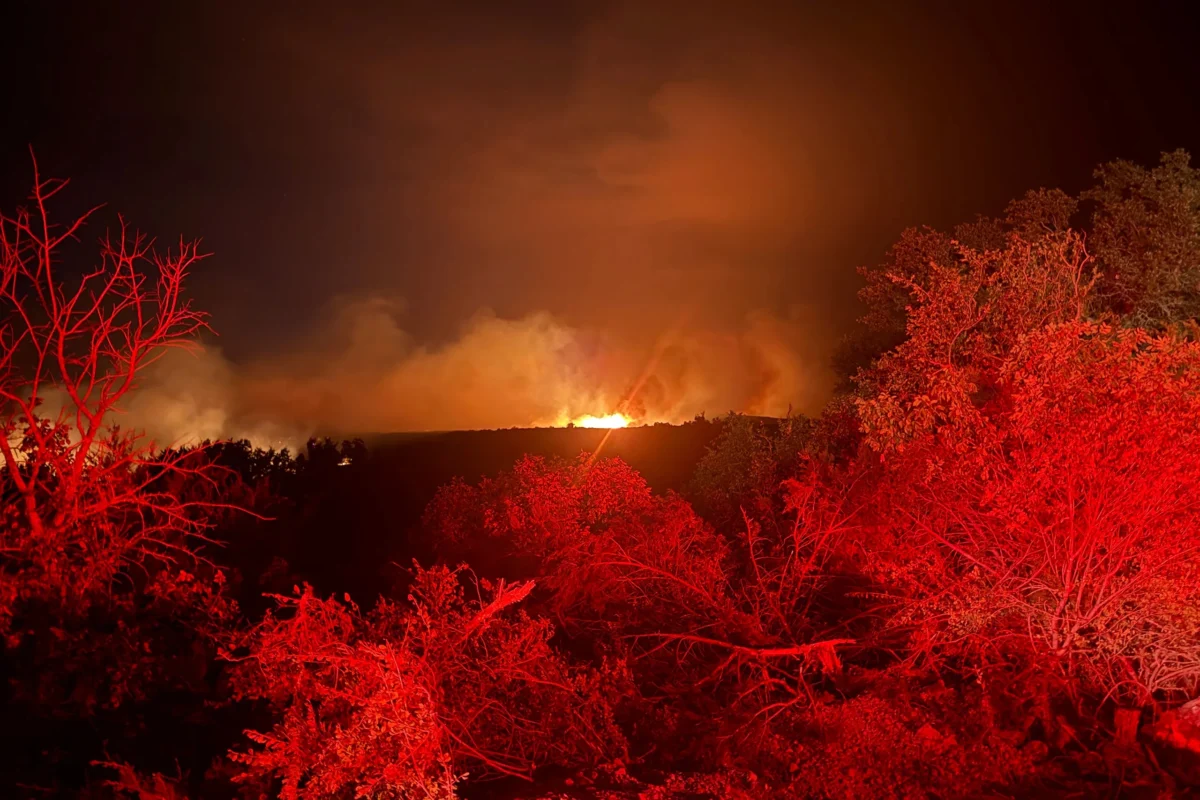
The Ross Fire has carved a path of devastation through the dry, rugged ranchlands of North Texas, cementing its place in the record books as one of the most significant wildfire events in the history of the Dallas-Fort Worth region. Over the course of just three days, the blaze has consumed 85,000 acres across Palo Pinto and Jack counties, creating a landscape of charred earth and thick, suffocating smoke. As state and local agencies rally to contain the inferno, the event serves as a stark reminder of the volatility of the Texas climate during the height of the summer heat.
A Rapid Expansion: The Chronology of Destruction
The fire ignited on Monday near Palo Pinto, finding immediate fuel in the parched, drought-stricken vegetation characteristic of the area. Driven by high winds and record-breaking temperatures, the fire exhibited what experts describe as "extreme fire behavior," moving with a speed that caught many off guard.
By Tuesday, the situation had deteriorated exponentially. Officials reported that the blaze had doubled in size within a matter of hours, ballooning to 50,000 acres. The sheer intensity of the fire, marked by "torching"—a phenomenon where trees ignite in groups, causing fire to leap through the canopy—rendered traditional containment efforts difficult. By Wednesday, the estimate had climbed to over 80,000 acres, solidifying its status as a catastrophic event.
As of Friday morning, the Texas A&M Forest Service reported that the fire was 26% contained. While the growth has slowed, the perimeter remains massive. Containment lines—man-made barriers intended to halt the fire’s progress—are being expanded daily, but the terrain’s ruggedness continues to pose a significant hurdle for crews on the ground.
Historical Context and Environmental Impact
To understand the scale of the Ross Fire, one must look at the historical data provided by the National Weather Service’s Fort Worth office. The blaze is currently the second-largest wildfire in the region’s recorded history. It sits behind only the infamous Possum Kingdom Complex Fire of April 2011, which razed 126,734 acres.
The environmental toll is already being felt. The fire has impacted various structures, most notably Worth Ranch, an 800-acre historic Scouting America camp situated along the banks of the Brazos River. While the full extent of the damage to the property remains under assessment, the loss of such a landmark underscores the fire’s reach into both the natural and cultural fabric of North Texas.
Across the state, the situation is increasingly precarious. The Texas A&M Forest Service is currently tracking 80 active fires that have scorched a combined total of over 90,700 acres. While many smaller fires have reached full containment, the sheer volume of incidents suggests a state under immense environmental pressure. The Ross Fire accounts for the vast majority of that total acreage, highlighting the unique severity of this specific incident.
Official Response: A Unified Front
The response to the Ross Fire has been a multi-agency operation, bringing together local rural fire departments, regional teams from the Dallas-Fort Worth metroplex, and the expert personnel of the Texas A&M Forest Service.
The operational priority remains clear: protecting human life, defending critical infrastructure, and establishing lines of defense that can eventually bring the fire to a complete standstill. The logistical support for these efforts was bolstered early on by Governor Greg Abbott, who announced that FEMA had approved a Fire Management Assistance Grant. This financial lifeline allows local agencies to recoup eligible firefighting costs, ensuring that the necessary resources—from water tankers to aerial support—remain available without being constrained by municipal budget exhaustion.
Evacuation orders and warnings have been fluid. On Tuesday, as the fire pushed northward, authorities issued mandatory evacuation orders for parts of Jack County. While those orders have since been rescinded as conditions improved, the message from officials remains one of extreme caution. Similarly, voluntary evacuation advisories for Palo Pinto County have been lifted, though residents remain on high alert, instructed to be prepared to evacuate at a moment’s notice should the wind shift or the fire’s behavior change.
To support those displaced, the Jacksboro Twin Lakes Recreation Center was converted into an emergency evacuation center. Furthermore, given the rural nature of the affected counties, authorities established livestock relocation centers, providing a critical service for ranchers and farmers needing to move cattle and other animals away from the path of the flames.
The Human Element: Health and Air Quality
Beyond the direct threat of the flames, the Ross Fire has created a secondary crisis: a public health hazard. Smoke from the blaze has drifted eastward and southeast, blanketing large swaths of North Texas in an orange, hazy fog.
Environmental regulators have issued stern warnings regarding air quality. The smoke, laden with particulate matter, poses a significant risk to the elderly, young children, and individuals with underlying respiratory conditions like asthma or chronic obstructive pulmonary disease (COPD). Officials have advised residents in affected areas to remain indoors and minimize outdoor activity until the air quality returns to safe levels.
The psychological toll on the community is also palpable. For residents living in rural Palo Pinto and Jack counties, the sight of a fire of this magnitude—one that eclipses almost everything seen in the last decade—brings a sense of unease. Road closures, including segments of U.S. 180 and Texas 254, have disrupted daily life and hampered movement, serving as a physical reminder of the fire’s ongoing presence.
Future Outlook: A Changing Climate
Looking toward the remainder of the week, the meteorological forecast offers a glimmer of hope. Temperatures in the Fort Worth area are expected to hover near the 100-degree mark, but the arrival of isolated showers provides a potential reprieve. The National Weather Service notes that the overall fire threat will likely decrease compared to the high-intensity conditions seen earlier in the week.
However, the Ross Fire is a symptom of a broader issue. The combination of intense, prolonged heat and dry, arid conditions creates a "fuel-loading" scenario where the landscape becomes essentially a powder keg. Even as crews battle the current fires, state leaders and environmental planners are beginning to discuss the long-term implications for the region. As wildfires grow more frequent and larger in scale, the need for robust forest management, advanced early-warning systems, and community preparedness programs becomes ever more critical.
The resilience of the North Texas community is being tested. While the efforts of the firefighters on the ground have been nothing short of heroic, the Ross Fire stands as a sobering reminder of nature’s power. As the sun sets over the smoldering landscape of Palo Pinto and Jack counties, the focus remains on containment, recovery, and the hope that the coming days will bring the rain and cooler temperatures necessary to finally put this historic chapter to rest.
This article first appeared on The Texas Tribune. All photos and reports are subject to verification by the Texas A&M Forest Service.
Topics: Trends, Catastrophe, Texas, Natural Disasters, Wildfire
