





In the rapidly evolving landscape of digital search, a quiet crisis of confidence is brewing. For years, search engine optimization (SEO) professionals have operated under the assumption that search rankings—whether in traditional Google blue links or AI-driven response snippets—are stable, objective metrics. However, new research and industry analysis suggest that AI visibility data is not a fixed reality, but rather a fluid, often noisy, reflection of probabilistic modeling.

As Large Language Models (LLMs) like SearchGPT, Gemini, and Perplexity become primary gateways for information, brands are scrambling to understand why their "visibility" fluctuates from day to day. A new preprint paper from IQRush, alongside independent corroboration from researchers at the University of St. Gallen, suggests that the industry must fundamentally rethink how it measures success in the age of AI.

The Myth of the Fixed Ranking
For decades, SEOs relied on rank-tracking tools that provided a snapshot of "where a site stands." If a site was in the top three for a keyword, it was a measurable, repeatable fact. In the era of Generative AI, this paradigm has collapsed.

AI models are inherently stochastic; they are designed to introduce randomness into their responses to avoid repetitive or robotic output. Because these models synthesize answers from a vast, shifting pool of data every time a query is submitted, they rarely return the exact same set of citations twice.

According to Ron Sielinski, co-founder of IQRush, the numbers seen on many AI visibility dashboards are not "fixed facts," but rather single, volatile snapshots of a moving target. The implication is significant: a perceived dip or spike in your brand’s AI citation share might not be the result of a brilliant strategy change or a catastrophic failure—it may simply be statistical noise.

The Quest for Statistical Significance
The IQRush paper, released in April 2026, introduces a "stopping rule" for data collection. The core challenge addressed is simple yet profound: How much data is required before an AI visibility ranking becomes trustworthy?

The research suggests that trust requires two conditions to be met simultaneously:

- Ordering Stability: The relative ranking of sites must cease to change as more data is collected.
- Clear Separation: The top-performing sites must maintain a statistical gap over their competitors that exceeds the margin of error.
In tests across 30 different platform-topic combinations, the number of queries required to achieve this stability ranged from 33 to 94. Notably, three of the tests failed to reach stability even after 125 queries, primarily on platforms where the top sites were too evenly matched to distinguish. This proves that there is no "one-size-fits-all" sample size; what works for one industry on one platform will be entirely inadequate for another.

Chronology of Discovery: From Skepticism to Science
The realization that AI search is inherently unstable did not happen overnight. It has been a cumulative process of discovery over the past 18 months:

- January 2026: SparkToro published findings demonstrating that AI tools provide different brand recommendations more than 99% of the time for the same query, highlighting the high degree of variability in LLM responses.
- March 2026: Google’s core update triggered massive volatility in search results, with Amsive reporting a shift away from aggregators like Reddit toward brand-owned sites—though this trend would prove temporary.
- April 2026: A wave of academic and industry research, including the IQRush paper and a separate study from the University of St. Gallen, formally introduced the concept of "repeated measurement" as the only viable way to extract signal from the noise of AI search.
- May 2026: SE Ranking’s analysis of 100,000 keywords showed that while overall volatility remained high, Reddit’s presence in top-tier results surged across almost all niches, proving that while individual queries are noisy, aggregate trends can still be identified with sufficient data.
Supporting Data: What Drives Visibility?
While rankings may be noisy, the underlying signals that influence AI engines are becoming clearer. A comprehensive study by AirOps and Kevin Indig identified three primary pillars of AI search visibility:

1. The Freshness Mandate
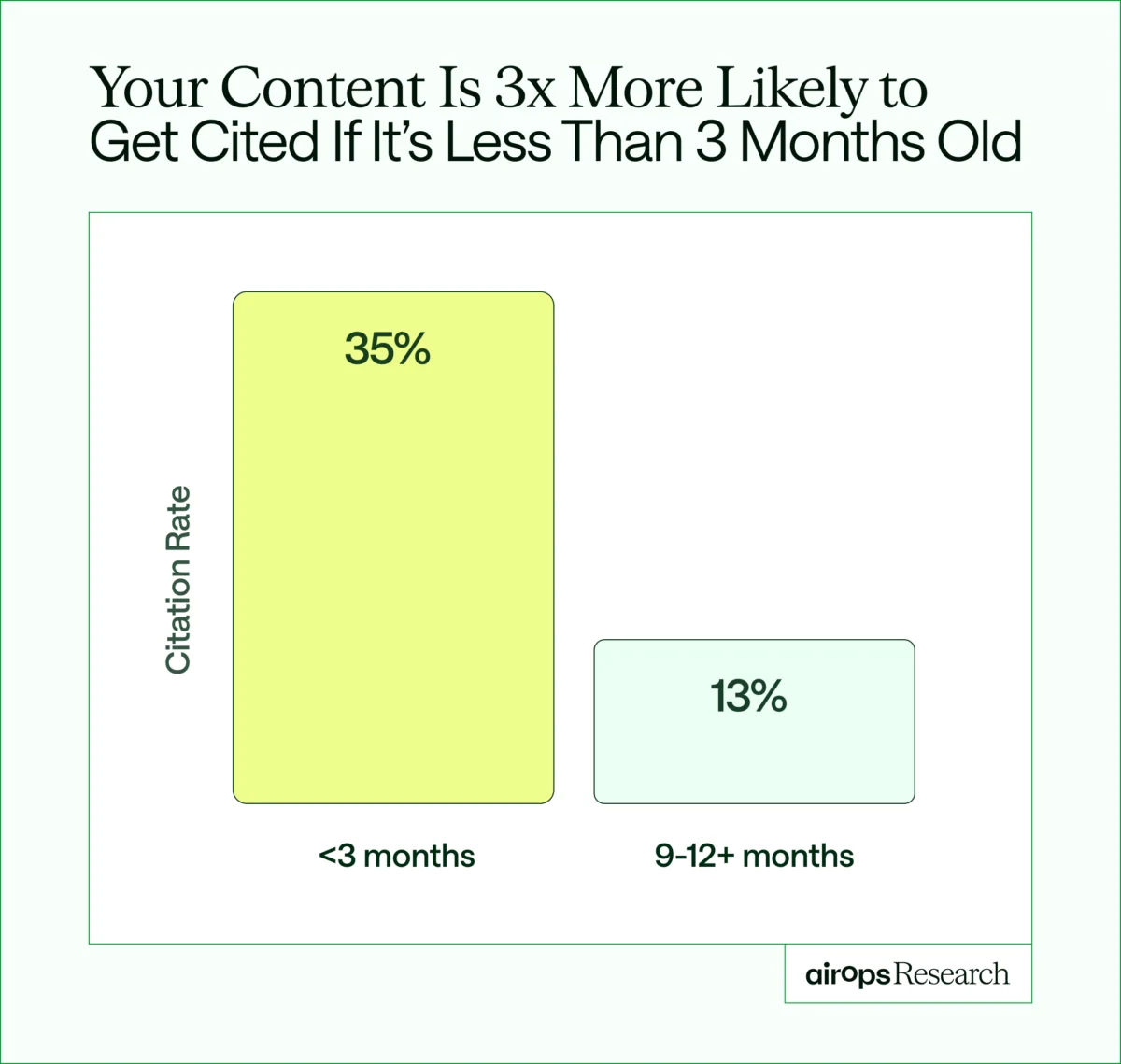
AI models prioritize current information. The data indicates that pages not updated on a quarterly basis are three times more likely to lose their citation status in AI answers. For commercial and transactional queries, this is even more critical; models prioritize pages that reflect the latest pricing, features, and availability.

2. Structured Clarity
AI systems are not just reading text; they are parsing information structures. Pages that utilize clean, sequential heading hierarchies (H1, H2, H3) and robust schema markup are 2.8 times more likely to be cited. Structure acts as a signpost for the model, allowing it to interpret the content’s relevance quickly.

3. The Trust Layer: Off-site Validation
Perhaps the most counterintuitive finding is the importance of "off-site" presence. Approximately 85% of brand mentions in AI search originate from third-party domains rather than the brand’s own website. Community platforms like Reddit, LinkedIn, and niche forums act as a "trust layer." AI models use these spaces to validate whether a brand is actually recommended by peers, rather than just what the brand claims about itself in its own marketing copy.

Implications for Reporting and Strategy
The shift toward AI-driven search demands a departure from the "single-number" reporting style of the past. If your dashboard reports a 3% increase in visibility, you must ask: Is this a statistically significant shift, or just a fluctuation within the margin of error?

Reporting with a Margin of Error
Industry experts, including Rand Fishkin, now advise that teams should demand their vendors "show their math." Effective reporting should include a range of potential visibility, rather than a false decimal point of precision. If a tool cannot tell you that there is "not enough data" to make a definitive claim, it may be providing a false sense of security.

The Content Audit 2.0
Corey Morris, an SEO strategist, advocates for a "Performance and Purpose-Driven" content audit. In this model, content is no longer judged solely by its organic traffic but by its ability to act as an authoritative answer.

- Purpose: Does this content serve a clear business goal?
- Performance: Is it contributing to the conversion funnel, or is it merely "bloat"?
- Potential: Does it contain the depth and structure required for an LLM to cite it as a definitive source?
The Future of Brand Discovery
As we look toward the latter half of 2026, the divide between YMYL (Your Money, Your Life) categories and experience-led niches remains stark. While healthcare and financial sectors are seeing more conservative, stabilized results, niches involving pets, hobbies, and personal gear are seeing massive swings as Reddit and other UGC sites solidify their role as the "peer validation" engine of the web.

The ultimate takeaway for brands is that visibility is no longer a game of "ranking" in the traditional sense. It is a game of "presence." You are not fighting for a slot on page one; you are building a profile of signals—freshness, structure, and community authority—that makes it mathematically probable for an AI to select your brand as a valid answer when it constructs its response.

The era of the "one-off" SEO tactic is over. In the age of stochastic search, success belongs to those who build consistent, authoritative, and structurally clear signals that can withstand the noise of an ever-changing digital landscape. As the plumbing of the web continues to integrate LLMs, the job of the marketer is to stop chasing the decimal point and start mastering the signal.
