





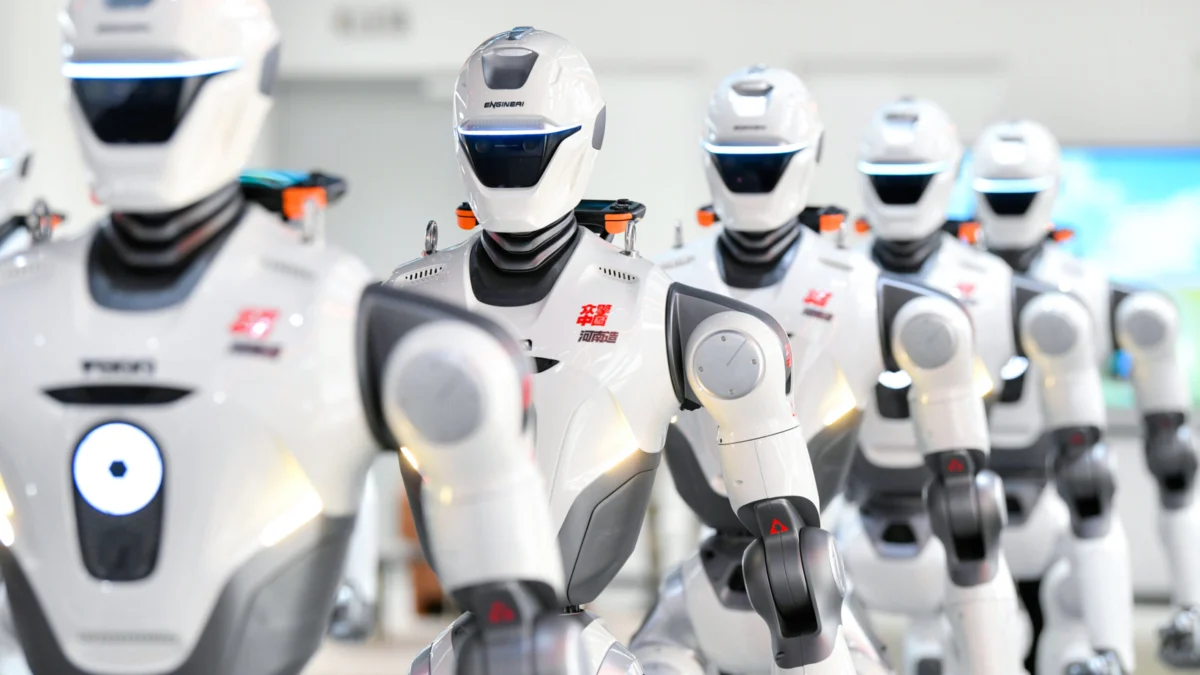
In a move that marks a tectonic shift in the landscape of global technology, the Federal Trade Commission (FTC) issued a sweeping ban last week on the import of advanced foreign-made robotics. The directive, which targets humanoids, quadrupeds, and a variety of wheeled autonomous systems, represents the most aggressive intervention yet in the burgeoning field of robotics. Citing national security imperatives and the necessity of domestic industrial self-sufficiency, the commission has effectively drawn a "silicon curtain" around the United States, forcing a recalibration of how American companies, researchers, and consumers interact with the hardware that will define the next decade of automation.
The Mandate: National Security and Strategic Sovereignty
The FTC’s ruling, which has caught both Silicon Valley and the robotics research community off-guard, rests on two pillars of justification. The first is the concern over data proliferation. As robotics transition from simple industrial arms to sophisticated, AI-driven agents capable of navigating sensitive environments—ranging from the privacy of domestic living rooms to the high-security perimeters of government facilities—the volume of data these machines collect has become a point of alarm. The Commission argues that foreign-made robots represent a decentralized network of sensors that could theoretically transmit proprietary or sensitive intelligence back to hostile actors.
The second pillar is industrial protectionism. For the current administration, the robotics sector is no longer an ancillary technology; it is the physical manifestation of the Artificial Intelligence revolution. By restricting the influx of cheaper, mass-produced foreign units, the FTC aims to provide a "protective incubator" for domestic robotics startups that are currently struggling to scale. The goal is to force a vertical integration of the supply chain, ensuring that the hardware powering the next generation of American infrastructure is manufactured on American soil.
A Chronology of Escalation: From Solar Panels to Humanoids
To understand the current ban, one must view it as the latest chapter in a long-standing trade playbook. For years, the U.S. government has grappled with the "China Challenge," specifically in sectors where rapid Chinese industrial scaling leads to a glut of low-cost, high-capability technology.
- 2010s: The Energy Transition: The U.S. began imposing tariffs on solar panels, arguing that state-subsidized Chinese manufacturing was destroying domestic solar innovation.
- 2020s: The EV and Drone Wars: As electric vehicles and commercial drones became strategic assets, the administration introduced strict procurement rules, effectively barring foreign-made units from federal contracts.
- 2026: The AI-Robotics Pivot: The current ban represents an expansion of this philosophy. Following reports that the White House is considering restrictions on open-source Chinese AI models—which analysts estimate could cost businesses $25 billion in lost efficiency savings—the FTC’s robotics ruling indicates that the administration is now willing to intervene at the earliest stages of industrial development.
This evolution tracks a clear trajectory: the U.S. government no longer views these technologies as mere consumer goods, but as essential components of national power that must be insulated from the volatility of international market dynamics.
The Data Landscape: Cybersecurity as a Catalyst
The push for this ruling was bolstered by high-profile concerns regarding the digital hygiene of autonomous systems. In a supporting document released alongside the ruling, the FTC highlighted a security vulnerability involving a fleet of 7,000 robot vacuum cleaners, which were compromised by an unauthorized actor, turning mundane household appliances into potential surveillance or disruption tools.
Gavin Kenneally, CEO of Ghost Robotics—a firm specializing in four-legged inspection robots—has become a prominent voice in favor of the ban. "The cybersecurity risks associated with foreign-made hardware are not hypothetical," Kenneally noted in a recent correspondence. "If this announcement serves as a catalyst for stronger cybersecurity protocols and creates a more level, secure competitive environment for domestic manufacturers, then it is ultimately a net positive for both our customers and the industry’s long-term sustainability."
The "Innovation Paradox": A Flaw in the Strategy?
While the administration’s strategy aims to bolster domestic industry, critics argue it may inadvertently cripple the very research ecosystem it seeks to protect. The robotics field is currently defined by an "innovation paradox": the most advanced software developers in the U.S. are heavily reliant on affordable, high-quality hardware imported from China to test their algorithms.
Aaron Prather, director of market intelligence for the Association for Advancing Automation (A3), points to a stark reality within academic circles. "Our internal review found that approximately 90% of robotics research papers published by U.S. universities in the last year utilized hardware from Unitree," Prather notes. "These Chinese models offer a price-to-capability ratio that is currently unmatched by any American counterpart. By cutting off access to these platforms, we are creating a significant bottleneck for domestic researchers."
The economic disparity is indeed cavernous. A high-end four-legged robot from Unitree can be purchased for roughly $4,600, whereas a functionally comparable unit from a U.S. industry leader like Boston Dynamics can cost upwards of $278,000. For university labs operating on limited grant funding, the price gap is not just a line item—it is the difference between conducting a meaningful study and being unable to start the research at all.
Industry Implications: A Widening Gap?
The global robotics race is currently moving at two different speeds. Unitree, the Chinese titan of the industry, is moving toward a public listing this week with a valuation approaching $6 billion. Their ability to manufacture at scale has allowed them to capture significant market share in research, education, and light-duty industrial applications.
Conversely, American companies like Figure and 1X are still in the nascent stages of scaling. While they represent the cutting edge of AI-integrated robotics, their current output is measured in dozens or hundreds of units rather than the thousands being deployed by overseas competitors.
However, the U.S. tech sector is not sitting idle. The recent announcement from Google DeepMind regarding a new AI model capable of teaching humanoids complex tasks—such as manipulating delicate objects like trash bags—demonstrates that the software advantage remains firmly in the American camp. The bottleneck is not the "brain" of the robot, but the "body." If the U.S. cannot bridge the hardware-cost gap, the software innovations developed in American labs may eventually be deployed on hardware manufactured elsewhere, rendering the FTC’s current protectionist efforts moot.
Conclusion: The Strategic Frontier
The practical impact of the FTC’s order remains shrouded in ambiguity, largely due to the extensive list of carve-outs and exceptions included in the text. However, the symbolic message is unmistakable: Washington has identified humanoids and advanced robotics as a primary strategic frontier.
For a field that only a few years ago was largely relegated to the realm of laboratory oddities or viral videos of robots stumbling over stage equipment, this represents a profound promotion in status. The administration is signaling that these machines are the future of labor, defense, and domestic infrastructure.
Whether this protectionist strategy will foster a new generation of American robotics giants or inadvertently stifle the progress of domestic AI remains the central debate of the year. As the industry watches the market reaction to the upcoming IPOs and the academic community struggles to adjust to the loss of affordable research tools, one thing is certain: the era of the "global robot" has ended, and the era of "nationalized automation" has officially begun. The challenge for the U.S. is now to prove that it can build these machines as efficiently as it can imagine them.
