


By Max Garland | October 30, 2026
In an era where supply chain transparency is no longer a luxury but a fundamental requirement for commercial survival, United Parcel Service (UPS) is accelerating its technological transformation. The logistics giant has announced a significant expansion of its Radio-Frequency Identification (RFID) infrastructure, a move CEO Carol Tomé projects will benefit approximately 6 million packages per day by 2027. This initiative represents a cornerstone of the company’s broader strategy to modernize its network, eliminate manual labor bottlenecks, and provide enterprise clients with unprecedented granular visibility into their inbound logistics.
The Evolution of the Smart Network: Main Facts
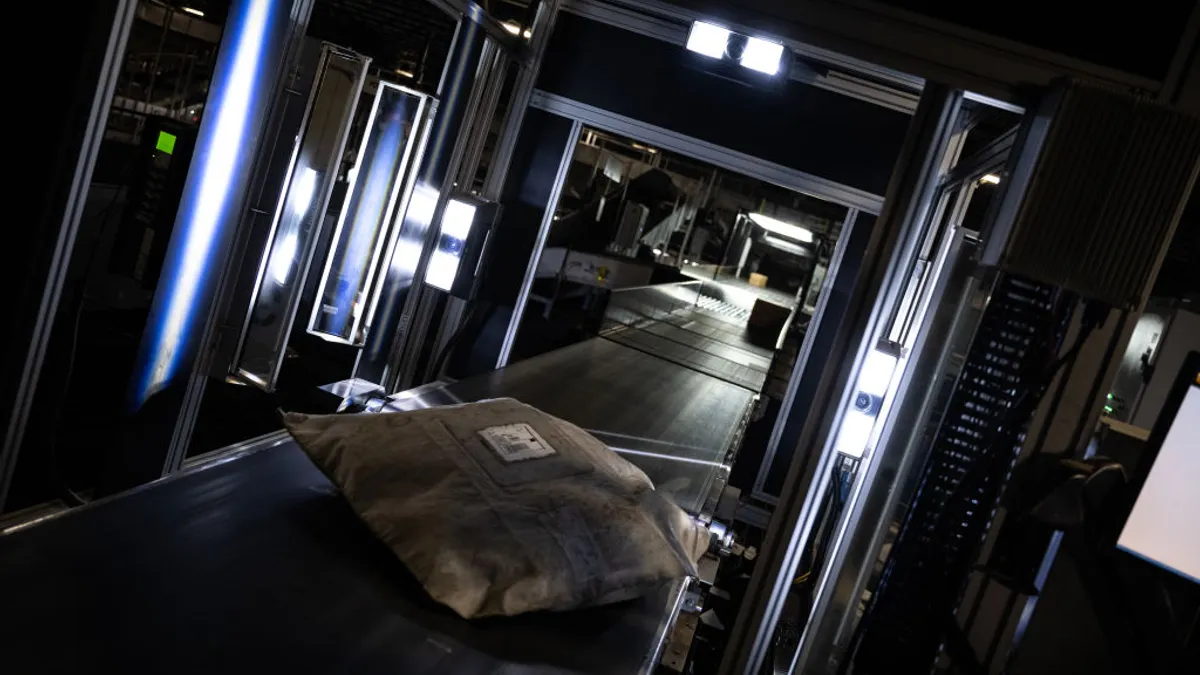
The shift toward RFID technology marks a departure from traditional, labor-intensive package tracking methods. Unlike standard barcodes, which require a direct line-of-sight scan by a human or a stationary automated scanner, RFID tags transmit data wirelessly. This allows UPS to track packages in real-time as they move through sorting facilities, transit hubs, and onto delivery vehicles.
For the modern shipper, this translates to "early visibility." When a package is labeled with an RFID tag at the point of origin—such as a large-scale retail distribution center—the UPS network automatically registers the item the moment it is picked up. By removing the need for physical "hand-scans" at every junction, UPS is not only streamlining its internal operations but also providing its customers with a digital footprint that begins the moment a parcel leaves the shelf.
The scale of this operation is immense. By the end of 2026, UPS projects it will have processed more than 4 billion RFID-enabled packages. This deployment is not confined to major industrial hubs; it has trickled down to the retail level, with RFID labeling now being integrated into packages dropped off at The UPS Store locations nationwide.

A Chronology of Technological Integration
UPS’s journey toward an RFID-driven network did not happen overnight. The carrier has spent the last several years methodically retrofitting its massive physical infrastructure to support high-frequency data transmission.
- Pre-2024: UPS began testing RFID feasibility in select urban "smart" hubs to determine if the technology could survive the high-speed sorting environments of facilities like the Centennial Ground Hub in Louisville, Kentucky.
- January 2025: During an earnings call, executive leadership identified RFID as a key competitive advantage, specifically noting its appeal to large U.S. enterprise retailers. The conversation shifted from "testing" to "deployment" as a core commercial strategy.
- Late 2025: The company reported that roughly 66.5% of its total package volume was flowing through automated processes. This benchmark served as the foundation for the current, more aggressive rollout.
- October 2026: UPS announces the path toward the 2027 milestone of 6 million RFID-tagged packages per day, signaling that the technology is now a mature, fully integrated component of the company’s "Network of the Future" strategy.
Supporting Data: The Efficiency Mandate
The push for RFID is intrinsically linked to the carrier’s overarching goal of network automation. As labor costs rise and the complexity of e-commerce returns increases, the "manual scan" has become a legacy cost that UPS is eager to retire.
According to data released by the company, the transition to automated sorting—bolstered by RFID—has been steady. By the fourth quarter of 2026, nearly 70% of all UPS volume will flow through an automated process. This represents a significant year-over-year improvement, confirming that the company’s capital expenditure on facility modernization is yielding tangible throughput gains.
Furthermore, the elimination of "billions of manual scans" is not merely a statistical achievement; it is a labor productivity play. In a network that handles tens of millions of packages daily, the seconds saved per package by removing manual scanning add up to thousands of work hours regained. These hours can be redirected toward higher-value tasks, such as loading optimization, complex exception handling, and customer service initiatives.
Official Responses and Strategic Rationale
During the most recent investor updates, CEO Carol Tomé emphasized that the current network is better positioned for holiday peaks than at any point in the company’s history. "As we head into peak, our network is more automated, more efficient and better positioned than ever to handle the holiday surge," Tomé noted.

The strategic rationale is echoed by Matt Guffey, EVP and chief U.S. domestic officer. Guffey has framed the RFID rollout as a "winning" strategy for the company’s commercial segment. "Large U.S. enterprise retailers are drawn to RFID offerings because they have inbound visibility to what’s hitting their docks," Guffey explained. "It allows them to spread their workforce and manage how they inbound that volume."
In essence, UPS is selling more than just transportation; it is selling logistics intelligence. By allowing a retailer to know exactly what is on a truck before it arrives at a loading dock, UPS is helping those retailers manage their own labor costs and inventory turnover, effectively making UPS an indispensable partner in the retail value chain.
Implications for the Future of Logistics
The transition to an RFID-centric model carries profound implications for the logistics sector at large:
1. The Death of the "Black Box"
For decades, the transit phase of a package was often a "black box"—the shipper knew when it was sent and when it arrived, but had limited data on its status in between. RFID brings the middle mile into the light. This level of transparency creates a new standard for customer expectations, pressuring competitors to match this visibility or risk losing market share to more tech-forward carriers.
2. Workforce Transformation
While automation often raises concerns about labor displacement, the narrative at UPS centers on "re-tasking." As the company automates the tracking process, the role of the logistics worker evolves. The focus shifts from the repetitive, monotonous task of scanning labels to roles that require cognitive input and exception management. The human-machine collaboration is becoming the new industry standard.

3. Sustainability and Waste Reduction
Better tracking is also a sustainability win. RFID enables more accurate route optimization and reduces the likelihood of lost packages. When a system knows exactly where a package is within a facility at all times, the company can avoid "mis-sorts" that require additional fuel and energy to correct. By optimizing the path of a package, UPS inherently optimizes its carbon footprint.
4. Competitive Moat
The capital investment required to retro-fit a national network with RFID sensors is immense. For UPS, this creates a formidable "moat." While smaller players may be able to implement RFID in a single warehouse, doing so across a global network of thousands of hubs is a massive undertaking that favors the incumbent. By executing this shift effectively, UPS is cementing its position as the premier choice for enterprise clients who require high-fidelity data.
Conclusion
As the 2026 holiday peak approaches, UPS stands at the precipice of a new operational reality. The integration of RFID is not just a hardware upgrade; it is a fundamental shift in how the company communicates with its network and its customers. With 6 million packages per day expected to be RFID-enabled by 2027, the company is demonstrating that the future of logistics is not just about moving boxes—it is about moving data.
By prioritizing automation and visibility, UPS is not merely responding to current market demands; it is actively shaping them. As retailers continue to demand real-time intelligence to manage their own volatile supply chains, the "smart" network that UPS is building today will likely become the standard for the logistics infrastructure of tomorrow.
