





This special report examines the intersection of emerging legislative "endgames," the encroaching shadow of global surveillance, and the volatile landscape of modern artificial intelligence.
I. The Generational Tobacco Ban: A New Model for Public Health
The United Kingdom’s recent enactment of a generational sales ban on tobacco products marks a seismic shift in public health strategy. Often referred to as an "endgame" approach, this policy moves beyond traditional harm reduction—such as increased taxation or the implementation of graphic health warnings—to pursue the total eradication of tobacco consumption for future generations.
The logic is simple yet radical: by ensuring that tobacco products can never legally be sold to anyone born after a certain date, the government effectively creates a "smoke-free" cohort that grows in perpetuity. As the parent of two young children in an era where AI literacy and digital-first homework are standard, the contrast between my own upbringing—where smoking was an omnipresent cultural fixture—and the current reality is striking. My children are repulsed by the very idea of cigarettes.
While critics argue that such bans may inadvertently fuel illicit markets or prove unenforceable, the shift represents a societal evolution. What was once considered a radical policy is now being framed as a necessary public health evolution.
II. The Spyware Paradox: When the Watchers Are Watched
In a chilling display of the current technological threat landscape, the European Union has been confronted with a profound security failure. Stelios Kouloglou, an EU lawmaker tasked with investigating the proliferation and abuse of Pegasus spyware, has himself been identified as a victim of that same technology.
The Anatomy of the Hack
According to reports from Citizen Lab, the Pegasus software—a sophisticated suite capable of total device takeover—was discovered on Kouloglou’s phone. The revelation has sent shockwaves through Brussels, casting a long shadow over the efficacy of the EU’s oversight committees.
Chronology of the Crisis
- Initial Investigation: The EU launched a formal inquiry into Pegasus abuses following reports of its deployment against journalists, activists, and political dissidents globally.
- The Infiltration: Despite his role as an investigator, Kouloglou’s device was compromised, demonstrating the extreme difficulty in securing hardware against state-level or high-end commercial cyber-espionage.
- The Disclosure: Citizen Lab’s forensic analysis confirmed the presence of the spyware, transforming a professional investigation into a deeply personal security crisis.
- Systemic Failure: Critics, including major media outlets like The Guardian, have accused the EU of "looking the other way" regarding spyware abuses, suggesting that the bloc’s internal regulations are insufficient to curtail the industry’s reach.
III. The AI Frontier: Regulation, Cost, and Geopolitics
As artificial intelligence transitions from an experimental novelty to a foundational economic utility, the tensions surrounding its development, deployment, and access are reaching a breaking point.
Anthropic and the Great Firewall
Anthropic, the developer behind the Claude AI model, is currently engaged in a high-stakes "cat-and-mouse" game with users in China. By closing loopholes that allowed access via VPNs, relay services, and proxy accounts, the company is attempting to enforce strict geolocation compliance. Despite these efforts, Chinese users continue to find innovative workarounds, highlighting the impossibility of containing powerful, internet-accessible software within rigid borders.
The Economic Throttling of AI
A fascinating trend has emerged in the corporate sector: the "throttling" of AI usage. Because high-end inference remains prohibitively expensive, companies are increasingly pleading with—or forcing—employees to rely on less powerful, more cost-effective models. Tesla, for instance, has capped its internal AI spending at $200 per week per employee. This reality check suggests that the "AI gold rush" is hitting a fiscal ceiling, where productivity gains must now be weighed against the massive energy and compute costs required to run state-of-the-art models.
Geopolitical Rhetoric and the "AI Action Plan"
The intersection of politics and AI has become increasingly volatile. Donald Trump’s recent purchase of significant stakes in major tech firms—timed suspiciously with the unveiling of his "AI Action Plan"—has drawn sharp criticism. Many analysts argue that the plan serves as a distraction from the broader systemic risks posed by unchecked AI development. Meanwhile, billionaire investor Peter Thiel has escalated the rhetoric, claiming that Pope Leo XIV is effectively "working for the Chinese Communists" by advocating for AI regulation that, in Thiel’s view, disproportionately benefits Chinese interests.

IV. Infrastructure and the Climate Conflict
The physical footprint of the digital age is clashing with the realities of a warming planet. The U.S. Department of Energy is currently pushing for data centers to rely on backup power sources during extreme heat waves, aiming to prioritize residential air conditioning and grid stability.
This policy creates a tension between the need for massive computing power and the fragility of the power grid. As local communities increasingly push back against the environmental impact—including water usage and noise pollution—associated with massive server farms, the "data center in my backyard" (DIMBY) movement is gaining political traction.
V. Implications: A World of "Mystery Drones" and Digital Erasure
Perhaps the most unsettling development in recent months is the emergence of "mystery drone" swarms. In December, a squadron of 15 to 20 drones breached restricted airspace near a sensitive military installation outside Boston. Despite the mobilization of federal law enforcement, the operators remain anonymous.
The Rise of Citizen Expertise
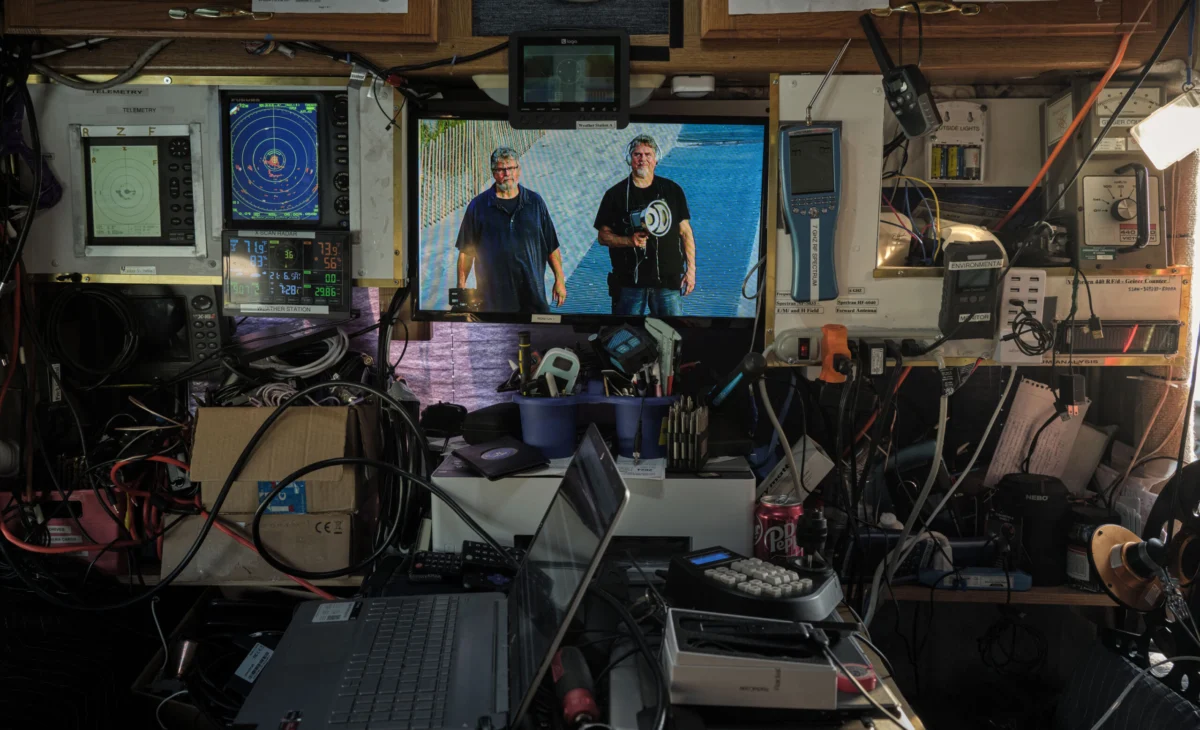
With the Pentagon and intelligence community offering little clarity, the responsibility for monitoring these incursions has partially fallen to civilians. Twin brothers from Long Island, known for their work in tracking unexplained aerial phenomena, have built a mobile field lab to assist investigators. The fact that the FBI is now soliciting support from civilian hobbyists speaks to a dangerous gap in national security and technological preparedness.
The Cost of Innovation
Technological progress is now accompanied by a "subscription tax." Meta’s decision to transition its "Conversation Focus" feature on smart glasses from a free utility to a $19.99 monthly subscription signals a new era in consumer hardware. The device you own is no longer fully yours; it is a platform that requires ongoing payments to unlock its core functionality.
VI. Concluding Thoughts: Preserving the Human Narrative
In the midst of these developments, the short story You Do Your Own Time by Elizabeth Bear serves as a poignant allegory. In the story, librarians act as the last line of defense, guarding a solid-state drive full of histories and biographies of those erased by state-mandated digital oblivion.
The story asks a fundamental question: What is left behind when a name is erased from the system? In an age of total surveillance, where names, locations, and political leanings are tracked with terrifying precision, the act of preserving memory becomes an act of rebellion.
Whether we are discussing the generational ban of a physical product like tobacco or the digital censorship of AI models across borders, we are seeing a shift toward a more controlled, monitored, and regulated existence. As Yann LeCun, founder of AMI Labs, recently noted, "We don’t have robots that are nearly as good at understanding the physical world as a rat."
We are currently building systems that can track, regulate, and optimize our lives with unprecedented efficiency, yet we remain remarkably vulnerable to the physical world—to the heat waves that threaten our power grids, to the drones we cannot identify, and to the spyware that turns our tools of communication into tools of capture.
As we navigate this decade, the challenge is not merely to build better technology, but to ensure that in our quest for control, we do not erase the very humanity we are trying to protect. We must remain vigilant, questioning the "endgames" presented to us and ensuring that the digital future remains a space of autonomy, rather than a silent, monitored archive.
