





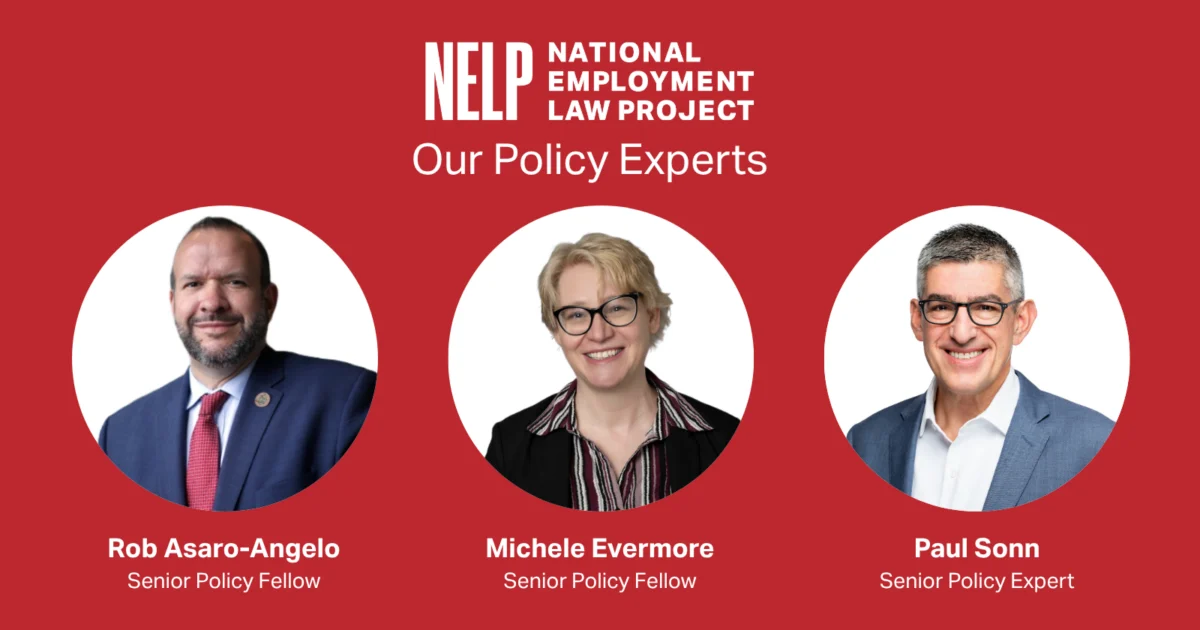
WASHINGTON, D.C. — July 1, 2026 — As the American labor market faces an unprecedented intersection of technological disruption, wage stagnation, and shifting enforcement landscapes, the National Employment Law Project (NELP) has announced a major strategic realignment. In a move designed to bolster its capacity to influence federal and state labor policy, the organization has appointed three nationally recognized policy experts to senior leadership roles.
This leadership expansion marks a deliberate pivot for the 57-year-old advocacy group. By tasking these veteran architects of labor reform with spearheading new initiatives, NELP aims to modernize the nation’s social safety net and create robust legal frameworks capable of regulating the "AI-driven" workplace of the future.
The Strategic Vision: A New Era for Worker Protections
The announcement, released by NELP President and CEO Rebecca Dixon, emphasizes that the organization is moving beyond traditional advocacy to embrace a more proactive, "innovation-led" policy model.
"We are thrilled to have such extraordinary leaders as Rob, Michele, and Paul taking on these significant new roles," said Dixon. "Among the nation’s most renowned worker advocates, each is an accomplished architect of both visionary policies and winning campaigns. Together, they will be the nucleus of a team that advances transformative policies for workers across the country."
The core mission of this newly fortified team is three-fold:
- Modernizing Social Insurance: Addressing the vulnerabilities exposed by the 2020s and the increasing prevalence of precarious, algorithm-managed work.
- Strengthening Enforcement: Moving from reactive legal challenges to proactive, technology-enabled state enforcement systems.
- Wages and Affordability: Developing a new generation of policy solutions that decouple worker economic security from inflationary pressures.
Leadership Profiles: The Architects of Reform
The appointments represent a "who’s who" of American labor policy, bringing together a mix of former government regulators, academic researchers, and grassroots campaign strategists.
Rob Asaro-Angelo: Senior Policy Fellow for Worker-First Protections
Asaro-Angelo joins NELP following an influential eight-year tenure as Commissioner of the New Jersey Department of Labor and Workforce Development (NJDOL). Under his leadership, New Jersey became a laboratory for progressive labor policy, implementing a $15 minimum wage and groundbreaking protections for temporary and domestic workers. At NELP, his focus will be on the "nuts and bolts" of labor law: wage theft prevention and the optimization of state-level enforcement agencies. His experience as a public sector executive will be instrumental in helping NELP bridge the gap between policy design and the practical realities of agency implementation.
Michele Evermore: Senior Policy Fellow for Economic Security and Worker Transitions
Returning to the NELP fold, Evermore is widely regarded as the nation’s foremost expert on Unemployment Insurance (UI). Having served in the Biden administration’s Office of Unemployment Insurance Modernization, she is uniquely positioned to address the obsolescence of current UI systems. Her work will focus on creating a more resilient safety net that can withstand economic shocks and facilitate smoother transitions for workers displaced by AI and automation—a key concern for policymakers in the mid-2020s.
Paul Sonn: Senior Policy Expert for Wages and Affordability
A long-time fixture at NELP, Sonn has been a primary architect behind the "Fight for $15" and the surge in local minimum wage laws. His new role focuses on the next frontier: affordability. As the cost of living continues to fluctuate, Sonn will lead the development of policy frameworks that ensure wages are not merely "fair" on paper, but sufficient to maintain economic security in a high-cost economy. Furthermore, he is tasked with spearheading NELP’s efforts to establish "just cause" job protections, ensuring that as AI changes the nature of work, it does not erode the foundational rights of the workforce.
Chronology of Influence: From Local Campaigns to Federal Policy
The trajectory of these leaders mirrors the evolution of the American labor movement over the last two decades.
- 2000–2010: The era of the "Living Wage" movement. Paul Sonn, working through the Brennan Center and later NELP, began codifying local minimum wage standards, effectively shifting the Overton Window on what constitutes a fair day’s pay.
- 2010–2020: The rise of the "Fight for $15." This period saw the professionalization of labor advocacy. NELP played a critical role in providing the data and legal research that allowed municipal and state governments to raise wage floors without triggering the projected economic catastrophes predicted by industry lobbyists.
- 2020–2024: The COVID-19 stress test. Michele Evermore’s work during this period highlighted the extreme fragility of the U.S. UI system. Her efforts helped secure historic, albeit temporary, expansions of benefits, proving that social insurance can be scaled rapidly if the political will exists.
- 2024–2026: The New Jersey Model. Rob Asaro-Angelo’s tenure in New Jersey showcased how a state labor department could serve as a proactive defender of workers’ rights, from domestic worker protections to aggressive anti-wage-theft enforcement.
- July 2026: The current pivot. By consolidating these experts, NELP is signaling a shift toward a more integrated approach that combines legal theory, agency-level enforcement, and macroeconomic policy.
Supporting Data: Why This Shift Matters
The necessity of this strategic realignment is underscored by the current economic landscape. According to labor market data from 2025 and 2026, the primary threats to worker stability are no longer just wage-related, but systemic:
- Algorithmic Management: A growing percentage of the workforce, particularly in logistics and service sectors, is now managed by AI. This has led to a rise in "invisible" wage theft, where algorithms incorrectly calculate hours or misclassify workers to avoid benefit obligations.
- Structural Under-enforcement: Research consistently shows that even when strong labor laws are passed, they are only as effective as the agencies enforcing them. Asaro-Angelo’s focus on "maximizing existing enforcement capacity" addresses the reality that many state agencies are chronically underfunded.
- The UI Gap: The U.S. unemployment system remains fragmented and technically antiquated. Evermore’s focus on "modernization" is aimed at closing the gap between the speed of the modern digital economy and the sluggish, paper-heavy systems that currently delay support for the unemployed.
Official Responses and Industry Implications
The announcement has been met with optimism by progressive labor circles, though industry groups have signaled that they will be watching these appointments closely.
"The appointment of these three leaders is a signal that NELP is preparing for the long-term battles of the next decade," says labor historian Dr. Elena Vance. "By focusing on both the enforcement of existing laws and the creation of new frameworks for AI, they are positioning themselves at the center of the most important regulatory debates of our time."
While the business community has historically pushed back against the types of policies NELP advocates—such as "just cause" protections and higher minimum wages—there is a growing recognition among some corporate leaders that a stable, well-protected workforce is essential for long-term productivity. Whether these new leadership appointments will lead to a more collaborative environment or a period of intensified litigation remains to be seen.
Implications for the Future of Work
The implications of NELP’s strategic pivot are significant for both policymakers and the workforce:
- A Shift Toward "Just Cause" Protections: If NELP succeeds in its goal to standardize "just cause" job protections, it would fundamentally alter the "at-will" employment doctrine that has dominated the U.S. labor market for over a century.
- Technology-Forward Advocacy: By focusing on the AI-driven workplace, NELP is moving into a space previously dominated by technology policy groups. Their entrance signifies that worker rights are now inextricable from digital rights.
- The "New Jersey" Blueprint: The lessons learned from New Jersey’s progressive labor policies under Asaro-Angelo are likely to be exported to other states, potentially creating a "blue wall" of strong labor protections that could force a federal-level conversation.
As the organization looks toward its 60th anniversary in 2029, the leadership team appointed this July will likely define the contours of American labor law for a generation. By blending academic rigor with the grit of campaign-based advocacy, NELP is positioning itself not just as a watchdog, but as an architect of the economy to come.
About NELP
Founded in 1969, the National Employment Law Project (NELP) is a non-partisan, non-profit organization dedicated to building a just and inclusive economy. With a history of impacting the lives of over 100 million workers through legal and policy advocacy, NELP remains a cornerstone of the modern labor movement. For more information, visit www.nelp.org.
