




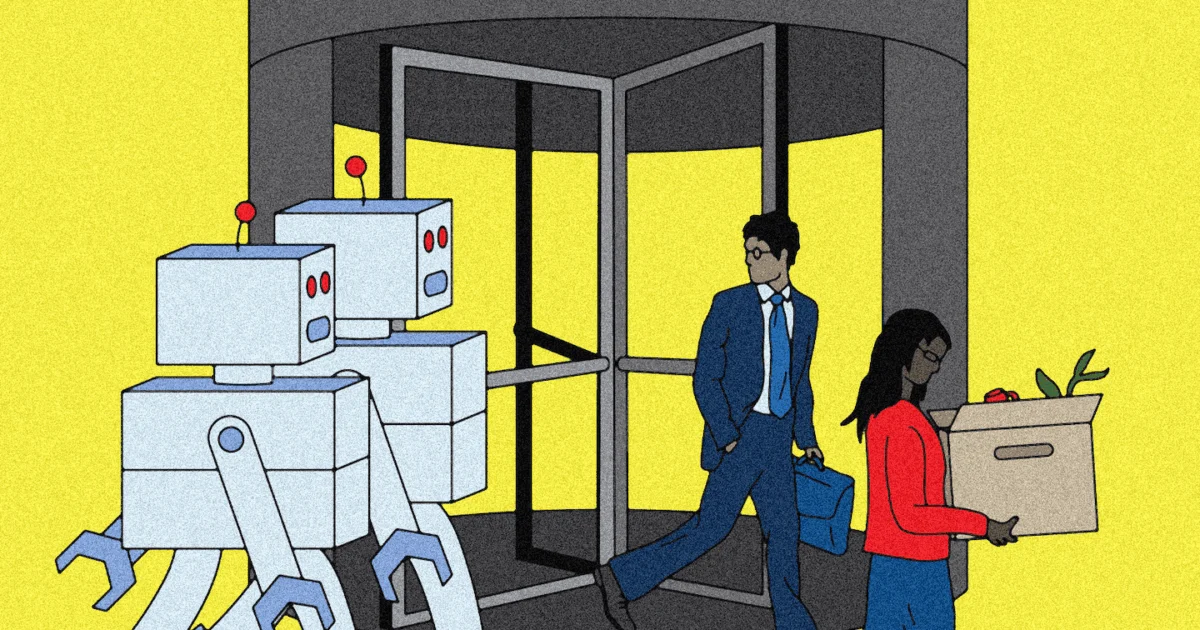
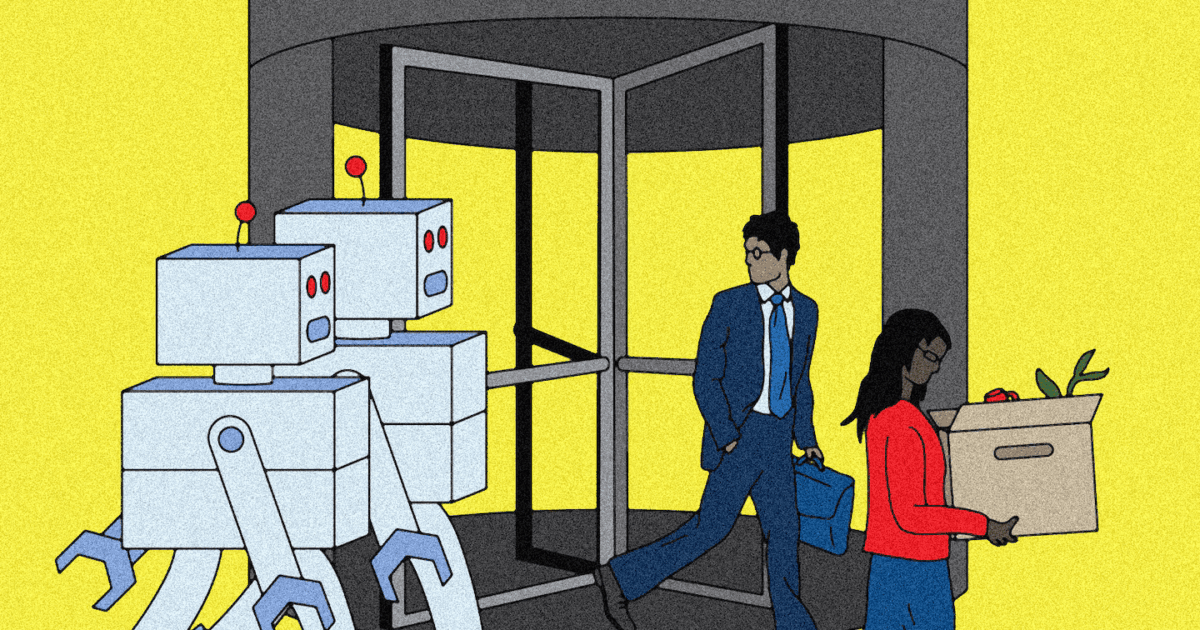
As the rapid integration of artificial intelligence (AI) begins to reshape the American workforce, the traditional pillars of the nation’s social safety net are coming under unprecedented scrutiny. While the technological shift promises gains in productivity and efficiency, it also threatens to displace millions of workers across diverse sectors. Among the most pressing concerns for policy experts is the inadequacy of the current unemployment insurance (UI) system, which critics argue is ill-equipped to handle a wave of white-collar layoffs and the evolving nature of modern employment.
Rebecca Dixon, CEO of the National Employment Law Project (NELP), has become a vocal advocate for systemic reform. According to Dixon, the current framework is not only "stingy" but fundamentally disconnected from the realities of the 21st-century labor market. As the prospect of AI-driven job displacement moves from theoretical debate to economic reality, the call to modernize unemployment benefits has reached a critical juncture.
The State of the Safety Net: A Patchwork of Inequality
At the heart of the current debate is the massive disparity in benefit levels across the United States. Unemployment insurance is largely administered at the state level, leading to a fragmented system where a worker’s financial survival depends heavily on their zip code.
Current maximum weekly payments illustrate this volatility: a displaced worker in Mississippi may receive as little as $235 per week, a sum that barely covers basic living expenses, let alone the costs associated with career transition or retraining. Conversely, Massachusetts offers up to $1,105 per week, reflecting a significantly more robust—though still limited—cushion.
The Eligibility Gap
Beyond the dollar amounts, the structural eligibility requirements pose a significant barrier to millions of Americans. As the labor market shifts toward gig work, freelancing, and part-time positions, the traditional "full-time employment" prerequisite for UI has rendered a vast segment of the workforce invisible to the system.
Dixon and other advocates argue that the current criteria unfairly penalize those who are most vulnerable to market fluctuations:
- Part-time workers: Often overlooked by state programs, despite contributing to the tax base.
- Recent graduates: As new entrants to the workforce, these individuals are frequently disqualified from benefits before they even gain a foothold in their careers.
- Contingent labor: The rise of the "1099 economy" means that millions of workers are categorized as independent contractors, leaving them with zero recourse when AI-driven consolidation leads to contract terminations.
A Chronology of the Automation Crisis
The anxiety surrounding AI-related job loss did not materialize overnight. The trajectory of this shift can be traced through several key phases of technological and economic development.
Phase I: The Blue-Collar Precedent (2010–2020)
For years, the discourse on automation centered on manufacturing and logistics. Robots and automated assembly lines were the primary focus of concern, leading to localized economic disruptions. Policy responses during this era were largely reactive, focusing on trade adjustment assistance rather than broad-based safety net reform.
Phase II: The Generative AI Inflection Point (2023–2025)
The emergence of sophisticated Large Language Models (LLMs) changed the calculus entirely. Suddenly, cognitive labor—coding, legal research, marketing, and data analysis—became susceptible to automation. This marked the first time in history that white-collar professionals, who historically felt insulated from technological displacement, found their roles at risk.
Phase III: The Current Reality (2026)
As of July 2026, we are witnessing the fallout of widespread enterprise adoption of AI. Companies are increasingly consolidating departments, leading to a surge in layoffs among junior-to-mid-level professionals. The NELP has highlighted that this "white-collar crisis" is testing the limits of state unemployment offices, which are struggling to process claims that are more complex and voluminous than those seen in previous cycles.
Supporting Data: The Economic Toll
The economic implications of inadequate unemployment insurance extend far beyond the individual household. When workers lack a stable floor, consumer spending contracts, leading to a secondary ripple effect across the broader economy.
Data from the Bureau of Labor Statistics and independent policy think tanks suggest that if AI-related displacement affects even 5% of the white-collar workforce, the current UI system would face an insolvency crisis. Because state funds are primarily funded through employer payroll taxes, a sudden, sharp increase in claims—particularly if those claims are from higher-earning workers—could deplete state reserves within months.

Furthermore, the "replacement rate"—the percentage of previous wages covered by unemployment benefits—has been in a long-term decline. In the 1970s, many states offered a replacement rate of nearly 50% for average earners. Today, that number has plummeted in many jurisdictions, leaving displaced workers to face a "cliff" where their household income drops by 70% or more the moment they lose their job.
Official Responses and the Policy Debate
The discourse in Washington and state capitals is increasingly polarized. On one side, industry leaders and some fiscal conservatives argue that increasing unemployment benefits could create a "disincentive" to work, potentially slowing the transition of labor into new, AI-augmented roles.
Conversely, organizations like NELP are pushing for a federal floor for unemployment insurance. This would involve:
- Standardizing Benefits: Establishing a federal minimum weekly benefit that adjusts for the cost of living in each state.
- Expanding Eligibility: Creating universal coverage pathways for part-time workers and independent contractors.
- Modernizing Infrastructure: Investing in the digital infrastructure of state UI offices, many of which still rely on legacy computer systems from the 1980s, causing massive delays in processing.
In recent weeks, NELP has been particularly active in opposing rollbacks to employment protections. By denouncing the Department of Labor’s proposed joint-employment rules, they are signaling a broader fight to ensure that as AI changes the nature of work, the legal protections for workers must evolve in tandem.
Implications for the Future of Work
The rise of AI is not merely a technological challenge; it is a profound social contract question. If the gains from AI are primarily captured by capital owners while the risks are socialized among the working class, the resulting inequality could lead to significant social instability.
The Necessity of Lifelong Learning
Policymakers are beginning to discuss "Unemployment Insurance 2.0," which would integrate training and education directly into the benefit package. If a worker is displaced by AI, the UI system should not just be a passive income replacement; it should act as a bridge to a new career. This requires partnerships between state governments, community colleges, and private industry.
The Political Stakes
As we look toward the next election cycles, the "AI Safety Net" is poised to become a central campaign issue. Voters in states with low benefit ceilings, such as Mississippi, are increasingly aware of the geographic lottery they inhabit. The pressure on lawmakers to harmonize these benefits will likely intensify as the white-collar workforce finds itself increasingly vulnerable.
Conclusion: A Call to Action
The evidence presented by the National Employment Law Project serves as a warning: the current safety net was designed for an industrial-era workforce that no longer exists. To weather the transition into the age of AI, the United States must move toward a more inclusive, robust, and technologically integrated system of support.
As Rebecca Dixon has emphasized, the goal is not to stop innovation, but to ensure that the American worker is not left behind by it. Whether through federal mandates, state-level reform, or a fundamental rethinking of the relationship between labor and technology, the path forward must prioritize the dignity and security of the individual. Failure to act will not only result in individual hardship but will likely deepen the divide in an already fractured economic landscape.
As the latest news from the labor policy front suggests—from the push to make UI accessible for people with disabilities to the strategic hiring of new policy experts at major advocacy groups—the fight for a modern, equitable labor system is only just beginning. The future of work depends on our ability to build a floor that is high enough for everyone to stand on, regardless of how much their job description changes in the years to come.
