

By Staff Reporters
In the current landscape of American real estate, the narrative is often one of hesitation. Developers are grappling with a "perfect storm" of high interest rates, escalating construction costs, and frozen capital markets. For many cities, this has translated into a visible scar: vacant ground-floor retail spaces, fenced-off construction sites, and stagnant urban corners that serve as reminders of projects indefinitely paused.
However, a shift is occurring in how municipal leaders view these "dead zones." Rather than waiting for the slow, often unpredictable tide of long-term capital investment, forward-thinking cities are embracing the concept of the "interim third space." By transforming sites awaiting redevelopment into vibrant, temporary hubs, communities are successfully bridging the gap between economic stagnation and long-term revitalization.
The Philosophy of the "Third Place"
The term "third place," coined by sociologist Ray Oldenburg in his seminal 1989 book The Great Good Place, refers to the social surroundings that are distinct from the two primary environments of home (the first place) and work (the second place). These are the cafes, libraries, parks, and community centers where people naturally congregate to foster social bonds.
In the context of dense urban environments like Rosslyn, Virginia—a 17-block mixed-use hub across the Potomac from Washington, D.C.—these spaces are not merely amenities; they are critical infrastructure. As hybrid work models permanently alter the daily routines of the 25,000 employees and 16,000 residents in the area, the demand for places that encourage connection, belonging, and informal gathering has reached an all-time high.
Mary-Claire Burick, president of the Rosslyn Business Improvement District (BID), and Kate Ange, deputy director of Arlington Economic Development, argue that the strategy of "interim placemaking" is no longer optional—it is an essential tool for neighborhood competitiveness.
Chronology: From Stagnation to Activation
The path to creating the "NOW Pop-Up Park" in Rosslyn serves as a case study in how municipal agility can overcome systemic development inertia.
Phase I: The Identification of Need (2023–2024)
As the real estate market cooled, Rosslyn stakeholders noted a rise in vacant commercial office space. Simultaneously, internal surveys conducted by the Rosslyn BID indicated that residents and workers were increasingly dissatisfied with the lack of outdoor gathering spots. The 2025 perception survey revealed a telling statistic: more than 60% of the 1,093 respondents explicitly requested more parks and informal gathering areas.
Phase II: The Strategic Pivot (Early 2025)
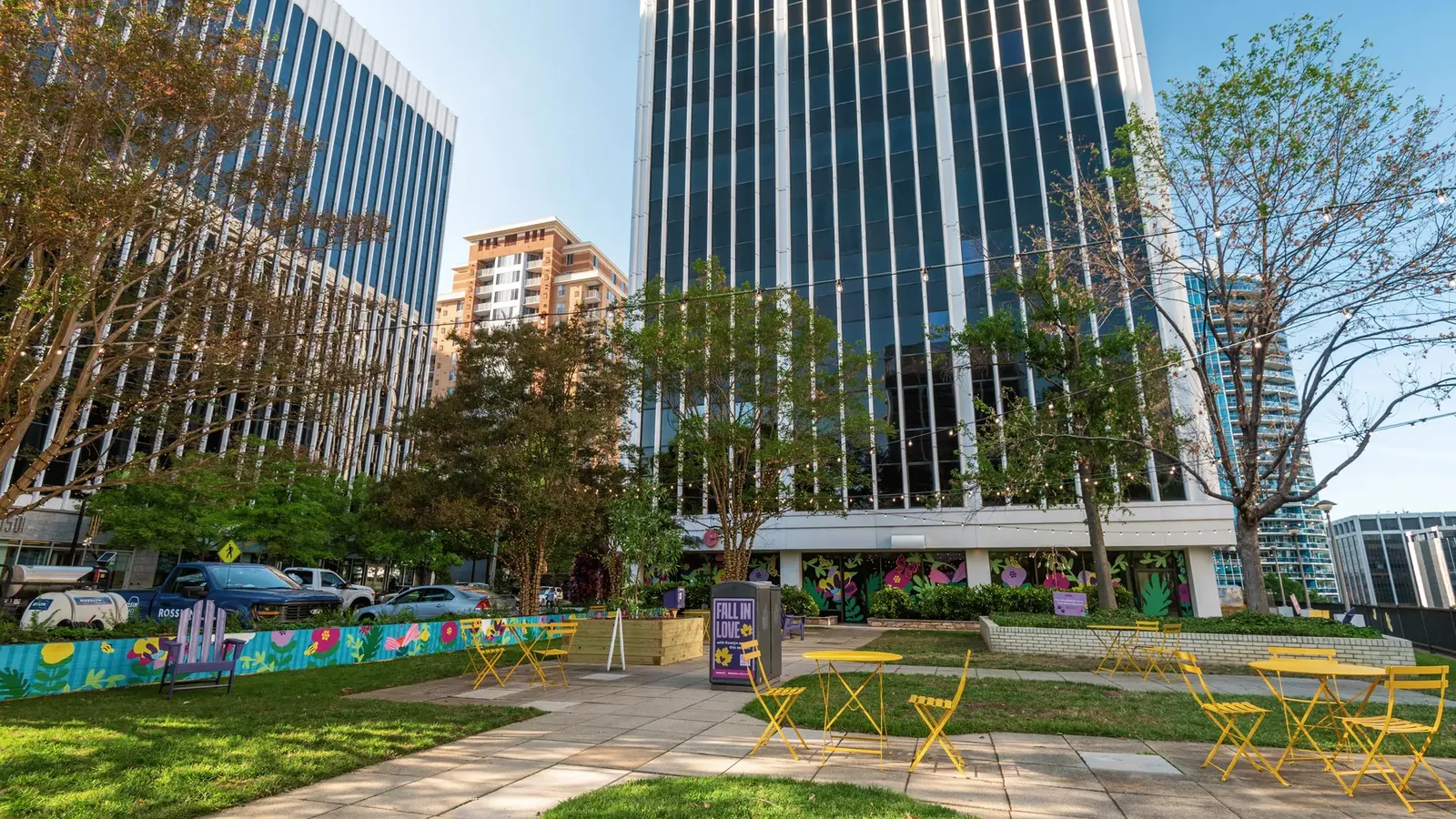
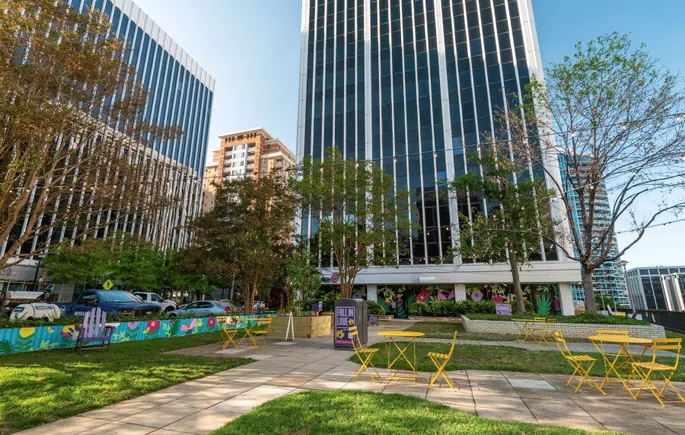
Rather than allowing the underutilized terrace at 1401 Wilson Boulevard to remain a fenced-off liability, the Rosslyn BID and Arlington Economic Development (AED) identified the site as a prime candidate for an interim solution. The goal was simple: activate the space to maintain the neighborhood’s economic vitality while the property owner navigated long-term redevelopment plans.
Phase III: Regulatory Navigation (Spring 2025)
The project faced immediate hurdles typical of municipal development: zoning codes, permitting, and insurance requirements were all designed for permanent structures. AED worked in concert with the county’s planning, zoning, and environmental services departments to create an "accelerated path." They successfully adapted existing processes to allow for temporary, modular installations without compromising public safety or long-term urban planning goals.
Phase IV: Launch and Iteration (Summer–Autumn 2025)
The "NOW Pop-Up Park" opened, featuring green space, a dedicated dog park, and modular infrastructure for community programming. By autumn, the park had moved beyond a novelty to become a fixture of local life, hosting everything from urban gardening workshops to informal corporate lunch gatherings.
Supporting Data: Why Connection Drives Economics
The economic argument for third spaces is bolstered by clear data points that link "social infrastructure" to "fiscal performance."
- Sense of Belonging: According to the 2025 Rosslyn BID perception survey, individuals who participate in local activations and utilize third spaces are twice as likely to report a strong sense of belonging in their neighborhood.
- Retention and Traffic: There is a direct correlation between social engagement and local economic metrics. Increased foot traffic, longer dwell times in the district, and repeat visits—all driven by the presence of inviting third spaces—directly support the bottom line for local retailers and restaurants.
- The Corporate Edge: Major regional employers—including Nestle, CoStar, and Deloitte—have signaled that employee retention is tied to the quality of the surrounding environment. Because these large firms often lack the internal resources to curate social experiences, the "third space" provided by the BID fills a critical corporate social responsibility gap, making the district more attractive to high-value tenants.
Official Perspectives: Building the Collaborative Model
The success of the Rosslyn project rests on a specific, collaborative governance model.
"We realized that if we waited for the traditional development cycle to resolve itself, we would lose years of momentum," says Kate Ange of Arlington Economic Development. "The partnership between the BID and the county was predicated on the idea that we needed to be as agile as the market was volatile."
Mary-Claire Burick emphasizes that the BID’s role is that of a "steward" rather than a developer. "Our mission is to translate public input into on-the-ground outcomes," Burick explains. "When you provide a space where a resident can walk their dog and an office worker can eat lunch, you aren’t just ‘activating a site’—you are building a community."
The municipal perspective from Arlington is equally pragmatic. By creating a flexible framework for interim use, the county effectively lowered the "cost of entry" for placemaking. This systemic approach is intended to serve as a blueprint for other districts facing similar challenges, proving that public-private partnerships can successfully de-risk projects that might otherwise languish in the shadow of stalled real estate cycles.

Implications: A New Urban Playbook
The implications of the Rosslyn experience for other municipalities are profound. As cities across the U.S. grapple with the long-term impact of remote work and the resulting decline in office utilization, the "interim" approach offers a path forward that is both fiscally responsible and socially regenerative.
1. The Death of the "Wait and See" Strategy
Municipalities can no longer afford to leave vacant land dormant for years at a time. The opportunity cost—measured in reduced foot traffic, weakened retail ecosystems, and a declining sense of community—is too high. Interim placemaking acts as a holding pattern that keeps the neighborhood "warm" for future investment.
2. Regulatory Flexibility as an Economic Driver
The most significant barrier to temporary development is often the regulatory environment. Cities that succeed will be those that treat zoning and permitting as "fluid" rather than "fixed." By creating pathways for temporary use, governments can unlock the latent value in underutilized commercial real estate.
3. BIDs as Essential Operators
Business Improvement Districts are uniquely positioned to serve as the operators of these interim spaces. Because they are funded by the local business community and accountable to local residents, they possess the agility to manage daily maintenance, security, and programming—tasks that are often too granular or time-intensive for traditional municipal departments to handle.
4. The "Care and Management" Mandate
A critical lesson from the NOW park is that a space is only as good as its stewardship. Sustainability requires ongoing maintenance. The success of an interim project depends on a commitment to safety, cleanliness, and the constant curation of content—ensuring the space remains relevant to the evolving needs of the neighborhood.
Conclusion
The "NOW Pop-Up Park" in Rosslyn is more than just a collection of benches and planters; it is a manifestation of a new urban philosophy. It posits that community connection should not be a byproduct of successful development, but rather a catalyst for it.
As cities look toward a future where commercial real estate is in flux, the ability to pivot—to treat a construction delay as an opportunity for activation—will distinguish the thriving neighborhoods of the next decade from those that remain trapped in the stagnation of the last. By planning for both the long-term permanent anchor and the short-term interim activation, municipal leaders can ensure that even in the toughest of markets, the heart of the city continues to beat.
