





As the United States grapples with an unprecedented surge in electricity demand—driven by the rapid expansion of artificial intelligence data centers, the electrification of the automotive sector, and the intensifying pressures of global geopolitical instability—the national conversation has increasingly focused on the "supply side." Policymakers and utility giants are locked in debates over grid capacity, nuclear resurgence, and renewable integration.
However, a landmark report from the American Council for an Energy-Efficient Economy (ACEEE) suggests that the most effective solution to our energy crisis may not lie in building more power plants, but in curbing the demand for electricity through systemic efficiency. The report posits that energy efficiency remains the "fastest, cheapest, and cleanest" resource at the nation’s disposal. If fully leveraged, these measures could save the U.S. economy a staggering $550 billion annually by 2050—equivalent to nearly $31,000 in savings for every household in the country.
Main Facts: The Economic Case for Efficiency
The core thesis of the ACEEE study is that energy waste is a hidden tax on the American economy. By utilizing the Energy Policy Simulator—a robust modeling tool developed by the think tank Energy Innovation—researchers mapped out a future where aggressive policy interventions transform how we heat our homes, power our factories, and move our goods.
The report identifies three primary pillars for these savings:
- Building Decarbonization: Transitioning to high-efficiency appliances, specifically heat pumps.
- Industrial Modernization: Improving thermal efficiency in manufacturing and material processing.
- Transportation Reform: Enhancing fuel economy and accelerating the adoption of electric vehicles (EVs).
The modeling suggests that by 2050, these integrated efforts could yield a net savings of $550 billion per year. While the transition requires significant upfront investment, the long-term operational savings—driven by reduced fuel consumption and lower utility bills—vastly outweigh the capital expenditure.
Chronology: A Policy Landscape in Flux
The trajectory of U.S. energy efficiency policy has been marked by significant shifts, reflecting the changing political climate in Washington.
- 2022: The federal government introduced a comprehensive building performance standard aimed at modernizing aging infrastructure and reducing the carbon footprint of the commercial building stock. This was viewed as a foundational step toward meeting national climate goals.
- 2024: In a significant reversal, the Trump administration revoked the 2022 federal building performance standard. This move effectively decentralized the effort, leaving the responsibility for building efficiency largely to the discretion of state and local jurisdictions.
- Present Day: The ACEEE report arrives at a critical juncture. With energy demand reaching all-time highs, researchers are now advocating for a return to rigorous national standards, arguing that voluntary measures and fragmented state policies are insufficient to meet the challenges of the next three decades.
The report emphasizes that while federal progress has stuttered, market-driven innovation—particularly in the private sector—has continued to push boundaries.
Supporting Data: Where the Savings Reside
The ACEEE study breaks down the $550 billion potential savings into specific economic sectors, providing a roadmap for where policy should be prioritized.
The Building Sector ($220 Billion)
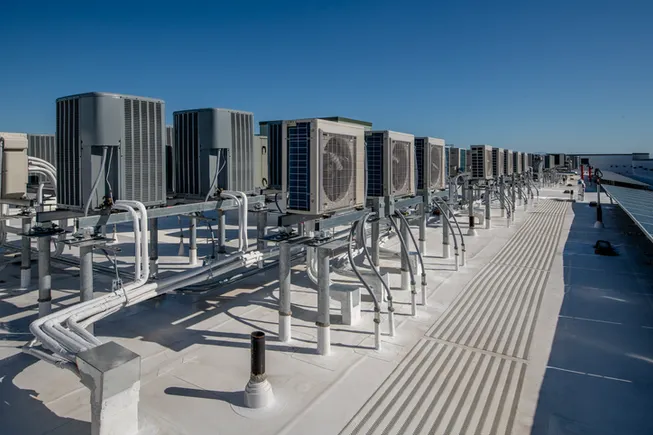
Buildings represent the largest source of potential savings. The report assumes a wholesale transition to heat pumps for heating by 2035, supported by appliance efficiency standards and consumer incentives. "Each inefficient unit currently in operation represents a large opportunity for energy and bill savings," the report notes. By replacing wasteful electric resistance heaters and gas furnaces with highly efficient heat pumps, the U.S. can drastically reduce winter peak electricity demand, which is currently a major stressor on the grid.
The Transportation Sector ($140 Billion)
Efficiency in transport is not just about electric vehicles; it is about the broader integration of the grid with the transportation sector. The model accounts for improved fuel economy standards and the widespread adoption of EVs, which, when coupled with smart-charging infrastructure, can serve as a load-balancing mechanism rather than a pure burden on the grid.
The Industrial Sector ($100 Billion)
Industrial efficiency involves optimizing thermal processes, reducing material waste, and upgrading electrical heat systems. The report highlights that industrial operations often rely on legacy equipment that is decades past its efficiency prime. Replacing these systems with modern, IoT-enabled controls can yield massive dividends in energy reduction.
Demand Flexibility
While it accounts for a smaller percentage of the total dollar savings, demand flexibility is arguably the most vital tool for grid reliability. The goal is to reduce overall peak demand by 20% by 2050. This involves shifting energy-intensive tasks to off-peak hours and utilizing "virtual power plants" (VPPs) to aggregate energy loads.
Official Responses and Corporate Leadership
The report highlights that the private sector is not waiting for federal mandates to optimize energy use. Technology giants, particularly those operating massive data centers, are leading the charge.
Google, for example, has become a pioneer in voluntary demand flexibility. By utilizing AI to manage the cooling and processing loads of its data centers, the company is actively offsetting its rising electricity footprint. Furthermore, Google’s foray into "virtual power plant" communities—where residential solar and battery storage systems are aggregated to support the local grid—serves as a blueprint for how large-scale operators can become grid partners rather than just grid users.
However, industry analysts warn that voluntary programs are not enough. The ACEEE report argues that without federal or state-level "building performance standards," the majority of the U.S. housing stock and aging industrial complexes will remain tethered to outdated, high-consumption technology.
Implications: A Strategic Imperative
The implications of the ACEEE report are clear: The U.S. energy strategy is currently lopsided. By focusing almost exclusively on adding new generation—whether through renewables or fossil fuels—policymakers are ignoring the most cost-effective "power plant" of all: the energy we choose not to waste.
Grid Reliability and Geopolitics
As geopolitical conflicts tighten global fuel markets, energy independence is no longer just an environmental goal; it is a national security necessity. Efficiency acts as a buffer against supply chain shocks. By reducing the load, the grid becomes inherently more resilient and less susceptible to the volatility of global energy pricing.
Economic Equity
The $31,000 in savings per household by 2050 is a powerful argument for energy justice. Lower-income households often spend a disproportionate amount of their income on energy bills in inefficient homes. A national efficiency program would effectively serve as a wealth transfer, lowering the cost of living and reducing the frequency of energy poverty.
The Road Ahead
The path to this efficient future requires a "whole-of-government" approach. Key recommendations from the study include:
- Reinstating stringent national building performance standards to create a predictable market for energy-efficient technology.
- Expanding federal incentives for the electrification of heating systems, specifically targeting the replacement of gas furnaces.
- Investing in grid-edge technology that enables demand flexibility and VPP participation at the consumer level.
The ACEEE report serves as a wake-up call. The energy transition is not merely about swapping coal for wind or gas for solar; it is about fundamentally re-engineering the American demand profile. If the U.S. can harness the potential of efficiency, it can secure a future that is not only cleaner but significantly more prosperous for every household in the nation. As the report concludes, energy efficiency is not a constraint on our growth—it is the catalyst for a more resilient and sustainable economic engine.
