



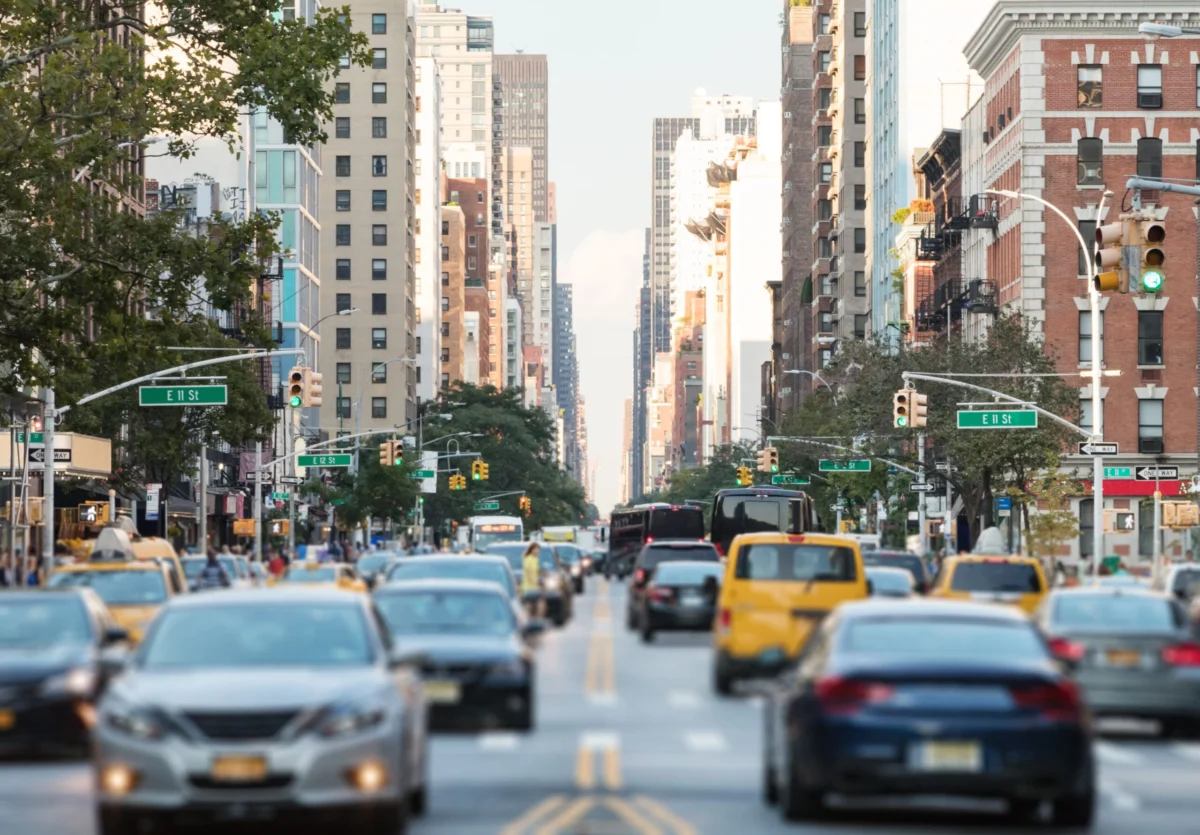
In the early months of 2025, New York City undertook what many urban planners described as the most ambitious traffic management experiment in American history. Faced with a crumbling transit infrastructure and a level of road congestion that saw the average driver squander 102 hours annually in gridlock, the city took a radical step: it began charging drivers to enter the heart of Manhattan.
The implementation of the Congestion Relief Zone (CRZ) tolling program was not merely a local policy adjustment; it was a fundamental shift in how one of the world’s most dense metropolitan areas manages the finite resource of road space. By imposing a $9 daily fee on vehicles entering the city’s most congested corridors, New York effectively signaled an end to the era of "free" road usage in the urban core. The results, a year into the program, have been stark, sparking a national debate about the future of American transportation.
The Vicious Cycle: Why NYC Needed a Change
To understand the necessity of the CRZ, one must look at the fiscal crisis that preceded it. In 2024, the Metropolitan Transportation Authority (MTA)—the lifeblood of New York City’s economy—reported a staggering $8.3 billion deficit. The relationship between the city’s transit woes and its traffic nightmare was symbiotic. As subway service quality wavered due to budget constraints, frustrated commuters abandoned public transit in favor of personal vehicles. This shift in behavior exacerbated road congestion, which in turn delayed buses and increased the overall unattractiveness of the city’s surface transportation.
By 2024, New York City held the dubious title of the most congested city in the United States. The economic inefficiency of this gridlock was immense. Each additional car on the road creates a marginal delay for every other driver, a phenomenon economists have long identified as a classic "negative externality." Yet, until 2025, there was no mechanism to force drivers to account for the true cost of their presence on the road.
A Chronology of Implementation: From Proposal to Toll
The road to the 2025 launch was long and fraught with political friction.
- Pre-2024: Years of debate followed the initial proposal, as planners looked to successful models in London, Singapore, and Milan.
- January 2025: The program officially went live. Utilizing a sophisticated network of over 1,400 license plate scanners and the existing E-ZPass infrastructure, the MTA began tracking entries into the CRZ.
- Early 2025: The program faced immediate resistance. In February 2025, Secretary of Transportation Sean Duffy moved to revoke federal approval and funding, citing alleged violations of federal policy.
- Mid-2025: The courts intervened. A legal challenge brought by federal authorities was rejected by the judiciary, allowing the program to continue as it awaited a hearing by the 2nd Circuit Court of Appeals.
- Late 2025: The MTA released its first evaluation report, confirming that the program was meeting its primary objectives: revenue generation and traffic reduction.
Supporting Data: The Quantitative Impact
The success of the CRZ tolling program is reflected in the data provided by the MTA’s inaugural evaluation report. The numbers demonstrate that price signals, when applied correctly, effectively alter human behavior.
Traffic and Transit Metrics
Comparing the baseline of 2024 to the performance in 2025, the city saw an 11 percent decrease in vehicle entries into the congestion zone. Simultaneously, public transit ridership increased by 9 percent. This suggests that the toll acted as a nudge, effectively shifting commuters from private automobiles to the city’s rail and bus networks.
The impact on road speeds was even more pronounced. Average vehicle speeds within the CRZ increased by 4.6 percent, while speeds on crossings entering Manhattan—previously the most notorious bottlenecks—improved by a staggering 23 percent.
Economic and Health Outcomes
Beyond the flow of traffic, the program has had tangible fiscal and public health impacts. The CRZ generated an average monthly revenue of $55 million. These funds have provided the necessary leverage to bond $15 billion for the MTA’s capital improvement plan, which is essential for long-term service upgrades.
Perhaps most critically, the reduction in congestion has led to improved emergency response times. According to research, a 5-6 percent reduction in congestion translates to a decrease in emergency medical service (EMS) response times of 63 to 70 seconds. In the context of medical emergencies, where "time is tissue," these minutes represent a quantifiable improvement in public safety.
The Mechanics of the Toll: A Nuanced Approach
The MTA designed the fee structure to balance efficiency with equity. Recognizing that not all road users are equal, the program implemented a tiered pricing model:
- Standard Vehicles: A flat $9 fee for the majority of passenger vehicles.
- Heavy Users: Large trucks and sightseeing buses are charged $21.60 per entrance to account for their disproportionate impact on road wear and traffic flow.
- Motorcycles: A reduced rate of $4.50.
- Commercial Fleets: Taxis are charged $0.75 per entry, while rideshare vehicles pay $1.50, ensuring that the cost of congestion is distributed across the gig economy without disproportionately crippling the service industry.
Furthermore, the MTA implemented a temporal pricing strategy. During peak hours (5 a.m. to 9 p.m. on weekdays, and 9 a.m. to 9 p.m. on weekends), drivers pay the full fee. During off-peak hours, a 75 percent discount applies. This has successfully reallocated traffic patterns, with the hours immediately adjacent to the peak window seeing increased travel as drivers shift their schedules to avoid the higher toll.
Official Responses and Legal Challenges
The implementation was not without its detractors. The federal lawsuit initiated by Secretary Sean Duffy remains the most significant hurdle. The government’s argument centers on the claim that the tolling scheme violates federal mandates regarding highway use. While the court has thus far permitted the program to operate, the uncertainty surrounding the 2nd Circuit Court of Appeals hearing remains a point of concern for investors and urban planners.
Supporters, however, frame the policy as a triumph of "Pigouvian" economics. By treating the road as a scarce resource, the city has successfully internalized the costs of driving. The MTA maintains that the toll is not a tax in the traditional sense, but a "user fee" that funds the very infrastructure that makes the city functional.
Broader Implications: Is NYC an Outlier?
The success of New York’s experiment has triggered a wave of interest from other major American cities. Los Angeles and Washington, D.C., have both seen local proposals for similar congestion pricing schemes resurface. However, experts caution that New York City may be a unique case.
The "Big Apple" Exception
New York is an outlier in several respects. It possesses the most extensive transit network in the United States and has the highest concentration of employment in its central business district. For cities that are still struggling to entice workers back into offices during the post-pandemic era, a congestion tax could be perceived as an additional barrier to economic recovery.
If other cities were to follow suit, they would need to ensure that their public transit alternatives are robust enough to accommodate the displaced drivers. In New York, the MTA provided an immediate, albeit imperfect, alternative to driving. In cities with weaker transit infrastructure, congestion pricing could inadvertently hurt the poor or the service class without providing a viable mobility alternative.
Conclusion: A Data Point for the Future
New York City’s 2025 congestion pricing program has provided the United States with a vital, real-world laboratory. It has proven that in an era of unprecedented urban density, the status quo of unrestricted road access is unsustainable. While the program faces legal headwinds and requires constant refinement, its ability to simultaneously reduce gridlock, generate billions in revenue, and improve emergency response times makes it an essential case study.
Whether this model can be scaled to the sprawling, transit-poor landscapes of other American cities remains to be seen. What is clear, however, is that New York has fundamentally changed the conversation. The gridlock that once seemed like an immovable law of urban nature has proven to be a policy choice—and one that can be altered with the right mix of technology, pricing, and political will.
