



Long before the current generative AI fervor swept through corporate boardrooms, Walmart was already embedding predictive intelligence into the backbone of its global logistics network. Today, as the retail giant embarks on an ambitious initiative to equip 2 million employees with agentic AI tools, its supply chain division stands as the primary blueprint for this transformation.
Indira Uppuluri, Walmart’s Senior Vice President of Supply Chain Technology, describes this shift not merely as an upgrade, but as a fundamental evolution in how the world’s largest retailer navigates an increasingly volatile global landscape. By synthesizing massive datasets—ranging from granular customer buying habits to complex, real-time meteorological patterns—Walmart is moving beyond reactive logistics into a new era of proactive, intelligent distribution.
The Core Strategy: Integrating Intelligence into Every Node
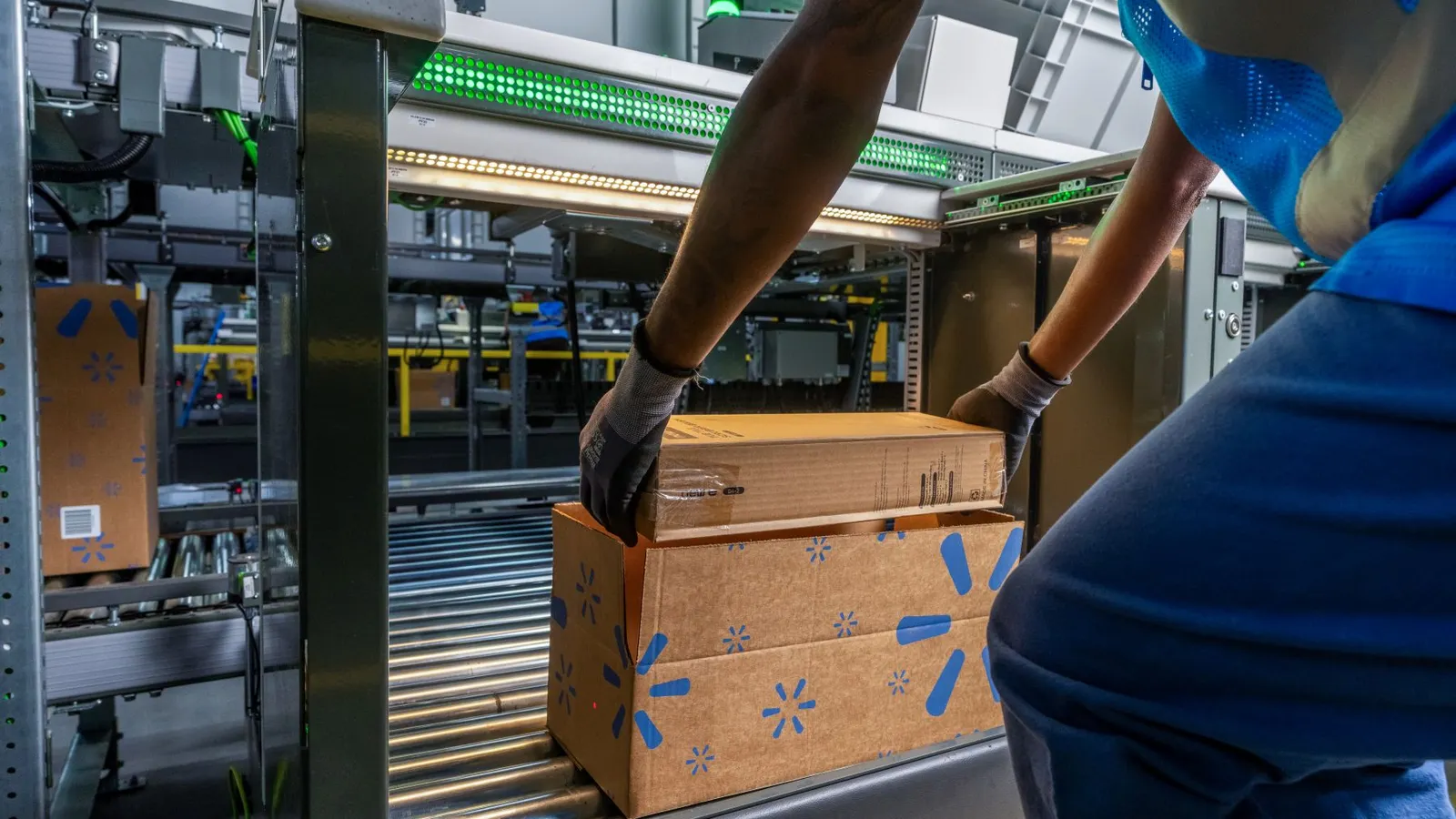
At the heart of Walmart’s operational strategy is the "fulfillment engine," a sophisticated network of nodes that manage the lifecycle of a product from the moment it is received until it reaches the customer’s doorstep. Managing these nodes—warehouses, distribution centers, and last-mile hubs—requires more than just traditional software; it requires a dynamic, learning infrastructure.
"Predictive models have always had a home within the supply chain industry," Uppuluri told CIO Dive. "But the volume of data and the advanced AI tools we have access to now provide us with significantly stronger signals to navigate a challenging environment. That is where the industry is heading."
Walmart’s technological architecture is built on a hybrid foundation. The company leverages enterprise-grade Large Language Models (LLMs) and open-source models while simultaneously empowering its internal data science and optimization teams to build custom AI tools. These bespoke solutions are designed to address the specific, high-stakes objectives of the retail sector, such as reducing the "cost to serve" while accelerating delivery speeds.
To foster a culture of innovation, Walmart has launched "Squiggly," an associate-facing platform that serves as a hub for AI education. Through strategic partnerships with industry titans like OpenAI and Google, the company offers role-specific AI certifications, encouraging employees not just to use AI, but to actively participate in building the custom tools that will streamline their daily workflows.
A Chronology of Technological Evolution
The journey toward an autonomous supply chain has been a multi-decade progression, marked by significant milestones in data processing and algorithmic sophistication:
- The Era of Stochastic Models: Historically, supply chain management relied heavily on stochastic modeling—statistical methods used to estimate the probability of various outcomes. These tools were effective for baseline forecasting but lacked the nuance required for real-time disruption management.
- The Rise of Machine Learning: As data storage costs plummeted and processing power surged, Walmart began layering machine learning on top of traditional models. This allowed for better pattern recognition in customer behavior and inventory depletion.
- The LLM Integration: The advent of generative AI and Large Language Models transformed how employees interact with the system. Complex supply chain data, once confined to spreadsheets and dashboards, could now be queried through natural language.
- The Age of Agentic AI: Today, Walmart is pivoting toward "agentic" workflows. Unlike static chatbots, AI agents can take independent action, navigating across different software silos to suggest, or even execute, optimizations that span the entire fulfillment lifecycle.
Supporting Data: Balancing Speed, Assortment, and Cost
For a retailer of Walmart’s scale, the primary operational challenge is the "trilemma" of retail logistics: balancing assortment, speed, and cost.
As consumer expectations shift toward instant gratification—exemplified by Sam’s Club’s recent launch of a one-hour delivery service in April—the margin for error has vanished. The supply chain technology team is now tasked with managing not just the "middle mile" (transportation between distribution centers), but the increasingly complex "last mile" that consumers now view as the standard.
Digital twins—virtual replicas of the entire logistics network—have become the cornerstone of this effort. These simulations allow Walmart to stress-test their supply chain against a variety of catastrophic scenarios. By modeling facility closures, sudden transportation gridlock, or localized spikes in demand, the technology team can identify potential bottlenecks before they manifest in the real world.
Official Responses and Operational Philosophy
Indira Uppuluri emphasizes that the goal of this technology is not to replace human decision-making, but to provide a "copilot" for the associate. In the face of a crisis—such as an extreme weather event or a sudden geopolitical disruption—the system processes millions of variables to offer actionable recommendations.
"If you suddenly have a fire or a hurricane somewhere, how do you react to it quickly?" Uppuluri asked. "The systems behind the scenes leverage the data to come up with actions that we can take, and our associates can take those recommendations and implement them for us."
This human-in-the-loop approach is critical. By providing associates with high-fidelity data and clear, AI-generated strategies, Walmart effectively turns its workforce into a highly agile, technology-augmented team capable of making high-level tactical decisions in real-time.
The Implications of a Volatile 2026
The year 2026 has already established itself as a testing ground for global supply chain resilience. Geopolitical turbulence, trade tariffs, and the rising frequency of extreme environmental events have created a "new normal" where stability is the exception rather than the rule.
1. Resilience Through Visibility
The move toward agentic AI implies a transition from a linear supply chain to a "networked" one. Instead of looking at a single warehouse in isolation, agents provide a holistic view of the company’s entire inventory pool. This allows for fluid inventory allocation, where goods can be rerouted mid-transit to mitigate regional disruptions.
2. The Democratization of Development
By encouraging employees to build their own tools via the Squiggly platform, Walmart is solving one of the biggest hurdles in enterprise AI: the gap between technical developers and front-line workers. When the people who understand the physical constraints of the warehouse are also the ones building the AI solutions, the resulting tools are inherently more practical and effective.
3. Sustainability and Efficiency
While cost and speed are the primary drivers, the optimization of these factors inevitably leads to sustainability gains. AI-driven routing reduces fuel consumption, and better demand forecasting reduces the carbon footprint associated with overstocking and expedited shipping.
4. The Future of Workforce Dynamics
The ultimate implication of this technological shift is the changing nature of work at Walmart. As repetitive, analytical tasks are offloaded to AI agents, the role of the supply chain associate is elevated. They are no longer just movers of goods; they are supervisors of a high-tech, AI-managed ecosystem.
Conclusion: A Continuous Evolution
As Uppuluri noted, the technology will continue to evolve, and so too will the supply chain. Walmart’s current strategy is not a destination but a trajectory. By embracing the fluidity of LLMs and the autonomy of agentic workflows, the retailer is preparing itself for a future where disruptions are inevitable, but where the ability to respond is instantaneous.
"It’s both the supply chain evolving and the models behind it evolving as well," says Uppuluri. For Walmart, the integration of AI is not merely a digital transformation—it is the strategic evolution of the retail giant into a data-first, intelligence-driven logistics powerhouse. As the industry watches, the success of these agentic tools will likely set the gold standard for how global enterprises navigate the complexities of the 21st-century economy.
