





By David Taube
Published Sept. 14, 2026
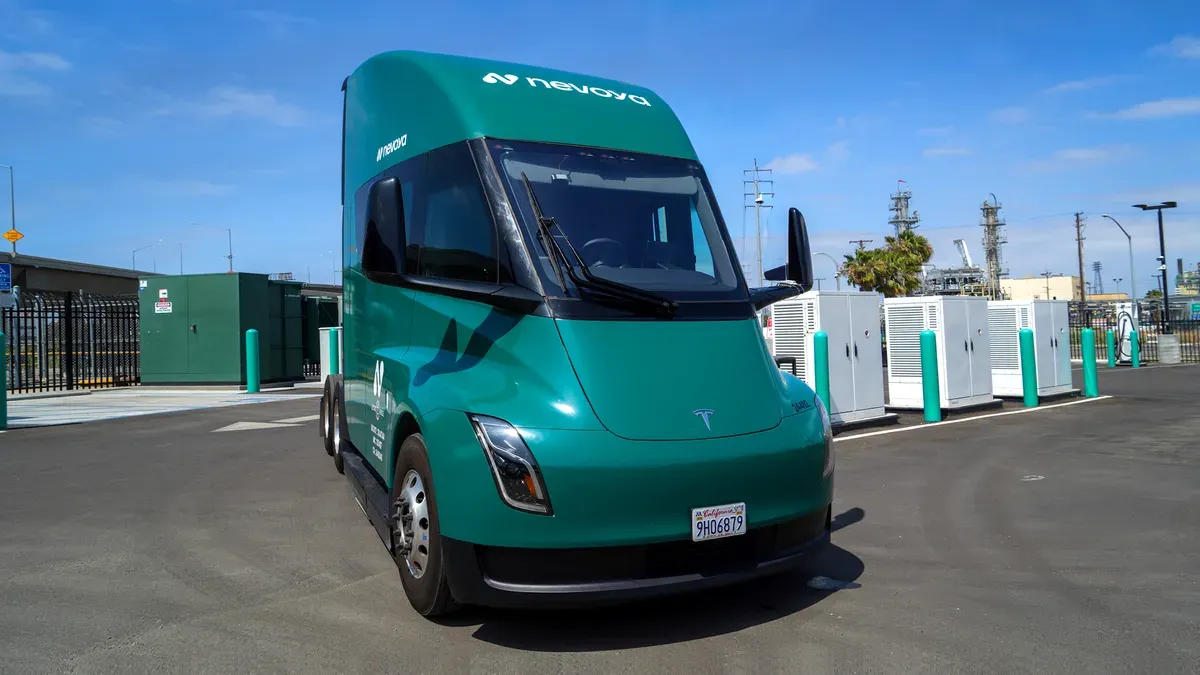
In a significant stride toward decarbonizing the American logistics landscape, Google has officially joined a high-profile coalition aimed at accelerating the transition to zero-emission freight. By partnering with the electric trucking startup Nevoya and the nonprofit Center for Green Market Activation (GMA), the tech giant is facilitating the deployment of 25 additional Class 8 battery-electric trucks. This initiative, focused on the critical Dallas-to-Houston freight corridor, marks a pivotal moment for sustainable supply chain management in the United States.
The Core Initiative: Scaling Zero-Emission Logistics
The partnership is more than a simple procurement agreement; it represents a sophisticated financial and operational model designed to overcome the "chicken-and-egg" problem currently plaguing the electric vehicle (EV) industry. By advancing capital directly to Nevoya, Google and its coalition partners are funding the acquisition of heavy-duty electric trucks and, crucially, the dedicated charging infrastructure required to keep them operational.
The project is spearheaded by the GMA Trucking alliance, a buyers’ coalition established in 2023. With the inclusion of Google, the total project scope has expanded to 63 Class 8 battery-electric trucks. This collection of vehicles is poised to become the largest known deployment of its kind in the state of Texas, with a full-scale launch scheduled for early 2027.
Chronology of the Coalition and Its Expansion
The development of this project has been a multi-year effort to synchronize private-sector capital with clean-energy technology.
- 2023: The Center for Green Market Activation (GMA) launches the GMA Trucking buyers’ alliance, creating a framework for shippers to collectively fund and de-risk the deployment of zero-emission heavy-duty trucks.
- January 2026: The GMA formally announces a landmark procurement deal involving industry titans—including Amazon, eBay, Etsy, Green Worldwide Shipping, and Meta—to deploy Nevoya electric trucks on the vital Houston-Dallas lane.
- September 8, 2026: Google publicly announces its participation, pledging to fund an additional 25 trucks, bringing the total fleet size to 63.
- Early 2027 (Projected): Official operational launch of the 63-truck zero-emission corridor.
The Mechanics of Decarbonization: The "Book-and-Claim" System
One of the most innovative aspects of this partnership is the utilization of a "book-and-claim" system. Because electric charging infrastructure is not yet ubiquitous across every mile of the U.S. interstate system, direct assignment of specific green miles to specific shipments is often impossible.
The book-and-claim system decouples the environmental attribute from the physical movement of goods. When companies like Google pay into the system, they receive environmental attribute certificates. These certificates serve as verifiable proof of emissions reductions, which the corporations can then apply toward their corporate sustainability goals and Scope 3 emission targets.
"Book and claim helps unlock the capital and operational certainty to deploy electric capacity where it makes the most commercial sense," noted Nevoya CEO Sami Khan during the project’s initial unveiling earlier this year. By providing this financial assurance, the coalition allows startups like Nevoya to invest in expensive hardware with the guarantee that the commercial demand is already established.

Supporting Data: Why the Texas Corridor?
The choice of the Dallas-Houston route is strategic. Texas serves as one of the busiest freight hubs in North America. The high volume of goods moving between these two major metropolitan centers makes the route an ideal testing ground for high-density, short-haul electric trucking.
- Total Fleet Size: 63 Class 8 battery-electric trucks.
- Projected Launch: Early 2027.
- Infrastructure Partners: Nevoya is collaborating with Greenlane to ensure that the charging network is robust enough to handle the requirements of heavy-duty, long-haul-capable vehicles.
- Procurement Standard: All carriers were selected via a rigorous competitive Request for Proposal (RFP) process, ensuring that the vehicles utilize renewable electricity or qualifying hydrogen fuel-cell technology.
"Nevoya was selected after an extensive evaluation through a competitive RFP to trucking carriers seeking to deploy Class 8 battery-electric trucks powered by renewable electricity across the contiguous United States," explained Clayton Gerber, senior program manager at the Center for Green Market Activation.
Official Perspectives and Industry Implications
The partnership has drawn praise for its holistic approach to the energy transition. Rather than viewing the shift to electric as merely a change in the vehicle’s powertrain, industry leaders are framing it as a complete operational transformation.
"This is an operating model shift, not just a powertrain play," stated John Vendon, Nevoya’s Chief Commercial Officer. By integrating the charging infrastructure—provided through the Greenlane partnership—into the logistics plan, the coalition is attempting to bypass the common failure points of early EV adoption, such as "range anxiety" and inadequate power supply.

Jenna Stauffer, Google’s head of strategic priorities for climate operations, emphasized the scale of the achievement, stating, "The overall project, with 63 trucks in total, is the largest known deployment of class 8 battery zero-emission trucks in Texas."
For Google, this move is consistent with its broader corporate strategy to reach net-zero emissions across its operations and value chain by 2030. By helping to finance the "first-mover" advantage for electric trucking, Google is not only reducing its own carbon footprint but is also helping to lower the barrier to entry for other corporations looking to move away from diesel.
Implications for the Future of Logistics
The success of this coalition could establish a blueprint for future infrastructure development. If the Houston-Dallas model proves successful, it is expected that the GMA will look to replicate this structure across other high-density freight corridors in the Midwest and along the East Coast.
1. Market De-risking
By aggregating demand from companies like Amazon, Meta, and Google, the coalition provides the stability that private equity and lenders require before backing capital-intensive ventures like EV fleet expansion. This "collective buying power" acts as a shield against the volatility of the nascent green-trucking market.

2. Standardization of Environmental Reporting
The use of verified environmental attribute certificates could lead to a standardized industry approach for how "green logistics" are reported to shareholders and regulators. As ESG (Environmental, Social, and Governance) reporting becomes more scrutinized, the transparency provided by the book-and-claim model will be a significant asset for participating companies.
3. The Infrastructure Catalyst
The partnership with Greenlane highlights that the true bottleneck for electric trucking is not just the vehicle, but the power grid. By linking the purchase of trucks to the installation of charging stations, this project ensures that the assets are actually usable. This integrated approach is expected to influence future government policy regarding the electrification of the National Highway System.
Conclusion
As the 2027 launch date approaches, the eyes of the logistics industry will be firmly fixed on the Texas corridor. The collaboration between Google, Nevoya, and the Center for Green Market Activation demonstrates that when large-scale shippers align their financial resources with innovative technology startups, the transition to a zero-emission future becomes a tangible reality rather than a distant goal.
The project stands as a testament to the idea that the "greening" of the supply chain is no longer just a marketing initiative, but a complex, capital-intensive, and highly coordinated engineering effort. If the 63-truck fleet performs to expectations, it will provide the empirical evidence needed to convince the rest of the trucking industry that the future of freight is, indeed, electric.
