



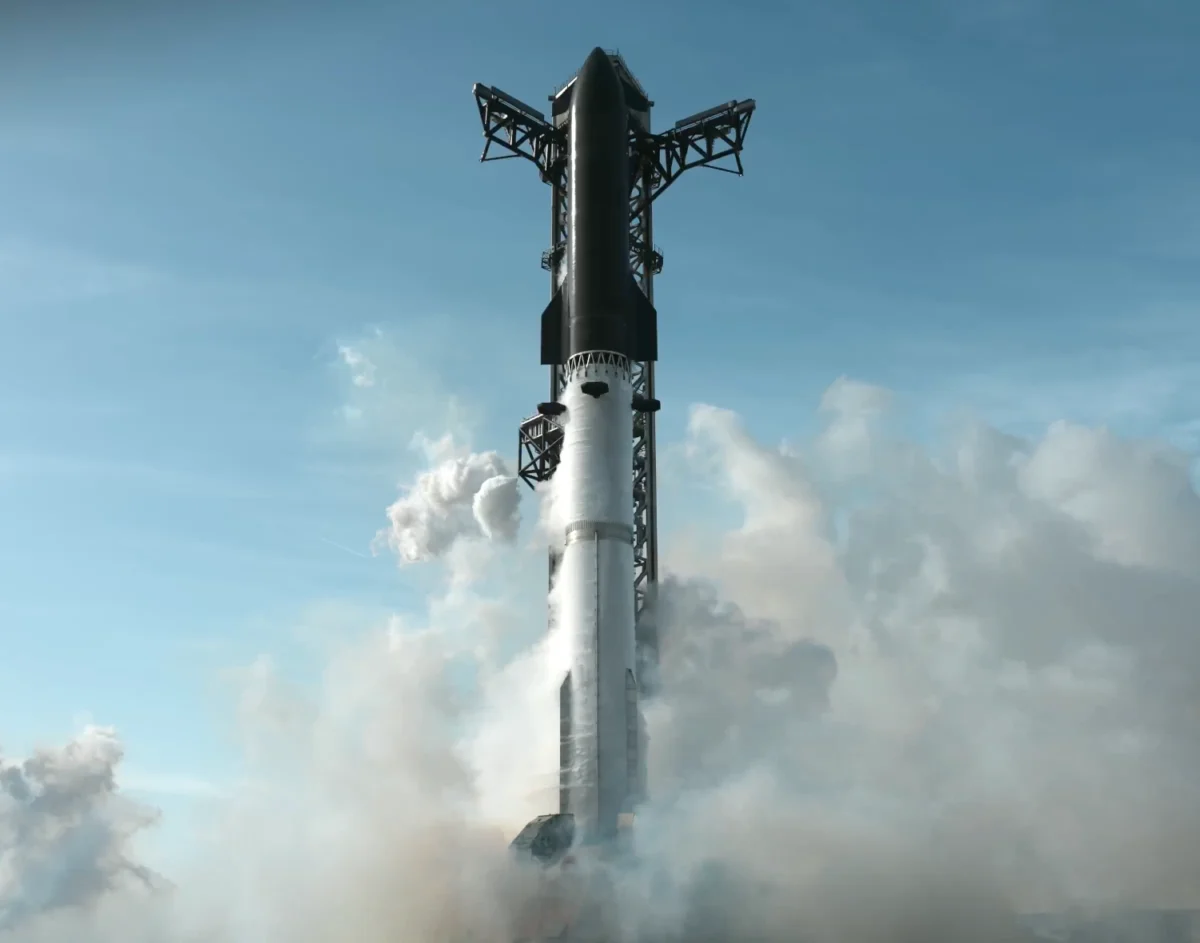
BOCA CHICA, Texas — SpaceX abruptly halted the second attempted launch of its upgraded third-generation Starship rocket system on Thursday. The automated abort occurred just moments after the massive booster’s engines began their ignition sequence at the company’s Starbase development and launch complex in South Texas.
The high-profile scrub represents a temporary setback for the aerospace giant, marking its first launch attempt since transitioning to a publicly traded corporation in a historic Initial Public Offering (IPO) last month. The failure of several newly designed Raptor engines to ignite triggered an automatic shutdown, forcing the company to postpone the mission and schedule hardware replacements.
Chronology of the Aborted Launch
The launch window on Thursday afternoon initially appeared to progress without major technical hurdles. Engineers at Starbase proceeded with the complex, multi-hour process of super-cooling and loading liquid oxygen and liquid methane propellants into both the massive Super Heavy booster and the Starship upper stage.
[T-Minus 1:00] ───► Brief Technical Hold (Resolved quickly)
[T-Minus 0:05] ───► Water Deluge System Activates
[T-Minus 0:00] ───► Ignition Sequence Begins (Visual fire/smoke)
[T-Minus 0:00+] ──► Automatic Launch Abort Triggered (4 Raptors fail to fire)
[Post-Abort]   ───► Safe State & Cryogenic Propellant Detanking
As the countdown entered its final minutes, the launch director cleared the vehicle for flight, with only a brief, temporary hold called at the T-minus one-minute mark. This hold was quickly resolved, and the countdown resumed its progression toward zero.
At T-minus zero, the launchpad’s high-pressure water deluge system—designed to suppress the immense acoustic and vibrational energy generated by the rocket—activated as scheduled. Visual feeds from the launch site showed the base of the Super Heavy booster engulfing in flame and exhaust as the ignition sequence commenced.
However, within fractions of a second, the automated flight computer system commanded a total shutdown of the booster. Telemetry graphics displayed during SpaceX’s official live broadcast indicated that four of the upgraded Raptor engines failed to fire upon ignition, immediately violating the vehicle’s strict safety and thrust-to-weight parameters required for liftoff.
Following the abort, launch controllers immediately transitioned the pad to a safe state. SpaceX engineers began the hours-long process of detanking—removing the highly volatile cryogenic propellants from both the booster and the upper-stage vehicle—before technicians could safely approach the launch mount to conduct a physical inspection.
Technical Analysis and the Shadow of the May Flight
The aborted mission was intended to be the second flight of the Starship V3 (Version 3) architecture, an upgraded iteration of the massive launch system. The V3 platform features stretched tanks, increased thrust capacity, and aerodynamic refinements designed to maximize payload volume and operational efficiency.
The Raptor Engine Challenge
The core issue behind Thursday’s abort lies in the ignition sequence of the Raptor engines. The Super Heavy booster is powered by 33 highly advanced, liquid-methane and liquid-oxygen-burning Raptor engines utilizing a complex full-flow staged combustion cycle. While this design offers industry-leading efficiency and thrust, it demands precise thermal management and pressure synchronization during startup.
Writing on his social media platform, X, SpaceX CEO Elon Musk confirmed the technical cause of the scrub:
"Some of the engines didn’t start, triggering an automatic launch abort."
Musk added that the company will be forced to replace two of the Raptor engines on the booster before attempting another flight. Consequently, SpaceX has ruled out any further launch attempts until next week at the earliest, allowing technicians time to roll the vehicle back or service the engines directly on the orbital launch mount.
Lessons from the May Test Flight
This launch attempt follows the maiden flight of the Starship V3 in May, a mission that yielded highly polarized results:
- The Successes: The May flight successfully demonstrated the vehicle’s structural integrity under maximum aerodynamic stress and achieved a major milestone by deploying a series of Starlink mass simulators into space. Additionally, the Starship upper stage performed a controlled re-entry and executed a successful simulated landing maneuver over the ocean.
- The Failures: The Super Heavy booster stage suffered a critical malfunction during its descent phase, preventing it from performing its final landing burn and causing it to break apart over the Gulf of Mexico. Furthermore, the Starship upper stage lost an engine during its ascent phase, though onboard computers compensated to reach the target suborbital trajectory.
The failure of the Super Heavy booster in May prompted a formal incident review overseen by the Federal Aviation Administration (FAA). The regulatory agency only cleared SpaceX to return to flight earlier this week, after verifying that the company had successfully identified the root causes of the booster descent failure and implemented corresponding engineering fixes.
Official Responses and Regulatory Status
In the wake of the abort, both corporate leadership and regulatory bodies have moved to clarify the path forward.
SpaceX’s engineering teams are currently analyzing telemetry data to determine why four engines failed to ignite and why two specifically require complete replacement. Under FAA guidelines, because the vehicle did not lift off and no safety boundaries were breached, the abort is classified as an operational launch scrub rather than a mishap. This distinction is crucial, as it means SpaceX does not automatically face another mandatory, agency-led investigation before its next launch attempt, provided the root cause of the engine ignition failure is resolved within their existing licensed operating parameters.
The FAA, which maintains strict oversight of the Boca Chica launch site due to its proximity to environmentally sensitive wetlands and public beaches, has not issued any new restrictive mandates following Thursday’s event. The launch license granted earlier this week remains active, clearing the way for the scheduled attempt next week once hardware replacements are complete.
Market Implications: The Post-IPO Reality
Thursday’s launch abort carries unprecedented financial stakes for SpaceX, marking the company’s first major flight test since its historic Initial Public Offering on June 12.
The Transition to Public Markets
For over two decades, SpaceX operated as a private entity, allowing Elon Musk to pursue an aggressive, iterative "fail-forward" development philosophy. Under this model, dramatic mid-air explosions and launchpad aborts were embraced as valuable data-gathering exercises.
However, the company’s record-breaking IPO—which raised more than $85 billion and briefly pushed SpaceX’s market capitalization to rival tech giants like Amazon and Microsoft—has ushered in a new era of intense public market scrutiny. Wall Street analysts and institutional investors accustomed to predictable aerospace operations are now reacting directly to engineering setbacks.
SpaceX Stock Price Movement (Post-IPO vs. Abort)
$150 |-----------------------------------------
     |   * (IPO Launch Peak)
$140 |----*------------------------------------
     |
$130 |------------------------* (Thursday Close: Below $135 IPO)
     |                       /
$120 |----------------------/-----------------
     |         *------------* (After-Hours Drop: Down >4%)
     |_________________________________________
     June 12                               July (Present)
On Thursday, even before the launch attempt, SpaceX’s stock closed below its initial IPO price of $135 per share, reflecting a broader market cooling over the past month. Following the immediate broadcast of the aborted launch, SpaceX shares tumbled an additional 4% in after-hours trading, underscoring the volatile relationship between flight-test outcomes and investor confidence.
The Economic Urgency of Starlink V3
The postponement also delays the deployment of SpaceX’s highly anticipated third-generation Starlink satellites. The primary objective of this mission was to launch these upgraded satellites into a low deployment orbit.
| Satellite Generation | Operational Goal | Key Feature | Fate on This Mission |
|---|---|---|---|
| Starlink V1/V2 | Global Broadband | Standard Phased Arrays | Standard Orbit Insertion |
| Starlink V3 | Orbital Data Centers | High-Throughput Edge Computing | Designed to burn up in 20 mins |
Because Starship V3 has not yet demonstrated the capability to reliably achieve a stable, circular Earth orbit and perform payload door operations under standard orbital conditions, these V3 satellites were programmed to re-enter the atmosphere and burn up approximately 20 minutes after deployment.
Despite their short-lived flight profile, testing these satellites in space is critical to SpaceX’s long-term business model. The V3 satellites are designed to lay the groundwork for "orbital data centers"—a highly ambitious concept aimed at establishing space-based edge computing networks.
Starlink is not merely a scientific endeavor; it is the financial engine of SpaceX. It represents the company’s largest source of recurring revenue and remains its only consistently profitable business segment. Delays in deploying Starlink V3 hardware directly impact SpaceX’s capacity to scale its commercial data services, adding commercial urgency to resolving the Starship platform’s reliability issues.
As technicians in South Texas prepare to swap out the damaged Raptor engines, the pressure on SpaceX is dual-fold: the company must satisfy the rigorous technical demands of orbital engineering while navigating the immediate, unforgiving reactions of public market investors.
