




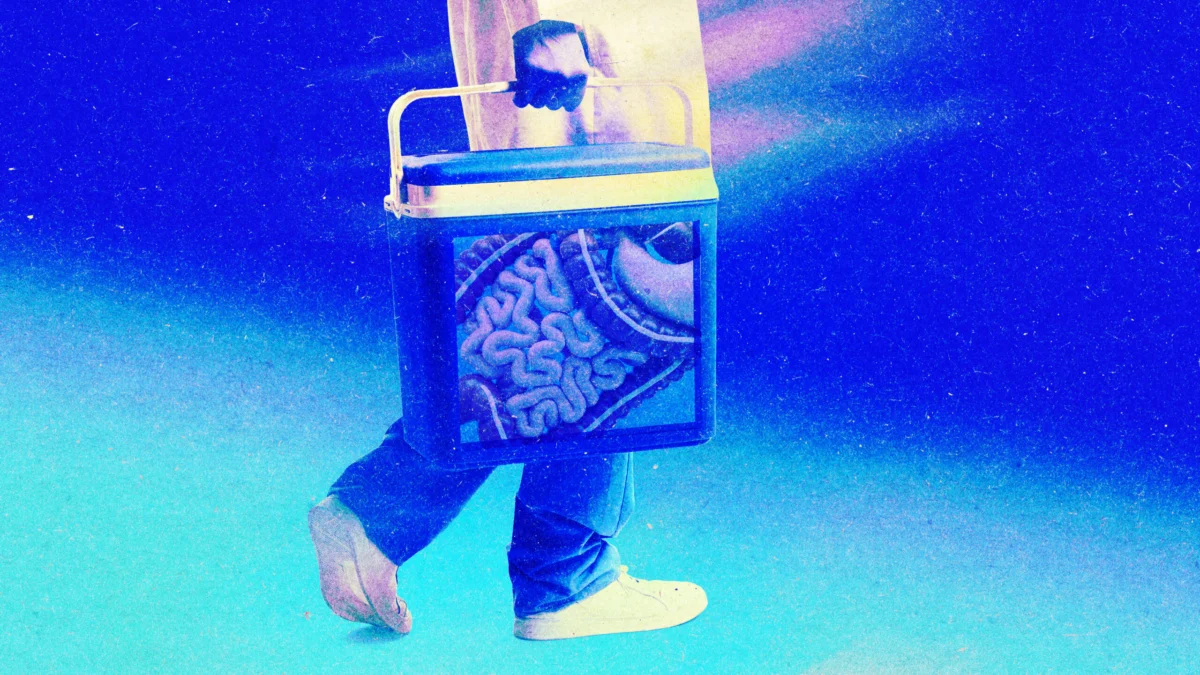
The global healthcare system faces a persistent, tragic bottleneck: the desperate shortage of donor organs. Every year, thousands of patients die on waiting lists, not because organs aren’t available, but because they cannot be transported and transplanted in time. Currently, a donor organ is a "ticking time bomb," surviving only a few hours on ice before cellular decay renders it useless.
However, a revolutionary shift is underway. Researchers are moving beyond simple refrigeration, exploring advanced techniques—from "supercooling" to mechanical perfusion—that promise to turn the dream of reliable, long-term organ banking into a reality.
The Tyranny of Time: Why Organs Fail
In current clinical practice, donor organs are kept in a state of suspended animation on ice, which slows metabolic processes but does not halt them. This "cold storage" approach is notoriously fragile. As time passes, the organ begins to suffer from ischemic injury—damage caused by a lack of oxygenated blood flow.
The goal for the next decade is to establish organ banks: facilities where hearts, lungs, kidneys, and livers could be stored for days, weeks, or even months. This would fundamentally change the logistics of transplantation, allowing doctors to perform thorough genetic matching, conduct stress tests on the organs, and coordinate surgeries with precision rather than emergency-room chaos.
A Landmark Breakthrough: The Success of Supercooled Kidneys
The field recently hit a major milestone. A research team, led by Matthew Powell Palm of Texas A&M, successfully demonstrated a new method for organ preservation: supercooling.
In a landmark study, the team took kidneys from pigs—whose physiology is remarkably similar to humans—and cooled them to -4°C (25°F) without the formation of ice crystals. The kidneys were then successfully reimplanted into living pigs. The results showed that these supercooled organs performed significantly better than those stored using traditional ice-based methods.
This achievement is critical because ice is the primary enemy of organ preservation. When water inside cells freezes, it expands, forming jagged ice crystals that puncture cell membranes and destroy the organ’s structural integrity. By avoiding the phase change into ice, the researchers preserved the delicate architecture of the kidney, proving that "supercooling" could eventually extend the viability of human organs from hours to days.
Chronology of Innovation: From Embryos to Brains
The quest to master extreme cold has a long and complex history, moving from the microscopic to the monumental.
- 1970s–1990s (The Era of Gametes): Scientists perfected the cryopreservation of reproductive cells. Today, it is routine to cool eggs, sperm, and embryos to -196°C in under two seconds. These cells can be thawed decades later and used to create healthy children.
- 2014 (The Alcor Case): The death of gerontologist Stephen L. Coles brought cryonics into the spotlight. His brain was perfused with cryoprotective chemicals (acting as biological antifreeze) and cooled to -146°C.
- 2025–2026 (The Era of Whole Organs): Recent years have seen the transition from theoretical cryonics to practical organ preservation. Studies on pig kidneys and human uteruses indicate that we are finally moving past the "ice-only" era.
While human cryonics—the preservation of entire bodies or brains—remains a speculative field, the lessons learned from these efforts are informing medical breakthroughs. When cryobiologist Greg Fahy analyzed portions of Coles’s brain years after his death, he found that the cells "bounced back" upon rewarming. While this does not prove the brain is "alive" or capable of consciousness—as experts like Matthew Powell Palm warn, "there are so many ways those neurons could be toast"—it confirms that the structural preservation of complex human tissues is physically possible.
Supporting Data: Perfusion as the Bridge
While cryogenics focuses on cold, another school of thought focuses on movement. "Machine perfusion" technology has emerged as the most viable near-term solution for organ longevity.
Unlike cold storage, which is static, machine perfusion devices circulate oxygenated, nutrient-rich solutions through the organ, mimicking the body’s natural cardiovascular system.
- Liver and Kidney Preservation: These devices are already in use, successfully extending the window of viability for up to 24 hours.
- The "Mother" System: In March 2026, researchers in Valencia unveiled a perfusion system nicknamed "Mother," which successfully kept a human uterus viable outside the body for an entire day.
- Ocular Potential: Scientists are even adapting these protocols for human eyeballs, opening the door to the potential for whole-eye transplants in the near future.
Official Responses and Expert Outlook
The scientific community is cautiously optimistic. Experts emphasize that the jump from pig kidneys to human hearts or lungs is massive. The vascular complexity of a human heart, for instance, requires a much more sophisticated perfusion cocktail than a kidney.
"We are currently in a ‘buzzing’ period of discovery," says one researcher involved in the Texas A&M study. "The data shows that we can bypass the damage caused by freezing, and we can simulate the body’s environment via machines. The challenge now is to scale these technologies so they are as reliable as a standard refrigerator."
However, there is a consensus that we must remain grounded. Matthew Powell Palm notes that while the "supercooling" of kidneys is a triumph, "we need to ensure that the long-term biological function of these organs matches the short-term results." The goal is not just to keep an organ "looking" healthy, but to ensure it functions perfectly once it begins filtering blood or pumping oxygen for a patient.
Implications for Global Health
If organ banking becomes a reality, the implications for society would be profound:
- Equity in Access: Currently, geographic proximity is a major factor in who gets an organ. If an organ can be stored for weeks, it can be shipped globally, ensuring that the best-matched patient receives it, regardless of where they live.
- Reduction in Waste: Thousands of donated organs are discarded every year because a suitable recipient cannot be found within the narrow time window. Longer storage times would virtually eliminate this waste.
- Elective Surgery: Transplantation would shift from a "crash" emergency procedure to an elective, scheduled surgery, allowing patients to be in the best possible physical condition before entering the operating room.
- Economic Impact: While the cost of perfusion machines and cryopreservation tech is high, the long-term savings of moving patients off dialysis and other life-support systems would be astronomical.
The Road Ahead
As we look toward the next decade, the convergence of cryobiology, perfusion engineering, and chemical preservation is set to transform the landscape of human medicine. We are moving away from the biological lottery of organ donation toward a more controlled, technological future.
The journey from a pig kidney in a lab to a fully functional, banked human heart is still fraught with technical hurdles. Yet, the progress made by teams like those at Texas A&M and in Valencia suggests that we are no longer asking if we can extend the life of an organ, but how long we can make it last.
For the millions of patients currently waiting for a second chance at life, this research offers something that was previously in short supply: time.
This article is based on ongoing research covered by MIT Technology Review. For further insights into the future of biotech and organ preservation, readers are encouraged to subscribe to "The Checkup," a weekly newsletter dedicated to the latest advancements in medical science.
