





The fifth-generation Toyota Supra (A90) has officially reached the end of its road. Its departure feels abrupt to many enthusiasts, leaving behind a market landscape devoid of a direct successor. In an era where sports cars are increasingly viewed as niche relics, the MkV Supra’s tenure feels like a fleeting spark—a bold, collaborative experiment that managed to defy the industry’s shift toward pure electrification and utility.
To understand how this machine came to be, we must look beyond the assembly lines of Magna Steyr in Austria and into the creative heart of Toyota’s Calty Design Research studio in California. Recently, we sat down with Alex Shen, Studio Chief Designer at Calty, to dissect the complex, often arduous journey from a digital concept to a global production icon.
The Genesis: A Design Studio in the Shadows
Calty Design Research, Toyota’s advanced design arm, functions as an incubator for ideas that often exist far outside the realm of commercial viability. For the designers at Calty, the process involves a steady stream of "early studies"—conceptual sketches and clay models that serve as stylistic exercises rather than blueprints for a showroom floor.
"We’re an advanced design studio, so a lot of our work is not really intended for public consumption," Shen explains. "Maybe those ideas aren’t quite hashed out yet, or they’re still in the works."
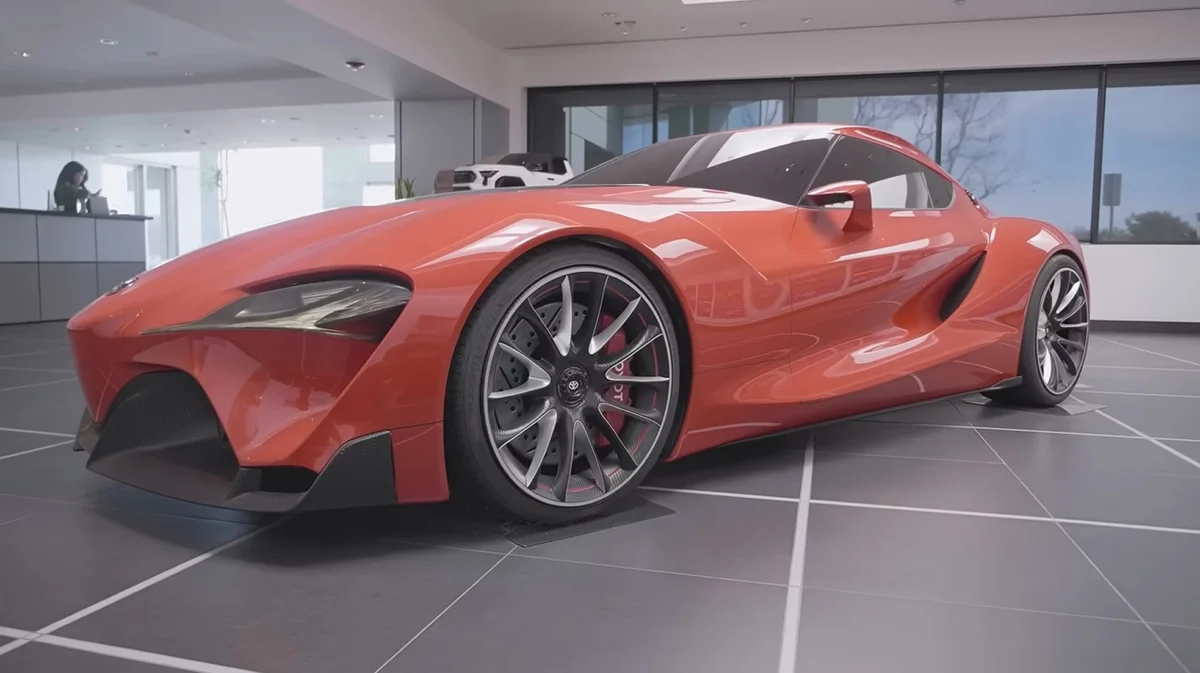
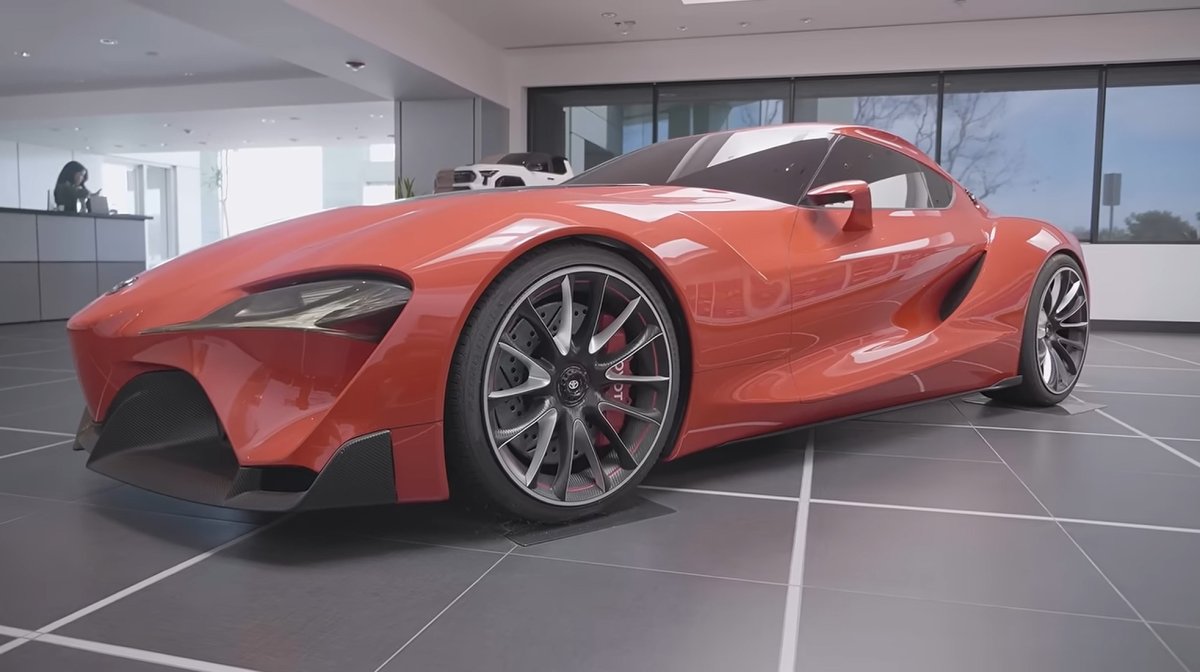
When a design moves from the shadowy corners of an advanced studio to the harsh, unforgiving light of a production facility, it is rarely a smooth transition. The evolution of the Toyota FT-1 concept into the MkV Supra serves as a masterclass in compromise, vision, and the occasional stroke of genius. It was a project that began as a passion play, not a mandate from corporate headquarters.
Chronology: From Digital Pixels to Asphalt Reality
The story of the MkV Supra did not start with a chassis or an engine; it started with the question, "What should a Supra be next?"
The Supra lineage had undergone a radical evolution over its history, transitioning from the long-hood, grand-touring Celica-Supra of the 1970s to the pure, twin-turbocharged sports car icon of the 1990s. By the time Calty began its internal exploration, the sports car segment was viewed by many automotive executives as a "money-loser." Toyota was not in the midst of a brand-identity crisis that necessitated a halo car, making the pitch for a new sports car a difficult sell to the brass.
The Gran Turismo Turning Point
Knowing that static renderings would fail to capture the imagination of decision-makers, the Calty team took an unconventional approach. They didn’t just want to show the car; they wanted the leadership to experience it.
The turning point occurred when the team partnered with Polyphony Digital, the developers of the Gran Turismo franchise. By digitizing the FT-1 concept, they allowed Toyota executives—including the legendary Akio Toyoda—to experience the car’s proportions and "vibe" in a virtual environment.
"We put it in the machine. We put it in Gran Turismo," Shen recalls. After a few laps in the virtual FT-1, the feedback was instantaneous and positive. The digital simulation proved that the spirit of the design was sound. This green-lit the development of a physical show car, a rarity in modern automotive design where concept-to-show-car budgets are increasingly scrutinized.
Supporting Data: The Constraints of Reality
Transitioning from a free-form concept like the FT-1 to a production vehicle brought the design team face-to-face with the cold reality of automotive engineering. The MkV Supra required a shared platform, leading to the high-profile partnership with BMW.
For the Calty designers, this meant the dream of the FT-1 had to be reconciled with the structural hard points of the Z4 chassis. The team had to balance:
- Physical Constraints: The fixed wheelbase and engine placement dictated by the shared BMW architecture.
- Financial Constraints: Developing a car that, while not expected to be a massive volume seller, still needed to hit specific profit margins.
- Aerodynamic Realities: Ensuring that the aggressive aesthetic of the concept car functioned within the parameters of wind tunnel testing and high-speed stability.
Shen notes that the team had to work backward from the "spirit" of the Supra. "Version by version, it changed from a Celica Supra to a pure sports car," he says. The challenge was to maintain that lineage while adapting to a modern manufacturing ecosystem that was fundamentally different from the one that produced the A80 Supra in the 1990s.
Official Responses and Design Philosophy
Alex Shen’s perspective on the project is one of quiet satisfaction mixed with professional pragmatism. When asked about the disconnect between the concept and the final production model, Shen emphasizes that design is a living, breathing process.
"Time always tells how good of a product you designed," Shen remarked during our interview. He suggests that the "advanced" nature of Calty means they are often designing for a future that hasn’t fully arrived yet. When a design finally reaches the consumer, it is the result of years of iterative refining, where the "early studies" are slowly stripped of their impracticalities to reveal the core essence of the vehicle.
The design philosophy at Calty remains rooted in the belief that a sports car must be "visceral." It isn’t just about the spec sheet—the horsepower, the torque, or the 0-60 times. It’s about the sensation of the design. "It’s not enough just to put a car out there," Shen says. "You’re supposed to drive these sports cars."
Implications: The End of an Era?
The departure of the MkV Supra leaves a significant void. With no successor currently on the horizon, we are left to wonder what the future holds for the "fun-to-drive" segment of the automotive industry.
The Cost of Innovation
The MkV Supra project serves as a reminder that sports cars are increasingly difficult to justify in an era of platform-sharing and electrification. The collaboration with BMW was not just a cost-saving measure; it was a necessity for the car’s existence. Without that partnership, the MkV might never have moved beyond the digital realm of Gran Turismo.
The Legacy of the MkV
As we look back, the implications of the MkV Supra’s run are clear:
- Collaborative Engineering is the New Normal: High-performance niche vehicles can no longer survive as standalone projects for most mass-market manufacturers.
- Digital Prototyping is Essential: The use of gaming technology to validate design concepts is no longer a gimmick; it is a vital tool for convincing corporate stakeholders to invest in emotional, rather than purely logical, products.
- The "Visceral" Quotient: Even as the industry moves toward autonomous and electric vehicles, there remains a demand for cars that prioritize the driver’s experience. The MkV Supra proved that even a polarizing design could find a loyal following if it captures that elusive "spirit" of the past.
In conclusion, the MkV Supra was more than just a car; it was a testament to the stubbornness of designers who refused to let a dream die on a computer screen. While its production run may have been shorter than many hoped, it succeeded in its primary goal: to reignite the fire of the Toyota sports car legacy for a new generation. Whether or not we see a MkVI in the future, the lessons learned from the FT-1’s journey will undoubtedly influence the next generation of Toyota’s performance vehicles.
