





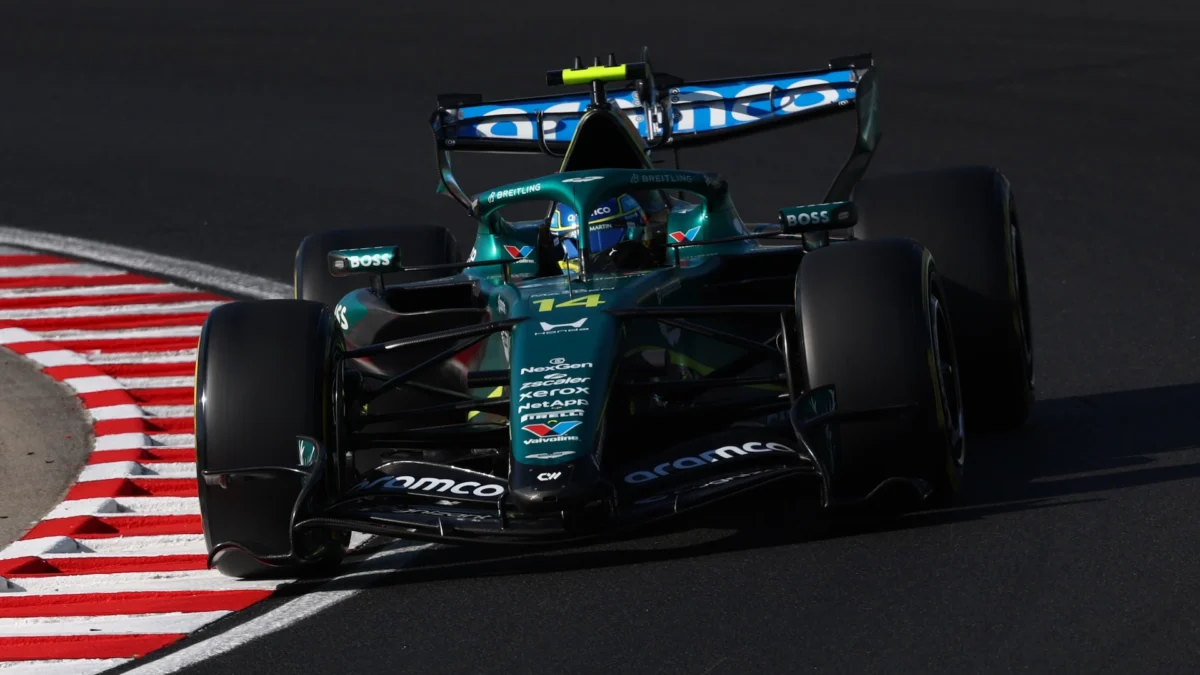
The 2026 Formula 1 season has been, by any objective metric, a difficult campaign for the Aston Martin Aramco F1 Team. As the sport navigates the complexities of new technical regulations, the Silverstone-based outfit has found itself slipping down the order, often languishing at the back of the pack. However, as the circus arrives at the iconic Hungaroring for the Hungarian Grand Prix, the atmosphere surrounding the team’s garage is one of cautious, calculated optimism.
In a move that signifies a pivotal turning point for the team’s season, Aston Martin has rolled out a comprehensive 16-part upgrade package for the AMR26. Described by team principal Mike Krack as a "significant aerodynamic overhaul and a weight reduction program," this "B-spec" evolution is designed to salvage a season that has thus far been defined by aerodynamic inefficiency and mechanical struggles.
The Anatomy of the Upgrade: A Comprehensive Revision
The upgrade package, which debuted during Friday’s Free Practice 1 (FP1) session, is one of the most aggressive mid-season technical shifts in recent memory. Rather than opting for the incremental, "trickle-down" approach preferred by many teams, Aston Martin has chosen to execute a "big-bang" deployment.
The technical overhaul targets three primary pillars of performance: airflow management, downforce generation, and mass reduction. According to documentation provided to the FIA, the primary modifications include:
- Floor Geometry: A complete redesign of the underfloor tunnels to optimize Venturi effect efficiency.
- Sidepod Sculpting: Refined intake profiles and bodywork curvature to improve the "coke bottle" effect, directing cleaner air toward the rear beam wing and diffuser.
- Suspension Geometry: Alterations to the wishbone mounting points to reduce anti-dive and anti-squat characteristics, aiming for a more stable aerodynamic platform.
- Weight Optimization: Strategic use of lighter composite materials in the non-structural bodywork panels, aimed at bringing the car closer to the minimum weight limit.
These changes are not merely cosmetic; they represent a fundamental shift in how the AMR26 interacts with the track surface. By reducing drag while simultaneously increasing vertical load, the engineering team hopes to address the chronic instability that has plagued Fernando Alonso and Lance Stroll throughout the European leg of the season.
Chronology of the Struggle: From Podium Hopes to Back-of-the-Pack
To understand the gravity of this weekend’s upgrade, one must look at the recent trajectory of the team. The beginning of the 2026 season saw Aston Martin battling for points, but as the development race accelerated, the team hit a wall.
The decline reached a nadir at the Belgian Grand Prix at Spa-Francorchamps. In a performance that sent shockwaves through the paddock, the Aston Martin cars were roughly five seconds off the pace of the pole-sitting machines. Being the slowest cars on the grid—a humiliation for a team with championship aspirations—served as a catalyst for the board of directors and the technical department to fast-track the current "B-spec" components.
Friday’s practice session in Budapest was supposed to be the moment of redemption. However, the unpredictability of F1 development reared its head immediately. While the data collection phase began successfully, Lance Stroll suffered a terminal rear suspension failure during the session. While the team has characterized the issue as a "teething problem" related to the new geometry, it highlights the inherent risks of introducing so many new parts simultaneously with limited testing time.
Supporting Data and the Engineering Perspective
Adrian Newey, the legendary technical mind now guiding the team’s vision, provided a measured assessment of the progress during a press conference at the Hungaroring.
"It’s very early days in terms of understanding the full potential of this package," Newey noted. "The provisional results are promising, but we must be realistic. We are currently very short on spare parts, which forces us to operate with extreme caution. We aren’t pushing the limits of the new floor yet because we cannot afford a major crash that would deplete our inventory."
The data from FP1 suggests that the car is responding better to mid-corner inputs, though the team is keeping specific performance targets under wraps. There are no claims of "finding a second per lap" at this stage; instead, the focus is on achieving a stable, predictable balance that allows drivers like Fernando Alonso to extract maximum performance without the car behaving erratically.
The strategy is clear: use the Hungarian weekend as a massive data-gathering exercise to validate the CFD (Computational Fluid Dynamics) and wind tunnel models. If the track data matches the simulation, the team will have a baseline to build upon for the remainder of the year.
Official Responses and Strategic Implications
The pressure on Aston Martin is immense, not just because of the current standings, but because of the external factors looming on the horizon. The most significant of these is the impending integration of the overhauled Honda power unit, scheduled for the Dutch Grand Prix at Zandvoort immediately following the summer break.
Mike Krack has emphasized that the current aerodynamic upgrades are the foundation upon which the Honda engine’s potential will be unleashed. "This isn’t just about this weekend," Krack stated. "This is about the second half of the season. We have to ensure that when the power unit updates arrive, the chassis is capable of handling that power and translating it into speed. If the car is draggy or unstable, the engine gain will be lost."
The internal sentiment is that the team has "hit reset." The frustration previously voiced by Fernando Alonso—who famously remarked that the current generation of F1 cars are "the worst ever"—has seemingly shifted from outward anger to a focused, albeit impatient, collaboration with the engineering staff.
The Path Ahead: A Summer of Reckoning
As the team looks beyond Budapest, the calendar presents a challenging series of circuits: Zandvoort, Monza, and Baku. These tracks offer a diverse range of aerodynamic requirements, from high-downforce cornering to low-drag straight-line speed.
The decision to bring these upgrades to Hungary is a tactical gamble. By introducing the parts now, the team gains a three-week window during the summer shutdown to analyze the data, refine the setup, and manufacture additional spare parts. If the package performs well, Aston Martin could feasibly jump back into the midfield scrap, potentially challenging for points consistently by the time the series returns to action in the Netherlands.
However, if the data proves inconclusive or if the suspension issues seen with Stroll persist, the team faces a difficult choice: continue developing the AMR26, or shift all resources entirely to the 2027 challenger.
For now, the focus remains on the Hungaroring. The technical staff is working through the night, cross-referencing sensor data with the new floor and bodywork configurations. The atmosphere is tense, as it should be when the reputation of a historic brand and the talent of a multi-world champion are on the line.
Whether this "B-spec" machine is the salvation of Aston Martin’s 2026 season or a cautionary tale about the limits of mid-season development remains to be seen. But one thing is certain: the eyes of the F1 world are fixed on the AMR26 this weekend, watching to see if the team can claw its way back from the brink of irrelevance.
