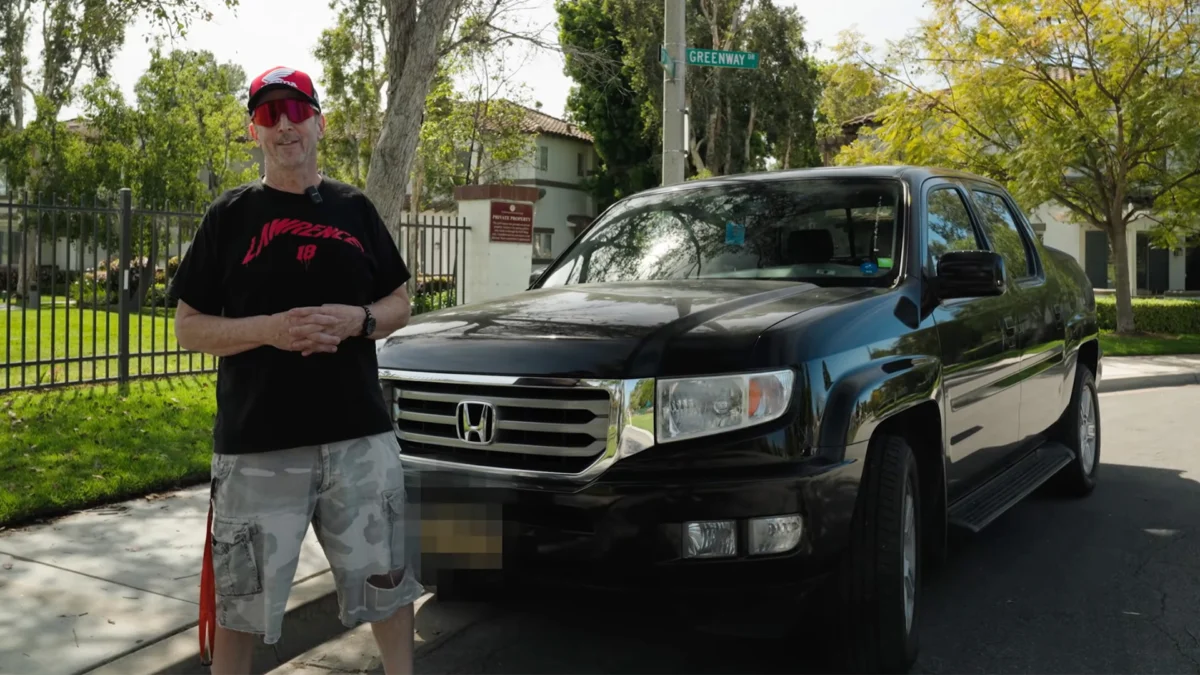





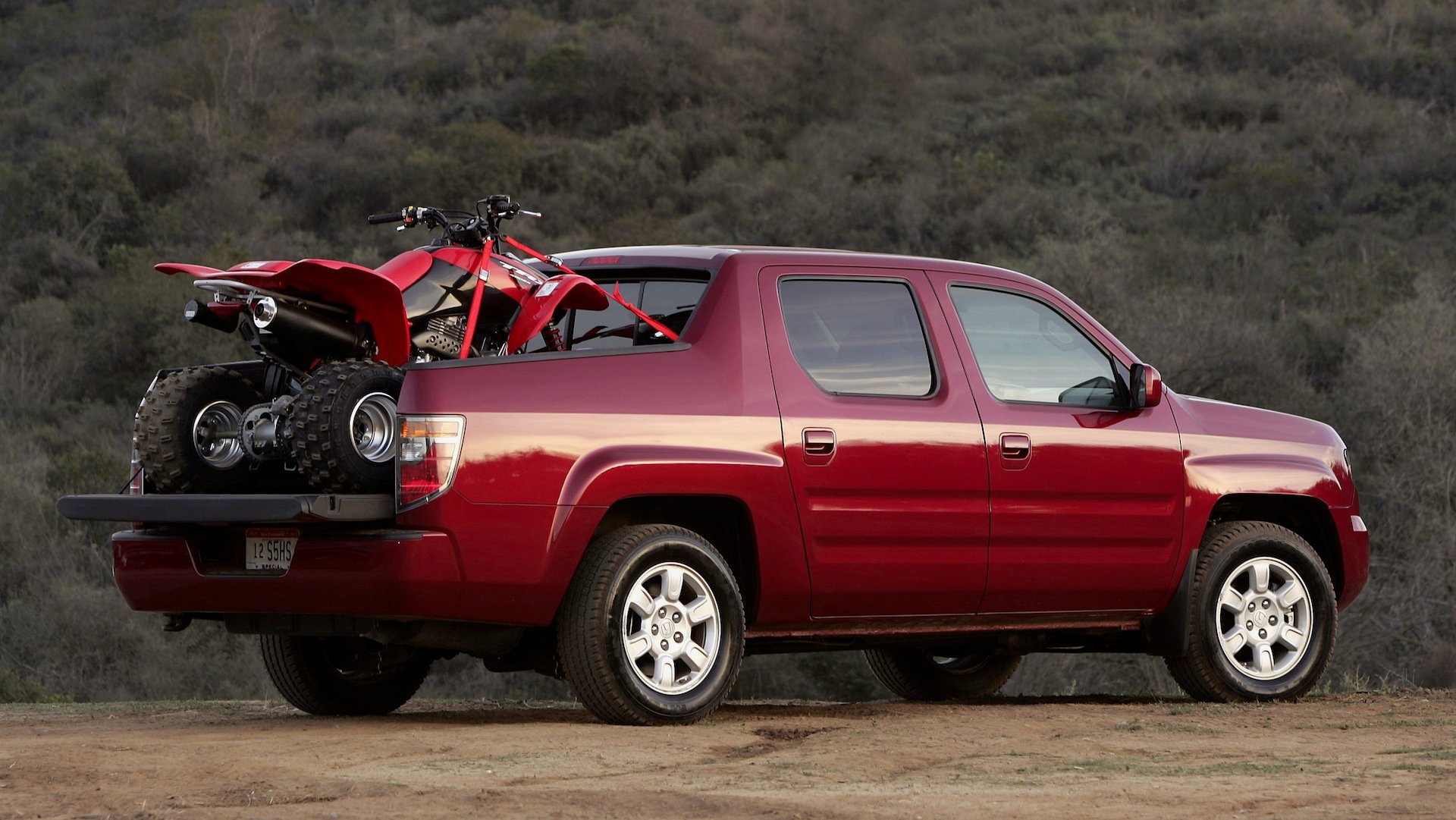
When the first-generation Honda Ridgeline rolled into dealerships in 2005 as a 2006 model, it arrived like an alien craft landing in a segment dominated by the rigid, unchanging traditions of Detroit’s "Big Three." To the casual observer, it was a head-scratcher. To the pickup truck purist, it was a blasphemy. By eschewing the industry-standard body-on-frame architecture in favor of a unibody construction, and by integrating the cab and bed with a polarizing, flying-buttress design, Honda signaled that it wasn’t playing by the rules.
But as it turns out, there was a reason Honda’s first truck looked nothing like a Ford or a Chevrolet: it wasn’t designed as a truck at all.
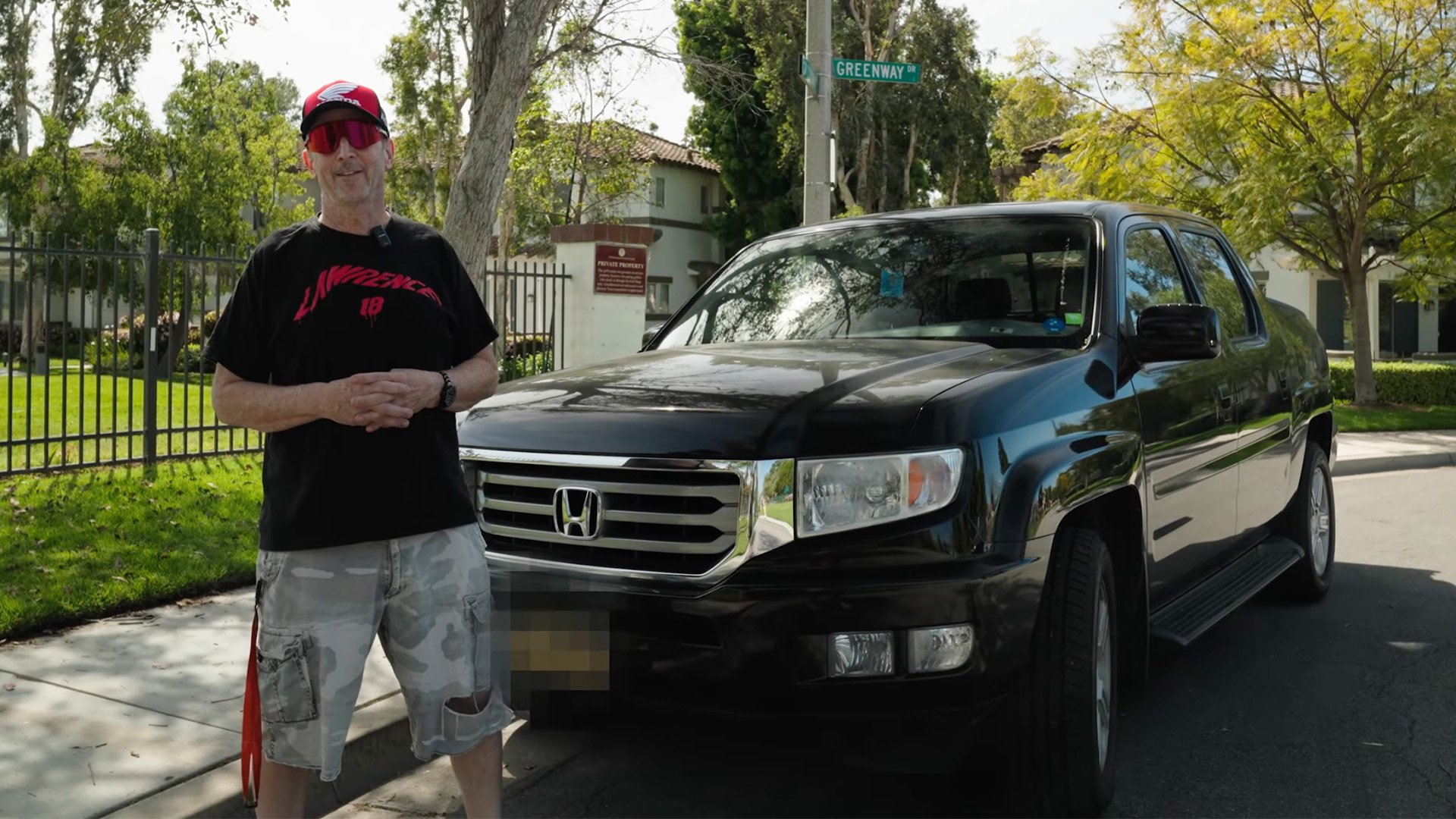
In a candid, deep-dive interview with automotive YouTuber Jack Bontatibus, Don Herner—the lead exterior designer for the original Ridgeline—has finally pulled back the curtain on the clandestine, "boredom-fueled" origin story of Honda’s most controversial vehicle.
The Genesis: An "Advanced Capabilities Vehicle"
Don Herner, a veteran designer who cut his teeth at the ArtCenter College of Design and later honed his skills in the hallowed halls of General Motors’ Corvette design studio, joined Honda with a resume that included the third-generation Acura Integra and the first-generation Acura RDX.
According to Herner, the Ridgeline did not begin as a market-research-driven attempt to capture Ford F-150 buyers. Instead, it was born from a lull in the design studio. "This never really started out to be a truck project per se," Herner explains. "Honda doesn’t make a transmission robust enough to turn the gigantic wheels and tires expected of a traditional truck."
Without the massive, heavy-duty mechanical foundations required for a body-on-frame hauler, the team had to pivot. They began sketching a vehicle that prioritized capability without adhering to the aesthetic limitations of a traditional pickup. Internally, the project was never referred to as a "truck." The design team called it the "Advanced Capabilities Vehicle" (ACV). The commitment to this concept was so strong that Honda reportedly entertained a potential partnership with Nike, aiming to tap into the sportswear giant’s "Advanced Capability Gear" branding—a testament to the high-concept, lifestyle-oriented vision the team had for the project.
Chronology of an Outlier
The development cycle of the Ridgeline was marked by a constant tug-of-war between design ambition and engineering reality.
- 1990s-Early 2000s: The concept phase begins as a "boredom project" within the Honda design studio.
- 2004: Development reaches a fever pitch. Engineering teams must reconcile the designers’ desires for "tough" proportions with the constraints of a unibody platform.
- 2005: The production model debuts. It utilizes a heavily modified version of the Honda Odyssey minivan platform, making it the largest vehicle in Honda’s history at the time.
- 2006: The Ridgeline hits the North American market, baffling the traditional automotive press but finding a dedicated following among buyers who prioritize utility over towing capacity.
- 2006–Present: Features like the dual-action tailgate and in-bed trunk become industry benchmarks for clever utility, eventually influencing the wider market.
Engineering the Unconventional
The design sketches for the Ridgeline initially featured massive 32-inch and 35-inch wheels, mirroring the aggressive stance of heavy-duty pickups. However, the engineering department quickly intervened. To maximize the at-wheel torque of the 3.5-liter V6 engine, the team needed the smallest possible diameter for the wheel-and-tire combination.
The powertrain—a 3.5-liter V6 mated to a five-speed automatic—produced 255 horsepower and 252 lb-ft of torque. While these figures were modest compared to the V8 engines found in competitors, the Ridgeline managed a respectable 5,000-pound towing capacity and a 1,550-pound payload.
Crucial to this performance was the cargo box. Honda opted for a fiberglass-reinforced composite bed rather than traditional steel. This choice was driven by a desire for long-term reliability and rust resistance. The team went to extreme lengths to prove the durability of this design, running extensive simulations where the bed was intentionally overloaded until the point of structural failure. Furthermore, the dual-action tailgate mechanism—which swings outward like a door and drops down like a traditional tailgate—was engineered to run the entire length of the bed to ensure it could support the weight of multiple people sitting on it.
Defying Corporate Mores
Beyond the engineering, the Ridgeline faced significant internal hurdles, particularly regarding branding. In a move that challenged Japanese corporate culture at the time, the designers insisted on spelling out "H-O-N-D-A" across the tailgate in the company’s official typeface.
"This violated Japanese corporate mores," Herner notes. At the time, Honda’s identity was primarily tied to its sedans and the "H" logo. To get the bold "HONDA" lettering on the back of the truck, the design team had to secure personal approval from the company president. It was a clear signal that the Ridgeline was intended to be a flagship of the brand’s versatility.
Legacy and Future Implications
The Ridgeline was packed with interior innovations that were years ahead of their time. It featured a hidden CD loader behind the head unit, a dedicated storage spot for handbags in the center console, and fold-up rear seats that maximized cabin utility. While the CD player has faded into obscurity, the modular interior storage solutions have become staples in modern automotive design.
The implications of the Ridgeline’s existence are profound. By creating a vehicle that occupied the space between a crossover SUV and a traditional truck, Honda proved that there was a massive, underserved demographic of buyers who needed a bed but didn’t want the fuel economy penalties or the stiff ride of a body-on-frame truck.
Today, as the market moves toward the next generation of the Ridgeline, the narrative is shifting. While the current generation features more conventional, "truck-like" styling to appease critics, it remains a unibody vehicle at its heart. The upcoming next-gen model promises an even more rugged aesthetic, but the industry is watching closely to see if Honda can maintain the "uniqueness" that defined the original ACV.
Conclusion: A Legacy of "What If"
The story of the first-generation Honda Ridgeline is a masterclass in challenging industry dogma. It reminds us that sometimes, the most innovative vehicles are not born from focus groups or market trends, but from a small group of designers asking, "What if we built this differently?"
Don Herner’s revelations serve as a poignant reminder that the Ridgeline wasn’t a failed attempt at a truck—it was a successful attempt at something entirely new. Whether it is remembered for its strange looks or its ingenious tailgate, its place in automotive history as the "Advanced Capabilities Vehicle" is secure. As the truck market continues to evolve, the Ridgeline remains a benchmark for what happens when a manufacturer dares to ignore the orthodoxy of the segment.
