




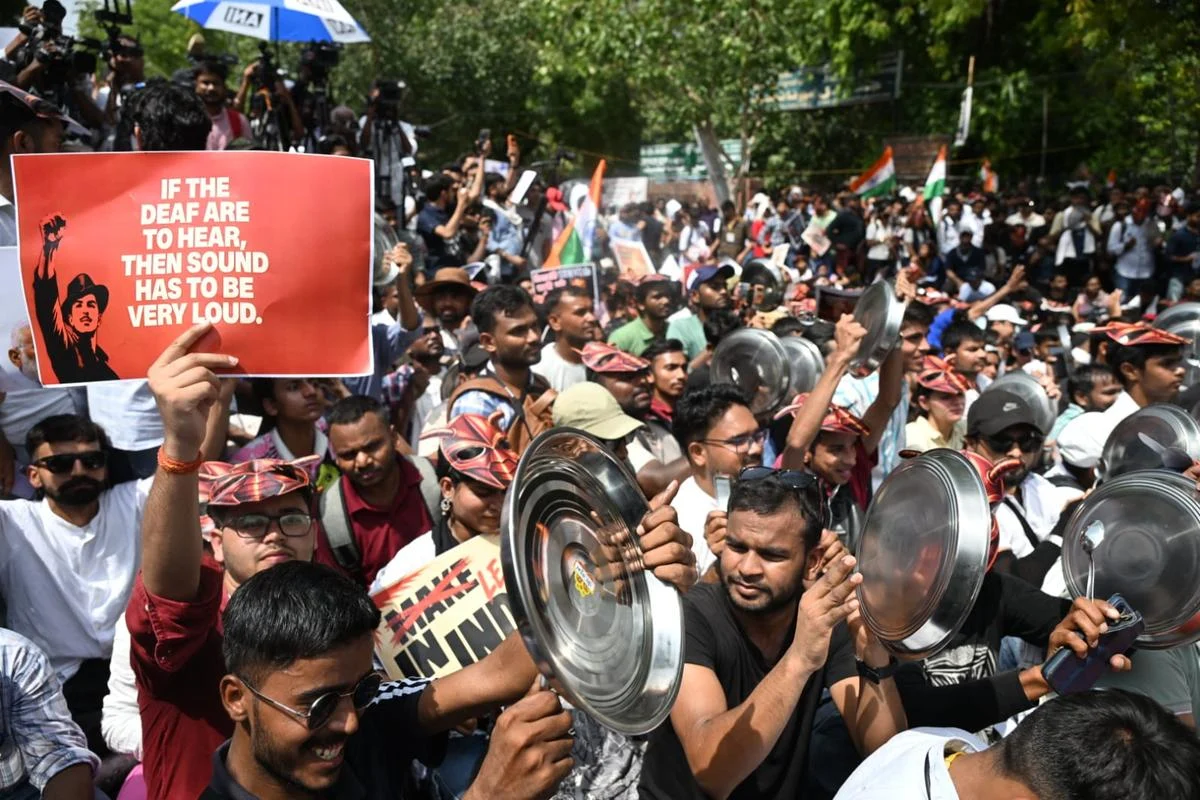
NEW DELHI – In a move that has drawn sharp international condemnation and reignited debates over civil liberties in India, the Lieutenant Governor of Delhi issued an order on July 15 invoking Section 3(2) of the National Security Act (NSA). The decision, which grants police sweeping powers to detain individuals without charge or trial, comes as the Indian capital remains gripped by mass youth-led protests against systemic failures in the national education infrastructure.
Amnesty International has formally denounced the measure, labeling it an “affront to human rights” that threatens to destabilize an already volatile situation. As the Cockroach Janta Party (CJP) continues to mobilize millions of students across the nation, the intersection of bureaucratic negligence and authoritarian police tactics has pushed India’s democratic norms to a precarious tipping point.
The Genesis of a Movement: The NEET-UG Crisis
The current wave of civil unrest traces its origins back to May 2026, when widespread reports confirmed that the answer keys for the National Eligibility cum Entrance Test (NEET-UG)—the primary gateway for aspiring medical students in India—had been compromised. The leak, which affected over two million candidates, was not merely an administrative error; it was an existential blow to a generation of students who had invested years of intense labor and financial resources into their medical aspirations.
The fallout was immediate and tragic. The pressure of the scandal, coupled with the systemic disillusionment of the youth, resulted in at least twenty documented cases of student suicides. This human toll galvanized the Cockroach Janta Party (CJP), a grassroots youth organization that transformed from an online movement into a formidable political force. The CJP’s demands—which include a comprehensive 5-point exam reform charter and state-funded compensation for the families of victims—have resonated deeply with a public increasingly frustrated by perceived elite incompetence.
Chronology of Escalation
The progression from academic protest to a full-scale confrontation with the state followed a rapid trajectory:
- May 2026: Initial reports of NEET-UG paper leaks emerge, leading to widespread outrage. The government announces a mandatory retake for over 2 million students, fueling further resentment regarding the logistical and mental burden placed on candidates.
- June 2026: The CJP organizes large-scale demonstrations. The movement gains traction after Chief Justice of India Surya Kant publicly disparages the protesters, labeling them "unemployed youths" and "cockroaches," a remark that became the namesake and catalyst for the CJP’s branding.
- Early July 2026: Protests escalate as students march toward the Indian Parliament. Delhi Police respond with force, deploying tear gas and batons to disperse the crowds.
- July 15, 2026: The Lieutenant Governor of Delhi invokes Section 3(2) of the National Security Act, effectively authorizing preventive detention for protesters.
- July 17, 2026: Amnesty International issues a formal condemnation, warning that the extension of these powers until October 18 will lead to a suspension of fundamental fair trial rights.
Understanding the National Security Act (NSA)
The National Security Act of 1980 is a controversial piece of legislation that permits the state to hold individuals in administrative detention for up to 12 months without formal charges. The law operates on the premise of “preventive detention,” allowing authorities to imprison individuals based on the mere suspicion that their actions might undermine “public order” or “national security.”
Under Section 3(2), detainees are stripped of their standard procedural protections. They are denied the right to legal counsel when appearing before the three-member Advisory Board, which reviews the detention orders. Furthermore, authorities are not legally required to disclose the specific grounds for detention to the individual for up to 15 days. Critics argue that this creates a “black hole” in the legal system, where the executive branch operates entirely outside the oversight of the judiciary.
Official Responses and Administrative Justifications
The Delhi Police have characterized the invocation of the NSA as a “routine administrative measure” intended to maintain law and order during a period of high-intensity unrest. In a brief statement, department officials emphasized that the current climate of protest has hindered public mobility and threatened government infrastructure, necessitating extraordinary measures to prevent further disruption.
However, legal experts and civil rights advocates reject this characterization. They point to the history of the NSA being weaponized against political dissenters rather than genuine security threats. From the 2020 anti-CAA (Citizenship Amendment Act) protests to the 2026 labor movements in Noida, the pattern remains consistent: the state utilizes the NSA to silence opposition when democratic discourse becomes inconvenient.
Aakar Patel, chair of Amnesty International India, stated:
“This deeply concerning move is an affront to human rights that risks enflaming the situation in Delhi even further. It grants the police a host of discretionary powers to detain people for entirely arbitrary reasons. Fair trial rights guaranteed under international human rights law are essentially suspended.”
The Human Rights Implications
The international community has begun to take note of the situation, with concerns centering on India’s adherence to the International Covenant on Civil and Political Rights (ICCPR).
Violation of ICCPR Standards
The NSA stands in direct conflict with two critical pillars of international law:
- Article 9 (Right to Liberty and Security): The ICCPR mandates that anyone arrested must be informed of the reasons for their arrest and brought promptly before a judge. The NSA’s 15-day window for disclosure and the lack of a judicial trial clearly violate this standard.
- Article 14 (Right to a Fair Trial): By denying detainees the right to legal representation during the review process, the state effectively bars the individual from mounting a defense against the claims of the authorities.
The dismissal of the students by Chief Justice Surya Kant as “cockroaches” has also been cited by legal observers as a dangerous signal. When the highest levels of the judiciary adopt dehumanizing language, it creates a climate of impunity for law enforcement officers on the ground, potentially justifying the use of excessive force under the cover of “national security.”
Looking Forward: The Path to Resolution
The government’s decision to extend these draconian powers until October 18 suggests that a rapid resolution to the crisis is unlikely. As the CJP maintains its stance, the central government faces a significant dilemma: either address the systemic flaws in the examination system and engage in transparent reform, or double down on its current path of administrative coercion.
The ongoing protests are a reflection of a deeper, systemic issue regarding the value placed on the youth and the future of India’s professional class. By treating the symptoms of public frustration—the protests themselves—as a national security threat rather than a failure of governance, the administration risks alienating the very demographic it relies upon for future economic growth.
For now, the streets of Delhi remain tense. With the threat of 12-month detentions looming, the space for peaceful protest is narrowing. Whether the government will prioritize the preservation of its authority over the rights of its citizens remains the defining question of the summer. International human rights organizations are calling for an immediate repeal of the NSA invocation, urging the Indian government to return to the path of dialogue, accountability, and respect for the fundamental rights of its students.
