




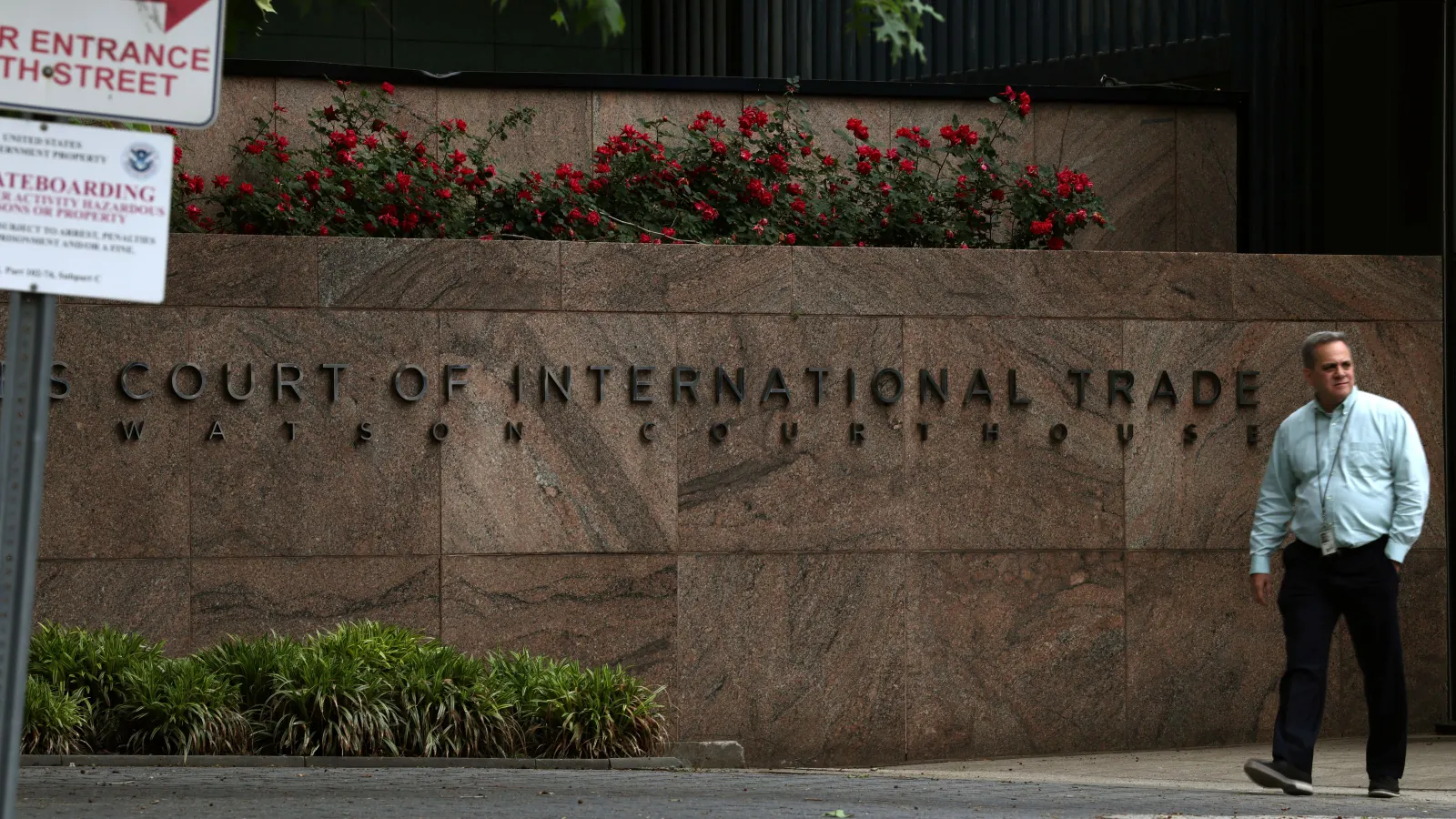
In a high-stakes escalation of the ongoing battle over U.S. trade policy, two American businesses have launched a direct legal challenge against the federal government, seeking to dismantle a fresh wave of tariffs imposed under Section 301 of the Trade Act of 1974. The lawsuit, filed last Friday in the U.S. Court of International Trade, represents the latest attempt by the private sector to rein in the Trump administration’s reliance on broad-based import duties to reshape global trade dynamics.
The plaintiffs—spice importer Burlap and Barrel and watch retailer Collective Horology—are not merely seeking a stay on the new levies; they are demanding a total removal of the duties and a comprehensive refund for all businesses impacted by what they describe as an "arbitrary and capricious" exercise of executive authority.
The Core Allegations: A "Backdoor" Trade Policy
At the heart of the legal filing is the claim that the current Section 301 tariffs are a tactical maneuver designed to replace previously invalidated duties. The administration justified these new measures as a response to forced labor practices in over 60 trading nations. However, the plaintiffs argue that the administration failed to follow the rigorous procedural requirements mandated by Section 301, effectively using the statute as a "backdoor" to reinstate the controversial 10% global baseline tariffs that were struck down by the Supreme Court earlier this year.
"The rates imposed by the Section 301 Action closely track the rate structure previously imposed or negotiated under the invalidated IEEPA program," the lawsuit states. The plaintiffs contend that the government determined the tariff rates before the formal investigation was even concluded, then engaged in a "post-hoc" effort to manufacture supporting evidence to justify the pre-determined outcome.
Chronology of a Regulatory Conflict
To understand the gravity of this legal challenge, one must examine the rapid-fire timeline of the administration’s trade maneuvers over the past six months.
- February 2025: The U.S. Supreme Court invalidates sweeping tariffs imposed by the Trump administration under the International Emergency Economic Powers Act (IEEPA), including a 10% global baseline duty.
- March 2025: U.S. Trade Representative (USTR) Jamieson Greer initiates a dual-track investigation: one probe into global forced labor practices and another into global manufacturing capacity.
- June 2025: After a remarkably short three-month investigation, the USTR proposes 10% to 12.5% tariffs on 60 trading partners, citing findings related to forced labor.
- July 2025 (Last Week): Following a public comment period and hearings, the Section 301 tariffs go into effect. Simultaneously, the 150-day expiration window for temporary "Section 122" tariffs (implemented as a stop-gap measure by the President following the February Supreme Court ruling) closes.
- July 25, 2025: Burlap and Barrel and Collective Horology file their lawsuit, arguing that the transition from Section 122 to Section 301 is a seamless, illegal continuation of the same tariff regime.
Expert Analysis: The "Tough Sell" for the Administration
The speed and uniformity of the tariff rates have drawn sharp criticism from trade experts who question the integrity of the USTR’s investigation. Alexander Schaefer, a partner at the law firm Crowell & Moring, suggests the administration faces an uphill battle in defending the mathematical coincidences of its policy.
"The government will have to convince the court that the proportional relief to the alleged harm occasioned by each of the 60-odd countries just happened to fall in the 10-12.5% range in every instance," Schaefer noted in an email to Supply Chain Dive. "That just happens to be more or less the same rate heretofore deployed under Section 122. That strikes me as a pretty tough sell."
The plaintiffs emphasize that the investigation into forced labor was completed in a timeframe that deviates significantly from historical precedent. By way of comparison, the first Trump administration’s investigation into China’s technology and intellectual property policies—which served as a hallmark of that era’s trade strategy—took more than twice as long to complete. This "abbreviated process," the lawsuit argues, demonstrates that the USTR did not genuinely engage with the economy-specific questions required by the statute.
The Failure of Specificity
Beyond the procedural complaints, the lawsuit takes aim at the efficacy of the tariffs as a policy tool. The plaintiffs argue that the USTR provided no meaningful, country-by-country analysis of the forced labor regulations in the 60 targeted nations. Instead, they allege the administration substituted a "generalized assertion" of global harm for the statutory requirement of identifying specific foreign policies that burden U.S. commerce.
"Section 301 does not permit USTR to substitute a generalized assertion that forced labor is harmful, unfair, or economically distortive worldwide for the statute’s required determination concerning an identified foreign act, policy, or practice," the filing states. The businesses argue that there is no demonstrated link between the imposed tariffs and a tangible improvement in global forced labor bans, characterizing the duties as purely revenue-driven rather than reform-driven.
Implications for the Global Supply Chain
The implications of this lawsuit extend far beyond the two plaintiffs. If the Court of International Trade rules in favor of Burlap and Barrel and Collective Horology, it could trigger a cascade of similar litigation from thousands of U.S. importers currently absorbing the cost of these duties.
Furthermore, the case tests the limits of executive power in trade. The administration has repeatedly used emergency statutes to bypass Congressional oversight, but the courts have become increasingly skeptical of these attempts. In May 2025, the Court of International Trade ruled that the previous Section 122 tariffs were illegal, setting a precedent that the current administration is struggling to overcome as that case moves through the appellate process.
For the global business community, this creates a period of profound uncertainty. Supply chain managers, who rely on predictable cost structures, are now forced to factor in the possibility that the current tariff regime could be overturned or modified by judicial intervention. This adds a layer of volatility to international procurement, potentially discouraging long-term investment in global trade networks.
The Path Forward
The Trump administration is expected to mount a vigorous defense, likely arguing that the President holds broad discretionary power under Section 301 to protect the American economy and promote human rights through trade leverage. However, the legal hurdles are significant. The court must decide whether the administration’s actions represent a good-faith interpretation of trade law or a cynical attempt to circumvent previous judicial rebukes.
As the litigation proceeds, the business community will be watching closely. Whether the courts uphold the tariffs or demand their removal, the outcome of this case will define the boundaries of executive authority in U.S. trade policy for years to come. For now, companies like Burlap and Barrel remain in a state of suspended animation, awaiting a ruling that could either validate their business model or leave them facing a prolonged and costly trade environment.
The government’s response to the complaint is expected in the coming weeks, and legal analysts anticipate a lengthy discovery process as the court digs into the internal records of the USTR’s investigation. Until then, the "Section 301" tariff regime remains in place, a polarizing monument to the administration’s aggressive, duty-reliant approach to global commerce.
