



Executive Summary: A Strategic Partnership in the Green Age
In an era defined by the dual challenges of rapid industrialization and the urgent necessity of the energy transition, India and Germany have emerged as unlikely but essential partners. As the world navigates the complex nexus of geopolitics, climate volatility, and economic stability, the two nations have committed to a robust bilateral climate partnership. Central to this diplomatic endeavor is a newly launched initiative by Clean Energy Wire and The Migration Story, in collaboration with the Heinrich Böll Foundation.
This program aims to pair fourteen journalists—seven from India and seven from Germany—to foster a deeper, cross-border understanding of the green technology, labor mobility, and critical mineral supply chains that will define the next decade. While the application window for this specific cohort has closed, the program stands as a critical case study in how media can facilitate diplomatic transparency and public engagement in transnational climate policy.
Chronology: The Evolution of the Indo-German Climate Partnership
The current acceleration in cooperation did not occur in a vacuum. It is the culmination of years of diplomatic maneuvering, technical exchange, and high-level political alignment.
2022: The Birth of the Green and Sustainable Development Partnership (GSDP)
The foundation of the current collaboration was laid in May 2022, during the 6th Indo-German Inter-Governmental Consultations. Prime Minister Narendra Modi and then-Chancellor Olaf Scholz signed a landmark declaration to establish the Green and Sustainable Development Partnership. This agreement set the stage for an annual investment of €10 billion in green projects, marking one of the most significant bilateral climate financing commitments in history.
2023–2024: Scaling Infrastructure and Policy Alignment
Throughout these years, the partnership moved from rhetoric to reality. Germany began providing technical assistance for India’s massive transition to solar and wind power, while India sought German expertise in circular economy models and the integration of green hydrogen into industrial processes.
January 2026: A Strategic Pivot
The momentum peaked in January 2026, when German Chancellor Merz traveled to India. This visit was pivotal, shifting the focus from general climate goals to granular, high-stakes sectors: critical minerals—essential for battery storage—and the migration of skilled workers. The visit underscored the reality that India’s vast labor market and Germany’s advanced engineering sector are inherently complementary in a decarbonized economy.
Supporting Data: The Pillars of the Transition
To understand why this journalistic initiative is so vital, one must look at the data driving the Indo-German cooperation.
1. Renewable Energy Capacity
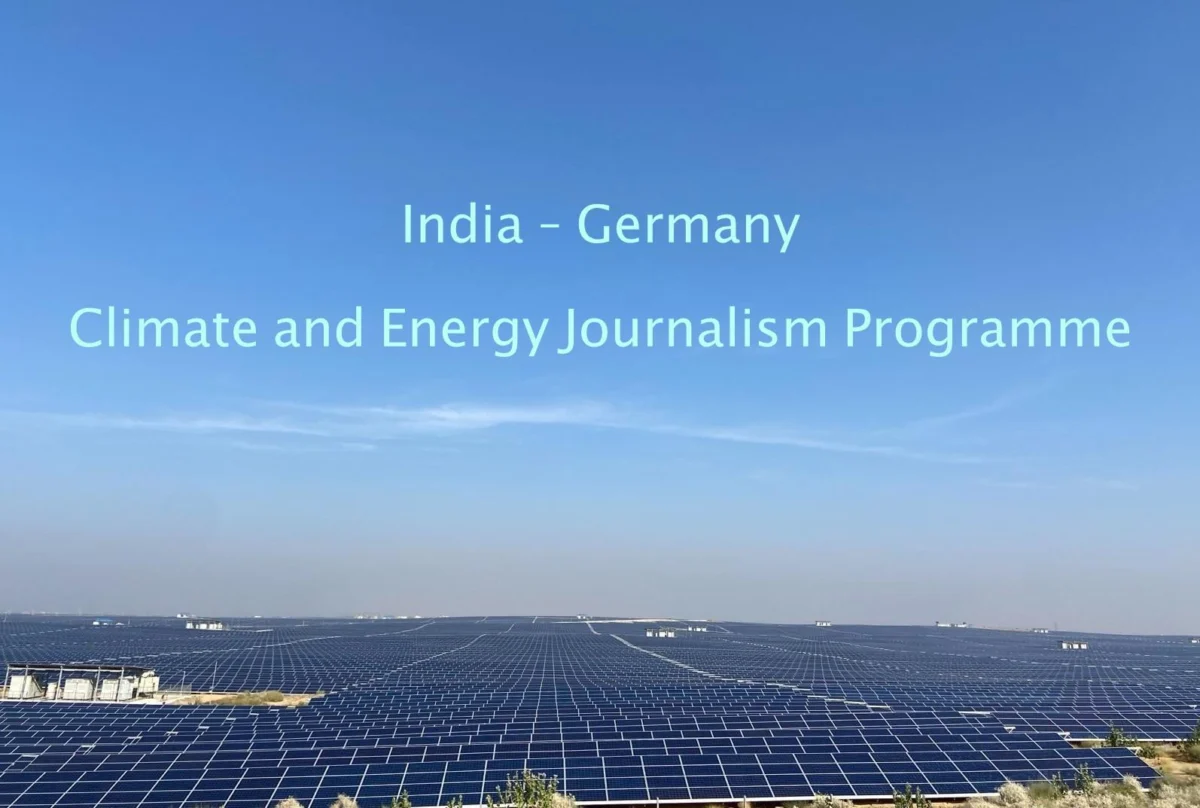
India is home to some of the world’s most significant renewable infrastructure. The Bhadla Solar Park in Rajasthan, for instance, stands as a testament to this, boasting a massive capacity that dwarfs many European counterparts. Germany, meanwhile, remains a global leader in renewable energy policy, grid integration, and green technology patents. The synthesis of India’s scale and Germany’s innovation provides a roadmap for the Global South and North to align.
2. The Critical Mineral Bottleneck
Critical minerals, such as lithium, cobalt, and rare earth elements, have become the new "oil" of the 21st century. India’s recent geological discoveries and its push to secure supply chains, combined with Germany’s industrial hunger for these materials, form a cornerstone of the 2026 bilateral talks. Without a coordinated strategy, both nations face exposure to volatile global market fluctuations dominated by non-democratic actors.
3. Demographic Complementarity
Germany faces a chronic shortage of skilled labor, particularly in the engineering and technical sectors required for the Energiewende (energy transition). India, possessing the world’s largest youth population, is positioned to provide the technical expertise and human capital necessary to keep the European industrial engine running. The journalism program aims to humanize these macro-economic trends by documenting the lives of workers and the impact of green jobs.
Official Responses and Perspectives
The initiative to train journalists is viewed by diplomatic observers as a strategic move to ensure that the climate partnership remains accountable and transparent.
The Role of Civil Society and Media
The Heinrich Böll Foundation, a German political foundation affiliated with the Alliance 90/The Greens, has consistently argued that climate change cannot be solved by governments alone. By funding this program, the foundation is betting on the power of "informed reporting."
"Journalism is the bridge between the technical intricacies of carbon credits or grid stability and the public’s perception of the climate transition," says a representative from Clean Energy Wire. "By pairing an Indian journalist who understands the local environmental challenges of a solar farm in Rajasthan with a German journalist who understands the European regulatory framework, we are creating a unique, cross-border narrative that captures the true scale of this partnership."
Government Stance
Both New Delhi and Berlin have expressed support for media-driven initiatives that foster "people-to-people" ties. The German Ministry for Economic Cooperation and Development (BMZ) has frequently emphasized that the GSDP is not just a top-down government project, but a societal transformation that requires public buy-in.
Implications: Why Cross-Border Journalism Matters
The implications of this program extend far beyond the fourteen journalists involved.
Challenging Misconceptions
Indian media often focuses on the "historical responsibility" of developed nations to finance the transition, while German media often grapples with the energy security crisis and industrial competitiveness. This program forces these narratives to intersect. A German reporter visiting an Indian factory and an Indian reporter visiting a German wind farm create a synthesis that avoids the pitfalls of polarized, nationalistic reporting.
Accountability in Green Investment
With billions of euros flowing between the two countries, there is a heightened need for investigative journalism. Are these funds actually reaching the grassroots? Is the green technology being deployed truly sustainable, or is it creating new environmental burdens in rural India? The cross-border reporting grants provided by this initiative empower journalists to act as watchdogs, ensuring that the partnership delivers on its environmental and social promises.
The Future of Climate Diplomacy
If successful, this model could be replicated across other bilateral partnerships. The "journalist-in-residence" and "cross-border grant" models are becoming the gold standard for climate reporting. By creating a cohort of experts who understand the bilateral landscape, the program is essentially building a "climate intelligence" network that will serve both countries for years to come.
Conclusion: Looking Ahead
As the world moves toward the mid-2020s, the Indo-German partnership will likely serve as a litmus test for global climate cooperation. The initiative led by Clean Energy Wire, The Migration Story, and the Heinrich Böll Foundation represents a proactive effort to ensure that the complexity of this relationship is not lost in the headlines.
While the sign-ups for this specific cycle have concluded, the mission remains ongoing. As these journalists begin their collaborative reporting, they will be tasked with untangling the complexities of green hydrogen, labor mobility, and the geopolitical shifts caused by the global hunt for critical minerals. In doing so, they are not just reporting on a partnership; they are actively shaping the narrative of a world transitioning toward a cleaner, more interconnected future.
The story of the Indo-German climate partnership is still being written. Through the eyes of these fourteen journalists, the public will soon gain a clearer, more nuanced view of the challenges and opportunities that lie at the intersection of two of the world’s most significant democracies. The success of this transition depends on the transparency, rigor, and cross-border collaboration that this initiative seeks to cultivate.
