




BERLIN – In a move that has sent shockwaves through the European energy sector, the German federal cabinet has approved a sweeping legislative overhaul of the nation’s renewable energy support framework. The reform, which marks a significant departure from the subsidy-heavy policies of the past two decades, aims to transition the country’s energy transition—the Energiewende—toward a more market-driven model. However, the decision has ignited a fierce debate, pitting the government’s desire for fiscal discipline against urgent environmental mandates.
Main Facts: The End of the "Feed-in" Era
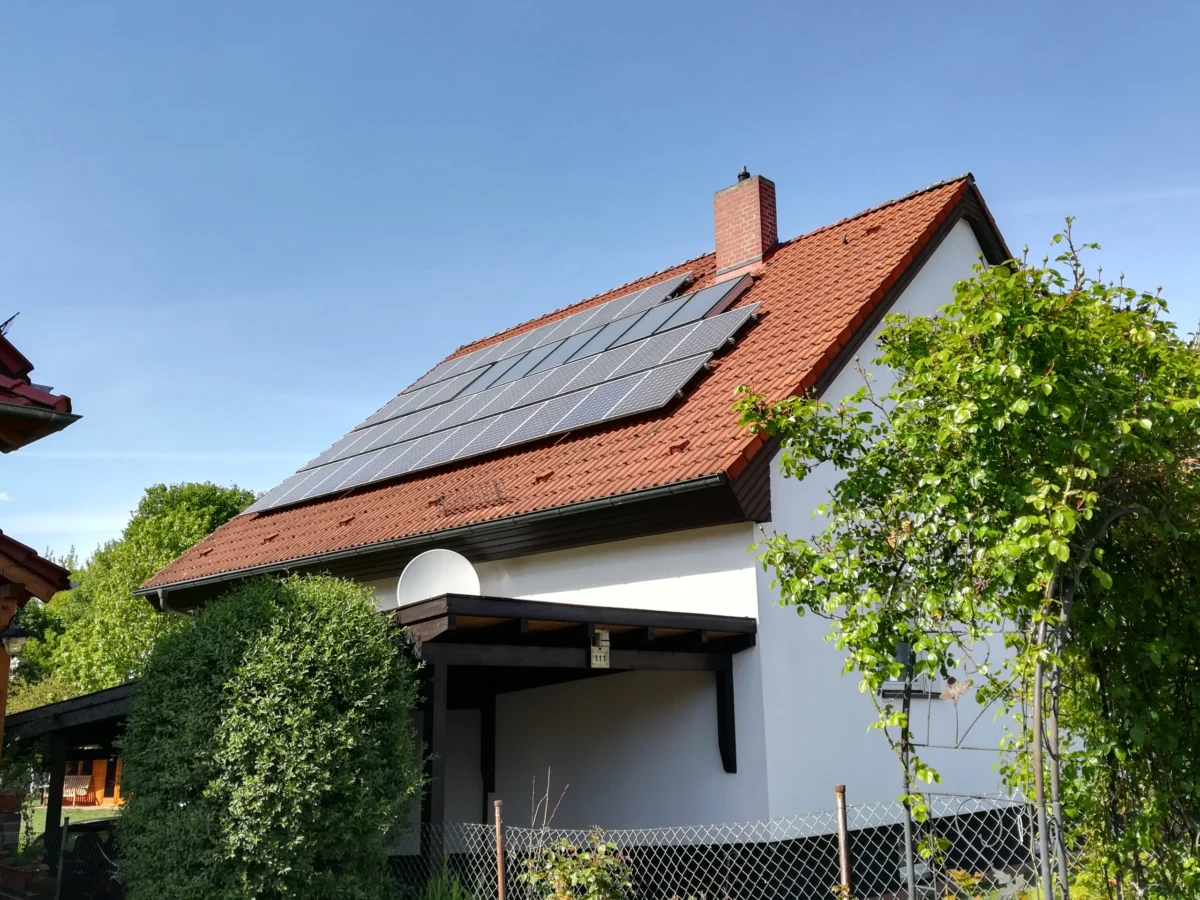
The core of the cabinet’s new policy centers on the systematic dismantling of guaranteed remuneration schemes that have, until now, provided the backbone for small-scale solar adoption. Under the new guidelines, new small-scale rooftop solar installations will no longer receive the long-standing "feed-in tariffs"—fixed payments for electricity exported to the grid.
Furthermore, the reform introduces stringent cuts to compensation for operators of wind and solar farms who are forced to curtail production during periods of grid congestion. As Germany’s power lines struggle to keep pace with the massive influx of intermittent renewable energy, the government is shifting the financial burden of these "grid bottlenecks" from the taxpayer to the energy producers themselves.
Economy Minister Robert Habeck, a key proponent of the reform, has framed the legislation as a "paradigm shift." According to the ministry, the previous system created an unsustainable reliance on public subsidies that distorted market signals. By incentivizing producers to generate power only when the grid can actually handle it, the government believes it can force a more efficient expansion of storage technology and grid infrastructure.
Chronology: The Road to Reform
The trajectory toward this reform began long before the cabinet’s approval on July 29, 2026. The roots of this change can be traced back to the following key milestones:
- 2023–2024: The Grid Bottleneck Crisis: As renewable energy penetration reached record highs, the German transmission system operators (TSOs) reported an exponential increase in the cost of redispatch measures—the process of balancing the grid when renewable supply exceeds regional transport capacity.
- Early 2025: The Fiscal Crunch: Faced with tightening federal budgets and the need to fund industrial decarbonization, the Ministry of Economic Affairs and Climate Action initiated a "stress test" of current renewable energy support mechanisms.
- Spring 2026: Draft Legislation Leaks: Early drafts of the reform were leaked to the public, signaling an end to the "guaranteed" era. The renewable energy sector reacted with immediate alarm, leading to a series of high-level meetings between industry lobbyists and government officials.
- July 29, 2026: Official Cabinet Approval: The government finalized the legislative package, signaling that the era of open-ended state support for renewables is effectively closed.
Supporting Data: The Cost of the Transition
The rationale for the government’s decision is anchored in data concerning the rising costs of grid management. Between 2020 and 2025, the annual costs for grid stabilization in Germany soared, reaching figures that critics labeled "astronomical."
- Grid Stabilization Costs: In 2025 alone, the cost to compensate operators for curtailing wind energy reached an estimated €4.5 billion, a figure that the Ministry of Economy argued was no longer sustainable under current public funding models.
- Rooftop Solar Saturation: Since the launch of the Erneuerbare-Energien-Gesetz (EEG) decades ago, Germany has installed over 150 gigawatts of solar capacity. Officials suggest that small-scale solar has reached a point of "market maturity," where the cost of hardware has dropped sufficiently to allow homeowners to profit through self-consumption rather than grid exports.
- Investment Projections: Independent energy analysts have noted that while the new policy may save the government billions in direct subsidies, it could slow down the installation rate of rooftop PV by as much as 15–20% in the immediate aftermath of the law’s enactment, as homeowners recalculate the return on investment (ROI) without guaranteed feed-in income.
Official Responses and Stakeholder Divergence
The reaction to the cabinet’s decision has been deeply polarized.
The Government’s Stance
Government officials argue that the reforms are necessary to prevent a "subsidy bubble." By forcing renewables to compete in the open market, the government believes it will incentivize the adoption of "smart" technologies, such as home battery storage and automated demand-response systems, which allow households to use their own power when prices are high. "We are moving from a system of state-directed payments to a system of market-driven energy efficiency," stated a ministry spokesperson.
Environmental NGOs and Industry Concerns
Environmental organizations have been scathing in their critique. "This is a betrayal of the small-scale energy transition," said a representative from a leading German climate watchdog. They argue that by removing the financial security provided by feed-in tariffs, the government is essentially punishing the very citizens and small businesses that led the charge in Germany’s renewable revolution.
Industry groups have warned that the move creates "investment uncertainty." When long-term regulatory frameworks are altered abruptly, investors—both large-scale institutional funds and private homeowners—tend to retreat. Concerns have been raised that this policy will jeopardize Germany’s ambitious climate neutrality goals, as the speed of deployment for new projects is expected to drop exactly when it needs to accelerate to meet 2030 targets.
Implications for the Future of the Energiewende
The broader implications of this reform extend far beyond the balance sheets of solar operators.
A New Market Landscape
The shift suggests that the future of German energy will be defined by "Flexibility." If the government refuses to pay for surplus energy, producers will be forced to invest in storage. This could lead to a massive boom in the domestic market for residential battery systems and hydrogen-based energy storage solutions.
The Business Location Debate
One of the most vocal criticisms, voiced by the Federation of German Industries (BDI), is that this reform weakens Germany as a business location. If energy prices remain volatile and the regulatory environment for renewable generation becomes more complex, energy-intensive industries may look elsewhere for stable, predictable power markets. The government’s challenge now is to prove that this "paradigm shift" will eventually lead to lower, more stable electricity prices, rather than a stagnation in renewable capacity.
International Scrutiny
Germany’s Energiewende has long served as a blueprint for the rest of the world. By pivoting away from generous subsidies, Germany is essentially conducting a massive, high-stakes experiment. If the transition results in a more resilient, market-efficient grid, other nations may follow suit. However, if the result is a significant slowdown in green energy adoption, it could serve as a cautionary tale for other countries attempting to balance climate ambition with fiscal reality.
Conclusion
As the German cabinet moves forward with these reforms, the country finds itself at a crossroads. The promise of the Energiewende—to create a clean, affordable, and democratic energy system—now faces its most rigorous test to date. Whether this shift towards market-based competition will foster a new wave of innovation or merely stifle the momentum of the green transition remains the central question for policymakers and citizens alike in the coming years.
The legislative process is far from over; as the bill heads to the Bundestag for further debate, the pressure from environmental groups and the energy industry is expected to intensify. For now, the German energy sector holds its breath, waiting to see if this "paradigm shift" will be remembered as the maturation of a green economy, or as a strategic misstep in the global fight against climate change.
