




In the high-stakes ecosystem of the modern trade show floor, the mantra is simple: "If you ain’t first, you’re last." Yet, for many exhibitors, the reality is a monotonous parade of spinning prize wheels, overflowing candy bowls, and visually aggressive booths that collapse into what industry experts call a "gauntlet of chaos."
In this sensory-overloaded environment, professional impersonator and marketing consultant David Babcock is redefining how brands connect with potential leads. By trading corporate buzzwords for character-driven engagement—stepping into the shoes of iconic Will Ferrell personas like Ricky Bobby and Ron Burgundy—Babcock is proving that the most effective way to stand out is not to spend more on carpeting, but to invest more in the human experience.
The Problem with the Status Quo: Why Your Booth is Invisible
Trade shows are often viewed as the lifeblood of B2B and automotive industries, yet the tactical execution remains stuck in the late 1990s. Babcock, speaking with Auto Service World Conversations, argues that the current approach to exhibiting is fundamentally flawed.
"Everything is overly done, overly splashy, overly colorful, overly lit up," Babcock notes. "How does the attendee filter through that?"
The issue, according to Babcock, is that exhibitors are confusing "presence" with "engagement." Companies sink significant capital into massive, over-designed booths meant to signal that they are "a big deal," yet they fail to consider the psychological state of the attendee. When a trade show floor is saturated with neon lights and shouting branding, the human brain enters a state of defensive filtering. The attendee becomes a master of the "aisle walk," eyes locked forward, consciously ignoring the standard-issue booth staffer hovering at the edge of the carpet.
The Disruptor’s Strategy: Character as a Catalyst
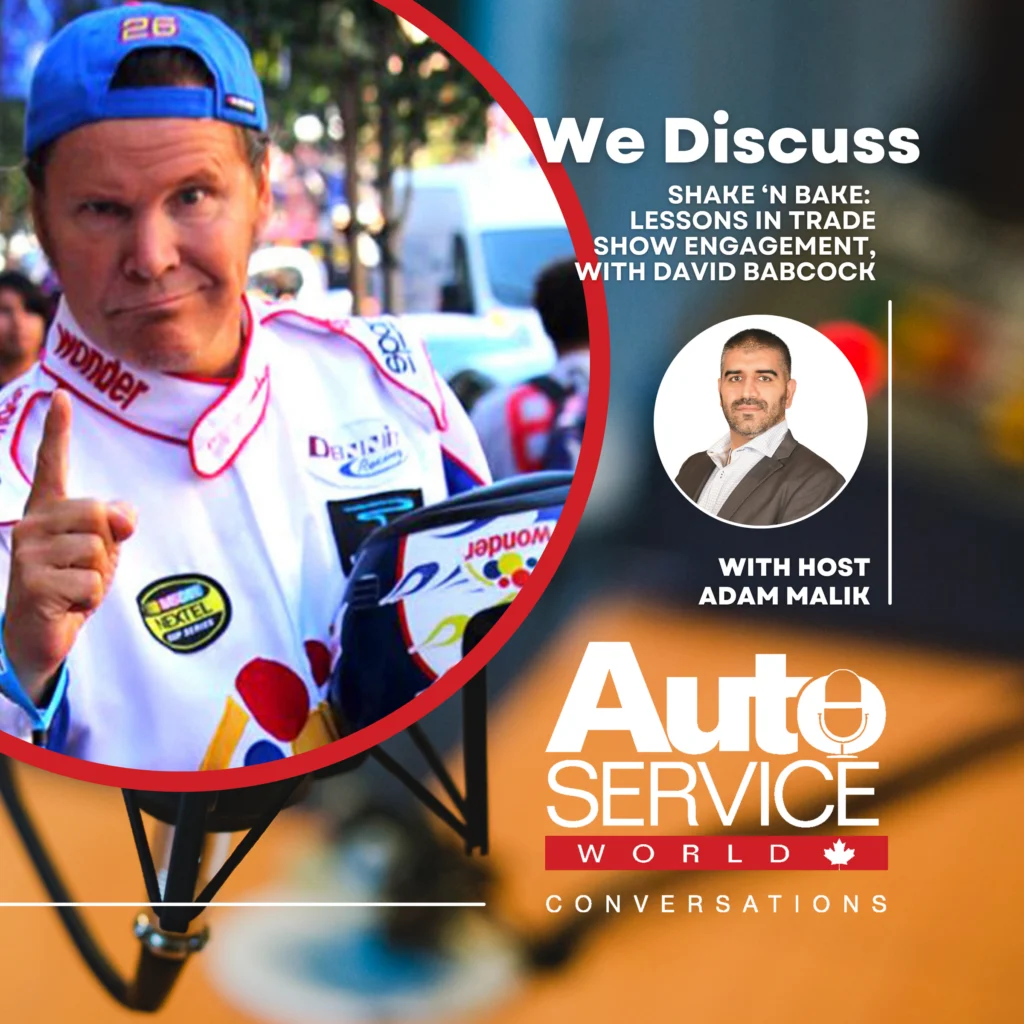
Babcock’s approach as a marketing consultant centers on the concept of the "pattern interrupt." When he appears at an automotive industry event clad in the iconic white racing suit of Ricky Bobby, the reaction is immediate. The character serves as a visual hook, stopping the attendee in their tracks.
This isn’t just about entertainment; it’s about tactical lead qualification. By providing an immediate, high-value interaction—the chance for a photo or a witty social media clip—Babcock shifts the power dynamic. Instead of a salesperson chasing a prospect, the prospect is chasing the experience.
Once the attendee is engaged, the process becomes a surgical operation. Babcock pivots from character banter to targeted questioning, assessing whether the person is a genuine lead or merely a casual fan. If they fit the target profile, he executes what he calls the "warm handoff."
"I’ll say, ‘Hey, Doug, come here, take this picture,’" Babcock explains. "Now my sales guy is into the interaction. There has been no hurdle to jump, no resistance, and no anxious salesperson energy." Once the lead is securely in the hands of the company representative, Babcock "fades into the bushes," leaving the salesperson to do what they do best without the initial friction of an cold approach.
A Chronology of the Trade Show "Vacation"
To understand why this level of creative intervention is necessary, one must look at the evolution of the trade show mindset. Historically, trade shows were the primary mechanism for product launches and relationship building. Today, however, they are often treated with a degree of casualness that borders on negligence.
The Era of the Paid Vacation
A persistent issue identified by Babcock is the shift in corporate culture regarding show attendance. Too many organizations treat these events as a "paid vacation." Sales representatives, looking forward to wining and dining with existing clients, often lose the hunger for new business. This complacency manifests in several ways:
- The Morning After: Reps arriving late, clearly suffering from the previous night’s festivities, signaling to prospects that the company lacks professional discipline.
- The Digital Wall: Staffers glued to their phones. In the modern era, an attendee doesn’t see a rep checking emails; they see someone disinterested in the prospect’s existence. "When people see you on your phone, they don’t think you’re doing business," Babcock warns. "They think you’re looking at TikTok. Those people are completely turned off."
The Pivot to Experience
As the digital age continues to diminish the "necessity" of face-to-face meetings, the trade show must justify its ROI. The transition from "showing up" to "delivering an experience" is the current frontier. Companies that fail to pivot—those that continue to rely on the "gauntlet of chaos"—are finding that their lead generation numbers are dwindling despite rising travel and booth costs.
Data and Implications: The Cost of Complacency
While specific ROI metrics vary by industry, the anecdotal evidence provided by seasoned consultants points to a stark reality: the cost of a lead is skyrocketing, and the quality of those leads is in decline.
The implication is that the "Big Deal" strategy—spending tens of thousands of dollars on plush carpeting and oversized LED screens—yields a diminishing return. In a competitive market, the brand that wins is the one that makes the attendee feel like a big deal.
Key Performance Indicators (KPIs) for the Modern Exhibitor
Babcock suggests that if companies reallocated even 20% of their "booth decor" budget toward engagement specialists or immersive experiences, the conversion rates would shift significantly.
- Lead Qualification Speed: How quickly does a cold walk-up become a qualified prospect?
- Interaction Depth: Are you getting a business card, or are you getting a meaningful conversation?
- The "Sticky" Factor: Is the interaction memorable enough to generate a follow-up after the show?
Professional Perspectives on Booth Etiquette
The debate over trade show strategy has created a divide between traditional marketers and the new wave of experiential consultants.
Traditionalists argue that branding consistency and corporate identity must be the primary focus. They maintain that a professional, "clean" booth signals stability and trust. However, critics of this model—including Babcock—contend that in a crowded hall, "clean" is often synonymous with "invisible."
"You don’t need to look like a big deal—you need to make them a big deal," Babcock insists. This sentiment is increasingly supported by behavioral marketing studies, which suggest that emotional triggers (humor, surprise, and personalization) are far more effective at creating brand recall than static visual branding.
The Risk-Reward Equation
The central theme of Babcock’s philosophy is the necessity of risk. In an industry where everyone follows the same playbook, the "safe" choice is actually the riskiest.
If a company spends its entire budget on the same aesthetic as its competitors, it guarantees that it will be viewed through the same lens. If the competitors are viewed as mediocre, the company becomes mediocre by association. By introducing a character, a performance, or a unique interactive element, the company introduces a variable that competitors cannot easily copy without appearing derivative.
"No risk, no reward," Babcock says. "If you want to be one of these people that does the same stuff every time, you’re doing the same as everybody else, you’re going to make the same money as everybody else."
Conclusion: The Future of the Trade Show Floor
The trade show floor of the future will not be defined by who has the biggest booth or the most expensive giveaway. It will be defined by the quality of the interpersonal "handoff."
As exhibitors navigate the challenges of a post-pandemic, digital-first world, the value of the in-person event rests entirely on the quality of human interaction. Whether through character-driven disruption, sophisticated engagement tactics, or simply putting the phone down and making eye contact, the path to the "pole position" remains the same: stop treating the booth as a display case and start treating it as a stage.
For companies willing to take that leap, the rewards are clear: fewer leads, perhaps, but higher-quality connections that actually translate to the bottom line. For everyone else, there is always the prize wheel—and the silence of an empty pipeline.
