




Main Facts: A Shift in Strategy
The U.S. Department of Transportation (DOT) has announced a pivotal strategic pivot regarding the long-stalled redevelopment of Washington Union Station. Under the direction of the current administration, the project—once envisioned as a $10 billion overhaul—is undergoing a fundamental restructuring. Rather than relying solely on federal capital, the project will now pivot toward a robust public-private partnership (P3) model.
The DOT has earmarked $24 million in initial funding to solicit private-sector expertise, aiming to create a more “ambitious and achievable” vision for the historic transportation hub. This move signals an end to the previous administration’s expansive, state-funded master plan, replacing it with a leaner approach intended to maximize profitability and operational efficiency. Central to this new plan is the eventual relocation of Amtrak’s corporate headquarters to the station, positioning the site as both a transit nerve center and a commercial anchor for the nation’s capital.
Chronology: From Congressional Mandate to Modern Pivot
The story of Union Station’s modernization is one of decades-long debate and shifting political priorities.
- 1983: The Union Station Redevelopment Corporation (USRC) is established by an act of Congress. Its mission: to oversee the restoration and maintenance of the historic landmark as a functional transit hub.
- 2022: Under the Biden administration, the project gained significant momentum. Plans were drafted for a massive, $10 billion expansion that would have integrated the station into a new transit-oriented development neighborhood, effectively bridging the gap between the station and the burgeoning NoMa neighborhood via a project often referred to as "Burnham Place."
- 2025: The current administration, led by the DOT, halts the previous trajectory. Secretary Duffy and the USRC announce a departure from the 2022 master plan, emphasizing a need for fiscal discipline and private-sector involvement.
- Current Status: The DOT has allocated $24 million to launch a new round of industry outreach, effectively resetting the project’s design and procurement phase.
Supporting Data: The Vital Statistics of a Transit Hub
Washington Union Station is not merely a terminal; it is the heartbeat of the Northeast Corridor. Understanding the scale of the facility is essential to grasping why any delay in its redevelopment impacts the broader American economy.
- Multimodal Integration: The station serves as a nexus for Amtrak’s national network, including the high-speed Acela and various regional lines. It is also the primary terminus for Maryland’s MARC trains and Virginia’s VRE commuter lines.
- Local Transit: The facility integrates a heavy-rail subway stop and a dedicated bus terminal managed by the Washington Metropolitan Area Transit Authority (WMATA), alongside intercity bus carriers.
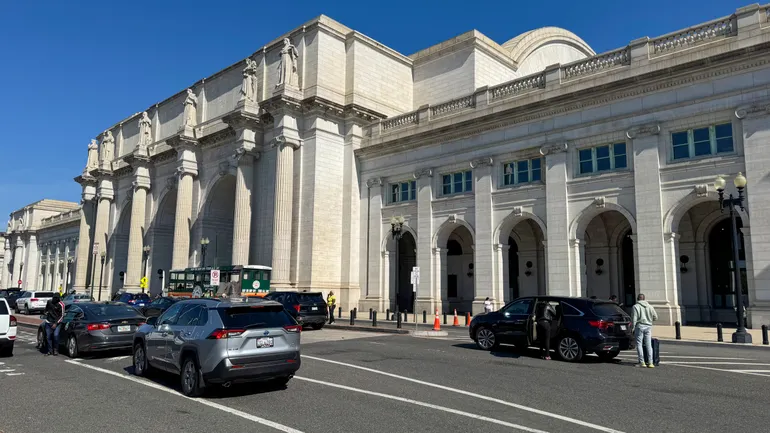
- Historical Significance: Completed in 1907, the station is a Beaux-Arts monument. Its status as a protected landmark adds layers of complexity to any renovation, as structural upgrades must coexist with strict historic preservation guidelines.
- The Funding Gap: While the 2022 proposal carried a $10 billion price tag, the new administration has yet to release a revised budget or a concrete timeline. The lack of these figures reflects the current uncertainty inherent in the transition from a government-led project to a market-driven P3 model.
Official Responses: The Philosophy of "Beautiful and Safe"
The pivot has drawn sharp distinctions between the approaches of the previous and current administrations.
Transportation Secretary Duffy, representing the Trump administration’s stance, emphasized a shift away from what he characterized as indiscriminate spending. "We’re not just throwing money at the problem like the last administration did," Duffy stated. "We’re thinking strategically and creating a public-private partnership to deliver meaningful upgrades to Union Station, ensure long-term profitability for this gorgeous transportation monument, and better serve the millions of travelers who rely on this critical transit hub."
Duffy further contextualized the project within the broader administrative goal of revitalizing the District of Columbia. "This is about making D.C. beautiful and safe," he noted.
Doug Carr, President and CEO of the USRC, expressed optimism regarding the new collaborative framework. "The DOT’s $24 million investment allows us to partner with the private sector to engage the industry’s best ideas for the station’s future expansion through a vision that is both ambitious and achievable," Carr said. By inviting industry leaders to the table, the USRC hopes to leverage private innovation to solve the logistical hurdles that have previously stymied large-scale redevelopment efforts.
Implications: What Lies Ahead for Travelers and the District
The redirection of the Union Station project carries significant implications for urban planning, federal spending, and the future of transit infrastructure.
The P3 Challenge
Transitioning to a public-private partnership model is a high-stakes gamble. While P3s can bring much-needed efficiency and private capital to public infrastructure, they also introduce risks regarding long-term cost recovery and public access. Private investors will require a return on their investment, which could manifest in increased retail prices within the station or higher transit-related fees. The success of the project will hinge on whether the USRC can balance these commercial imperatives with the station’s primary mission as a public transit service provider.
The Amtrak Relocation
The proposed relocation of Amtrak’s headquarters to the station is a strategic move intended to consolidate the agency’s operations within the very terminal it relies upon most. This could streamline communication between Amtrak’s corporate decision-makers and the field operations teams, potentially improving service reliability for the millions of passengers who traverse the station annually.
Urban Connectivity and "Burnham Place"
The previous $10 billion plan included a vision for "Burnham Place," a multi-acre project meant to cap the rail tracks and create a new neighborhood of housing, offices, and green space. The current administration’s silence on this specific component has left urban planners and local stakeholders wondering if the scope of the project has been significantly curtailed. If the P3 model focuses solely on the interior of the terminal building, the opportunity to reclaim the rail yard for urban development may be lost, potentially stalling the long-term expansion of downtown D.C. toward the east.
Transparency and Accountability
The lack of a stated timeline or total project cost in the recent DOT announcement has drawn scrutiny from transit advocates. Without transparency regarding the project’s milestones, stakeholders fear a repeat of the "analysis paralysis" that has plagued the station for decades. As the administration enters the next phase of procurement, the public will be looking for clear metrics of success and a firm commitment to the schedule.
Conclusion: A Monument in Flux
Washington Union Station remains one of the most critical pieces of infrastructure in the United States. Its future is currently caught between two competing ideologies: one that views the station as a massive, government-funded civic project, and another that views it as a commercial asset to be optimized through market competition.
For the daily commuter, the immediate impact remains to be seen. The station will continue to operate, but the grand vision for its future is now being redrawn behind closed doors. Whether this "ambitious and achievable" strategy will result in a more efficient transit hub or a series of protracted negotiations remains the central question for the nation’s capital. As the USRC and the DOT move forward with their private-sector partners, the progress of this project will serve as a bellwether for the future of large-scale infrastructure in the United States.
