



The aerospace industry is currently standing on the precipice of a transformation as profound as the transition from propeller planes to jets. As the U.S. Department of Transportation (DOT) and private innovators like Joby Aviation and Archer Aviation push toward a future of electric vertical takeoff and landing (eVTOL) aircraft, the focus has shifted from mere engineering and FAA certification to a far more terrestrial challenge: the human element.
According to the DOT’s 2025 Advanced Air Mobility (AAM) National Strategy, the sector is expected to expand from a pilot program phase in six initial states this year to a widespread network covering diverse urban and rural environments by 2030. However, as the industry eyes 2035—a year the DOT predicts will usher in fully autonomous air operations—a significant bottleneck has emerged. The hurdle is not just building vertiports or charging stations; it is the urgent, systemic need for a specialized workforce capable of maintaining the complex, high-voltage, software-defined aircraft of the future.
The Evolution of the AAM Ecosystem: A Chronology
The roadmap for the AAM industry has been a rapid progression of technological validation and regulatory alignment.
- 2023–2024: The industry focused heavily on airframe development and securing early-stage FAA flight testing permissions. Major players began their initial public demonstrations, proving that electric propulsion could offer a viable, lower-noise alternative to traditional helicopters.
- 2025: The DOT released its landmark AAM National Strategy, officially codifying the federal government’s commitment to integrating air taxis into the national airspace. This period saw the first major investments in "vertiport" infrastructure in states like Florida, New York, and Texas.
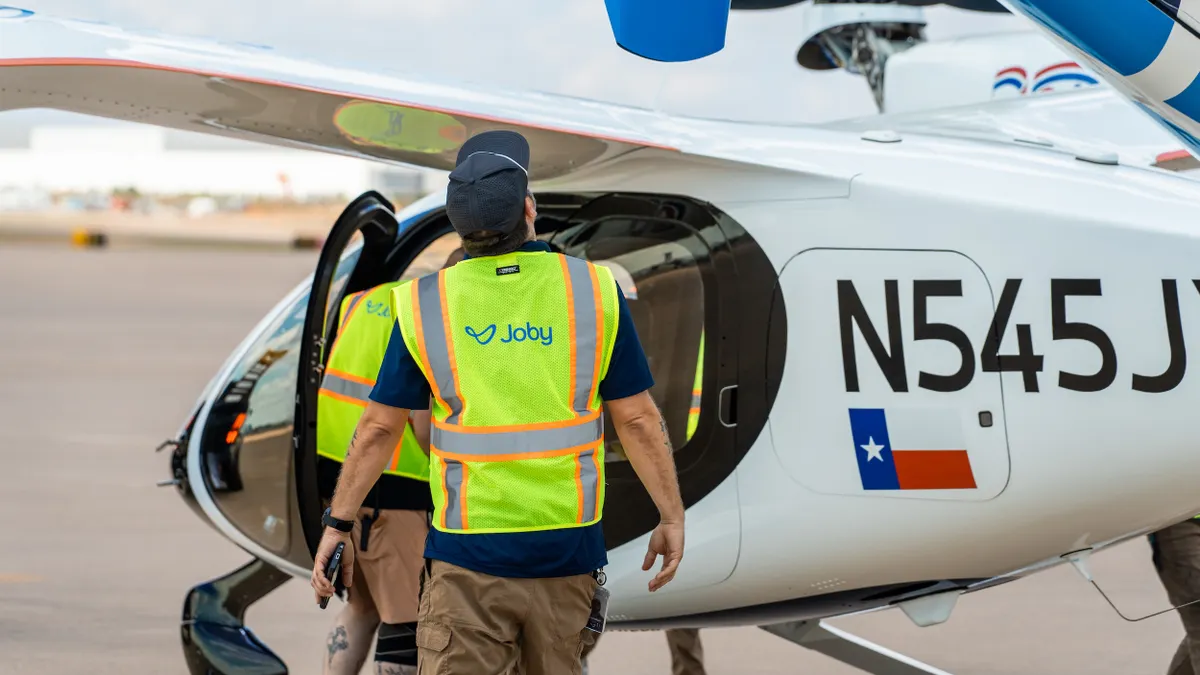
- 2026: The current year has marked a pivotal shift toward operations. With the FAA finalizing rules regarding pilot training and operational standards, the conversation has pivoted toward the scalability of the workforce. Companies like Joby Aviation have begun high-profile flight demonstrations, such as those at Perot Field in Fort Worth, signaling that the hardware is ready for prime time.
- 2027–2030 (Projected): The industry aims to move from controlled demonstration environments to commercial, inter-modal transport, where air taxis function as a "third dimension" of urban transit.
- 2035 (Target): The industry-wide goal for the integration of fully autonomous flight, potentially removing the pilot from the cockpit and placing an even greater burden on remote maintenance and ground-based diagnostic systems.
Building the Workforce of the Future
While the public remains captivated by the "flying car" aesthetic, industry experts emphasize that the real economic engine will be found on the ground. The maintenance requirements for an eVTOL aircraft differ drastically from those of a traditional combustion-engine aircraft. These machines are essentially flying computers with high-voltage battery arrays, advanced telemetry, and complex software-defined flight controls.
The Monterey Bay Economic Partnership (MBEP) has emerged as a bellwether for regional readiness. Recognizing that California’s Central Coast is home to major industry players—Joby Aviation in Santa Cruz and the roots of Archer Aviation in Palo Alto—the nonprofit is spearheading an initiative to prepare the local workforce.
“The critical step here is to make sure that the workforce will be prepared,” says Tahra Goraya, President and CEO of the MBEP. For regions looking to capitalize on this boom, the transition requires a multi-tiered approach to education.
Bridging the Skills Gap
The training required for the AAM sector does not always necessitate a four-year degree. Much of the required maintenance and ground-support work focuses on high-voltage electrical systems, sensor maintenance, and software troubleshooting.
"There’s a lot of skills and a lot of training that doesn’t necessarily require a two-year degree or a four-year degree," Goraya notes. By engaging with local community colleges, the University of California system, and county offices of education, the MBEP is attempting to build a "cradle-to-career" pipeline. The strategy involves:
- K-12 Exposure: Introducing aerospace and battery-tech concepts early to stimulate interest in STEM careers.
- Vocational Certification: Creating short-term, intensive certificate programs for existing mechanics to transition from internal combustion engines to electric propulsion systems.
- Higher Education Partnerships: Integrating software engineering and robotics into standard aviation curriculum.
The Infrastructure Imperative: Why Waiting is Not an Option
One of the most persistent warnings from industry advocates is the danger of "readiness inertia." Many regional airports currently function as quiet hubs for recreational or small-scale general aviation. Transforming these sites into AAM-ready vertiports involves significant capital expenditure and structural upgrades, particularly concerning electrical grid capacity.
"If regions wait until aircraft are certified to begin building the systems around them, they will be laying the groundwork at the point when they should be ready to move into implementation," the MBEP warns. This delay would leave little room to align infrastructure, institutions, and community investment.

For rural airports in towns like Watsonville, Marina, Salinas, and Hollister, the AAM transition offers a lifeline. These airports, which have traditionally struggled to find consistent revenue streams, could become regional nodes in a high-speed, point-to-point transit network.
"Most general aviation airports don’t have this kind of activity," Goraya explains. "I think this could certainly be a strong opportunity for airports to generate economic opportunity." By becoming early adopters, these regional hubs can establish themselves as testing grounds for the wider national network.
Official Perspectives and Economic Implications
The economic potential of AAM is difficult to quantify precisely, but the scale of the investment suggests it will be a major driver of regional GDP. However, there is a degree of cautious optimism among leaders like Goraya.
"Certainly, there’s a lot of buzz around jobs and the job potential, but we don’t quite know what those numbers will look like yet," she admits. This uncertainty is shared by policymakers who are wary of "over-promising" on jobs that may be highly automated.
The DOT’s strategy highlights that as flight becomes more autonomous, the workforce will shift from active piloting to remote system monitoring. This creates a high-tech, high-wage job profile that requires constant upskilling. The challenge, therefore, is to ensure that regional workforce boards and educational institutions are agile enough to update their curricula as quickly as the aerospace companies update their software.

Implications for the Future
The path toward an autonomous, electrified sky is paved with challenges that extend far beyond the cockpit. The success of the AAM industry will ultimately be determined by the strength of the "ground-based" support system.
- Regulatory Harmonization: The FAA must continue to work closely with local governments to ensure that the regulatory environment for vertiports is consistent, preventing a patchwork of local ordinances that could stifle innovation.
- Energy Resilience: As these airports become electric hubs, the load on local electrical grids will increase exponentially. Integrating renewable energy and battery storage systems directly into airport design will be essential for sustainability.
- Social Acceptance: The "noise" and "privacy" concerns regarding air taxis are real. Early and transparent community engagement, as championed by groups like the MBEP, will be the difference between a project being embraced as a public utility or rejected as a nuisance.
As we look toward 2030 and beyond, the narrative of the air taxi will evolve from a technological marvel to a necessary component of modern infrastructure. The pioneers in this space—the ones training the mechanics, reinforcing the power grids, and rezoning the land—will be the ones who define the future of the American landscape.
The aviation industry is effectively "re-tooling" for a new era. For the workers of the future, the message is clear: the skills required for the next century of flight are being written today. Those who align themselves with the intersection of software, high-voltage electricity, and aerospace engineering will find themselves at the forefront of one of the most exciting economic transitions in modern history.
