





In an unprecedented shift for one of the world’s most respected research institutions, Australia’s Commonwealth Scientific and Industrial Research Organisation (CSIRO) is actively courting private philanthropists and corporate donors to bridge a widening chasm in national research and development (R&D) funding. The move, underscored by recent, painful restructuring and workforce reductions, highlights a systemic crisis in how Australia fuels its scientific future.
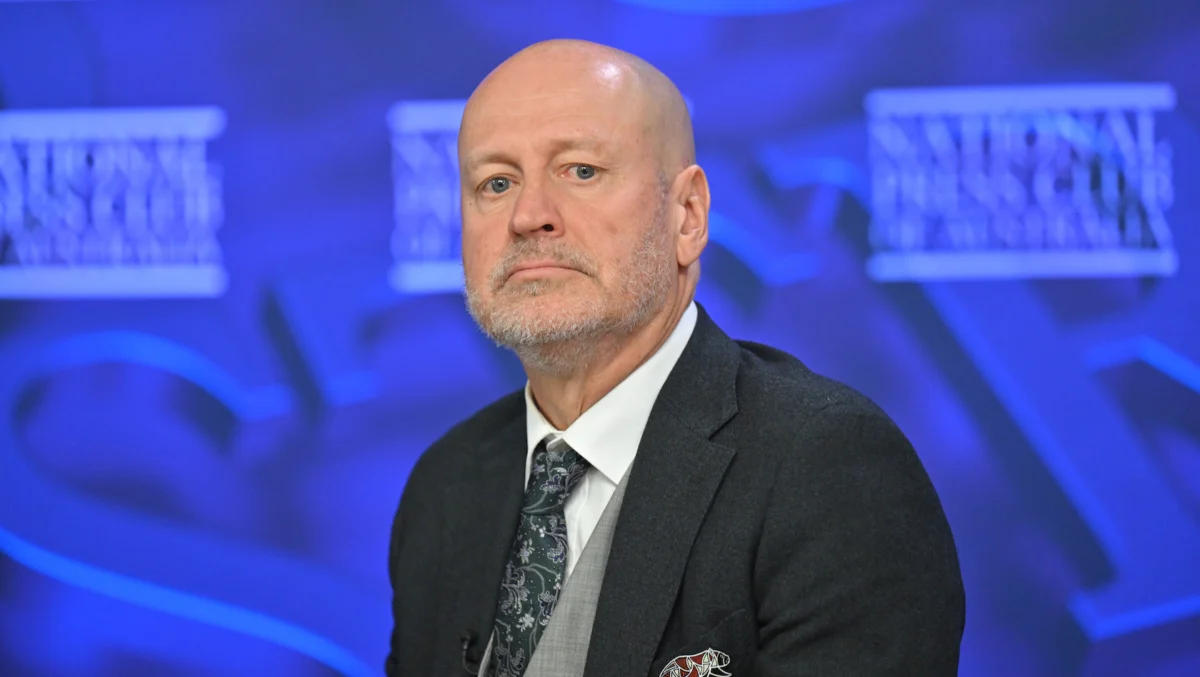
As CSIRO CEO Doug Hilton stood before the National Press Club in Canberra this week, his message was clear: the era of relying solely on federal appropriations is evolving. As the nation faces stiff global competition in deep tech, quantum computing, and climate mitigation, the national science agency is seeking to replicate the successful funding models long utilized by the medical research sector.
The Main Facts: A Pivot Toward Private Capital
The CSIRO, long considered the bedrock of Australian scientific ingenuity, is facing the reality of a shrinking fiscal envelope. Despite its mandate to solve the nation’s greatest challenges—from drought resilience to energy transition—the agency has been forced to navigate lean budgetary cycles.
Dr. Hilton’s admission that the CSIRO is in active discussions with private benefactors marks a formal departure from the traditional model of government-funded research. While the medical research community has historically enjoyed robust support from private donors—who often fund specific laboratories, chairs, or disease-specific research—the broader spectrum of scientific enquiry has largely remained the exclusive domain of the taxpayer.
"We’re having conversations with philanthropists in many different areas at the moment," Dr. Hilton told the Press Club. He noted that while medical research is "expert" at tapping into private capital, the CSIRO is looking to broaden that scope to include agriculture, environmental science, and advanced manufacturing. The goal is not to replace government funding, but to provide a "safety net" that allows for high-risk, high-reward research that might otherwise be stifled by bureaucratic funding constraints.
A Chronology of the Funding Squeeze
To understand why the CSIRO is seeking private donors today, one must look back at the trajectory of Australian R&D over the last decade.
- 2014–2016: The CSIRO undergoes a period of significant "re-alignment," resulting in the loss of hundreds of positions, particularly in climate research. This era signaled a tightening of the belt that would become a recurring theme.
- 2020–2022: The COVID-19 pandemic brought a temporary surge in awareness regarding the necessity of national scientific capability. However, the subsequent inflationary environment eroded the real-term value of these research grants.
- 2023: The federal government’s "Strategic Review" of the CSIRO underscored the need for the agency to become more "commercially agile."
- 2024–2025: Faced with rising operational costs and the need for expensive, cutting-edge infrastructure, the CSIRO initiated another round of restructuring, leading to further job cuts that sparked significant internal and external backlash.
- Mid-2026: Dr. Doug Hilton, in his capacity as CEO, formalizes the shift toward a "philanthropy-integrated" funding model, publicly stating at the National Press Club that private support is no longer just an option—it is a necessity for the agency’s strategic survival.
Supporting Data: The Innovation Lag
The urgency behind Dr. Hilton’s pivot is supported by sobering macroeconomic data. Australia’s Gross Expenditure on R&D (GERD) as a percentage of GDP has remained stubbornly low, consistently trailing behind the OECD average. While countries like Israel, South Korea, and the United States have aggressively scaled their R&D investment to capture the next wave of technological hegemony, Australia has seen its private-sector R&D participation stagnate.
According to recent industry analysis:
- Declining R&D Intensity: Australia’s R&D expenditure has hovered around 1.6% to 1.8% of GDP, significantly lower than the 2.5% to 3.0% benchmarks seen in leading innovation nations.
- The "Valley of Death": There remains a persistent gap between basic research—conducted in universities and the CSIRO—and commercial application. Private philanthropy is viewed as a potential bridge to help startups and researchers cross this "valley of death" where government grants end and venture capital is not yet ready to enter.
- Workforce Volatility: The recent job cuts at the CSIRO are not merely administrative; they represent a "brain drain." High-caliber scientists, unable to secure long-term tenure or stable project funding, are increasingly migrating to North American and European institutions where research funding is more insulated from political cycles.
Official Responses and Strategic Rationale
The reaction to the CSIRO’s pivot has been mixed. Supporters of the move argue that it is a pragmatic necessity. In an era of fiscal constraint, the agency must diversify its income streams to remain relevant. By engaging with philanthropists, the CSIRO can secure "untied" funds—capital that is not strictly bound by the rigid reporting requirements of government grants. This, proponents argue, will foster a culture of speed and experimentation.
"I’m interested in philanthropy," Dr. Hilton stated, framing it as an opportunity for private wealth to leave a legacy. He emphasized that the agency is not "selling out" but rather inviting the public and the private sector to share in the ownership of national breakthroughs.
Conversely, critics express concern regarding the "commercialization of the public good." There is a lingering fear that if research is funded by wealthy donors, the agency’s agenda could be swayed by the interests of those donors rather than the national interest. Furthermore, there is the risk that the government might use the success of philanthropic fundraising as a justification to further reduce its own financial commitment, creating a downward spiral of state divestment.
The Implications: What This Means for Australia
The implications of this shift are profound for the Australian research landscape.
1. A New Culture of Scientific Giving:
If successful, this will normalize the concept of "scientific philanthropy" beyond the medical field. It could lead to the creation of endowed chairs at the CSIRO, where private wealth supports specific scientific missions—such as hydrogen energy or biodiversity preservation—over a decade-long horizon.
2. Increased Competition for Private Capital:
The CSIRO will now be entering a marketplace already occupied by universities, hospitals, and NGOs. This could lead to a more professionalized "fundraising" wing within the agency, changing the internal culture from a purely scientific body to one that must also be proficient in donor relations and public relations.
3. Potential for Greater Autonomy:
The most significant benefit could be increased agility. If the CSIRO secures a diversified pool of private funding, it may be able to respond to crises or emerging opportunities with a speed that the current federal budgetary process—which often requires parliamentary approval—cannot match.
4. The Risk of Inequality:
A significant danger exists that "popular" or "marketable" science will receive a surplus of private funding, while essential but "unsexy" fundamental research (such as long-term environmental monitoring or basic physics) remains starved. Ensuring that private funding supplements rather than supplants government priority is a tightrope walk the agency must master.
Conclusion: A Turning Point for National Innovation
The CSIRO’s decision to court donors is a symptom of a deeper malaise in the Australian innovation ecosystem. While the agency is taking the necessary steps to secure its own future, the broader question remains: can a nation afford to rely on the generosity of private individuals to maintain its scientific infrastructure?
As the global race for technological supremacy accelerates, the "innovation lag" in Australia is not just a statistical anomaly—it is a strategic vulnerability. The move by Dr. Doug Hilton to open the doors to philanthropy is a bold attempt to secure the agency’s relevance in the 21st century. Whether this model can scale sufficiently to make up for decades of stagnating R&D investment remains to be seen. However, one thing is certain: the CSIRO has recognized that in an increasingly complex world, the old ways of funding science may no longer be enough to keep the lights on—and the labs running—at the cutting edge of human knowledge.
