




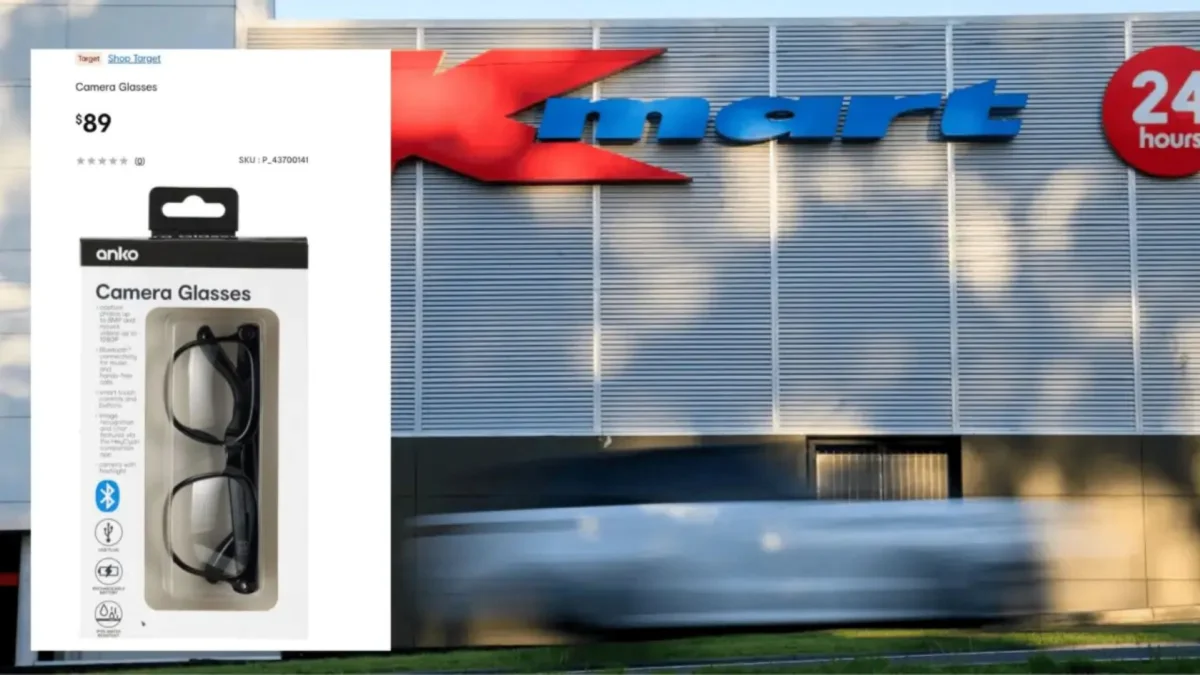
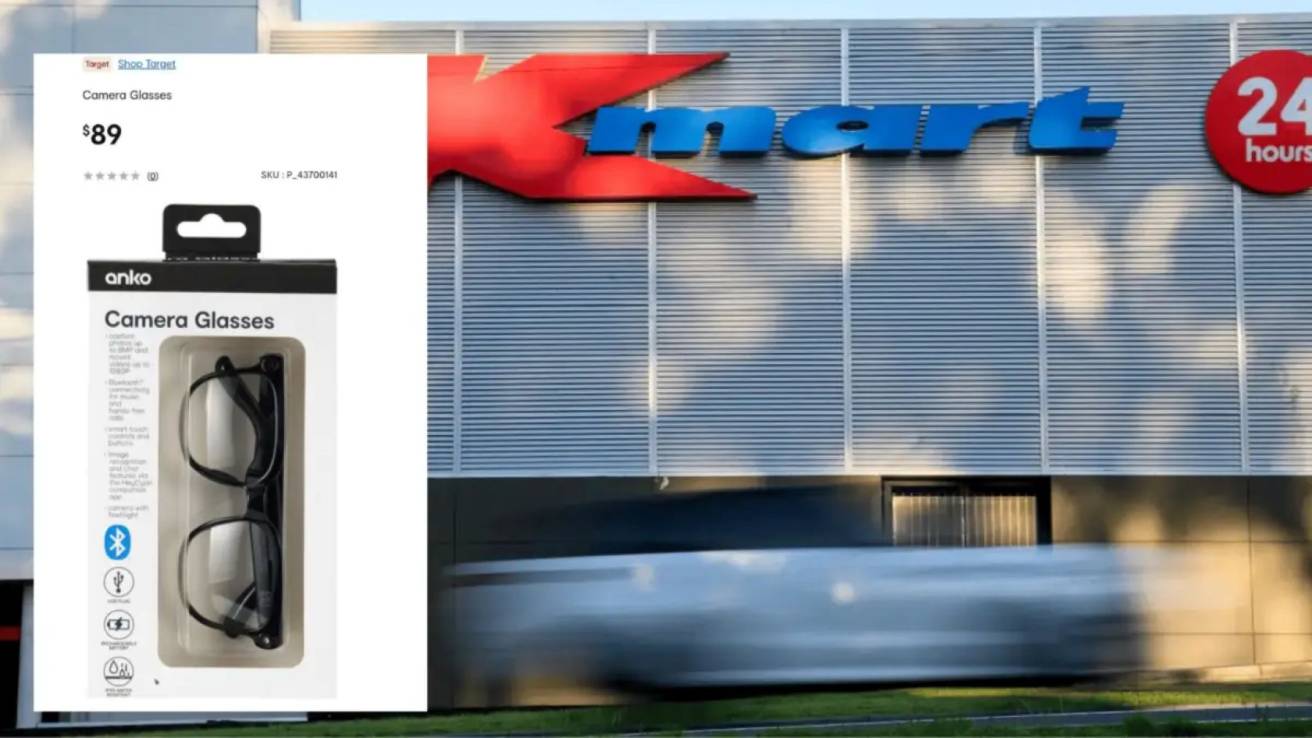
In a move that has sent shockwaves through the technology sector and privacy advocacy groups alike, Australian retail giants Kmart and Target have introduced a line of "smart glasses" under the Anko house brand for just $89. This strategic launch effectively shatters the financial barrier to entry for wearable AI and recording technology, previously dominated by premium players like Meta and Ray-Ban.
As these devices hit shelves, they have sparked an urgent, multifaceted conversation regarding the future of public surveillance, the ethics of AI image recognition, and the shifting boundaries of personal consent in an increasingly digitized society.
The Main Facts: Specs at a Budget Price Point
The Anko smart glasses arrive at a time when wearable technology is transitioning from niche Silicon Valley experimentation to mass-market consumer goods. Despite their modest price tag, the hardware specifications are remarkably robust for the entry-level segment.
Encased in a design that mimics standard, thick-rimmed eyewear—often referred to as "geek-chic"—the devices are engineered to be discreet. Beneath the frame, they pack a surprising array of hardware:
- Imaging Capabilities: An integrated camera capable of capturing 8-megapixel still photographs and 1080p high-definition video.
- Audio and Connectivity: The frames include built-in speakers and microphones, allowing for hands-free audio playback and voice commands. Bluetooth connectivity ensures seamless pairing with both iOS and Android devices.
- AI Integration: Perhaps most significantly, the glasses function in tandem with a proprietary smartphone app that offers image recognition features, allowing users to "query" the world around them through the glasses’ lens.
By offering this technology at less than one-fifth the cost of competing high-end smart glasses, Kmart and Target are positioned to bring surveillance-capable tech into the hands of a broader demographic, ranging from students to casual tech enthusiasts.
A Chronology of the Wearable Revolution
The path to the "Anko moment" did not happen overnight. To understand the gravity of this release, one must look at the evolution of wearable AI.
The Early Phase: Google Glass (2013)
The discourse on wearable cameras began in earnest with Google Glass. While technologically visionary, it failed due to its high cost, clunky aesthetics, and the "Glasshole" stigma—the social ostracization of users recording others without clear intent.
The Meta Pivot (2021–2024)
Meta, in partnership with EssilorLuxottica, successfully rebranded smart glasses as a lifestyle fashion accessory. By focusing on audio quality and social media integration, Meta proved that consumers would wear cameras on their faces if the hardware felt like "normal" glasses.
The Accessibility Breakthrough (2026)
Following Meta’s successful market validation, the supply chain for miniaturized camera sensors and low-power processors reached a tipping point. Throughout early 2026, industry insiders noted an influx of white-label wearable technology originating from East Asian manufacturing hubs. The Kmart/Target launch represents the culmination of this commoditization, where the technology has become cheap enough to be sold as a "home brand" lifestyle accessory.
Supporting Data: The Cost of Privacy
The economic disparity between these devices and their competitors is stark. Meta’s Ray-Ban collection typically retails between $300 and $450 AUD. The Anko device, at $89, represents an 80% reduction in cost.
| Feature | Meta Ray-Ban | Anko Smart Glasses |
|---|---|---|
| Price (approx) | $350+ | $89 |
| Video Quality | 1080p | 1080p |
| Image Recognition | Advanced (LLM-based) | Entry-level (App-based) |
| Discretion | Moderate | High (Thick-rimmed) |
Market analysts suggest that this price point effectively turns smart glasses into a "disposable" or "impulse-buy" item. While high-end glasses are treated as a long-term investment, the Anko glasses are priced similarly to a standard pair of fashion sunglasses, significantly lowering the hesitation of the average consumer to engage in constant recording.
Official Responses and Corporate Silence
To date, the response from Kmart and Target has been measured, focusing on the "utility" and "convenience" of the glasses rather than their surveillance potential. A spokesperson for the parent company, Wesfarmers, noted that the product is intended for "capturing memories and hands-free convenience," mirroring the marketing language used by global tech giants.
However, the retail sector is clearly bracing for a public relations storm. In similar instances abroad, retailers have been forced to implement "No Smart Glasses" signage in fitting rooms and sensitive areas. Consumer watchdogs in Australia, including the ACCC and privacy commissioners, have begun reviewing the marketing materials of these products to ensure they comply with existing laws regarding the recording of private conversations and non-consensual image capturing.
The Implications: A Society Under Constant Lens
The proliferation of $89 smart glasses carries profound societal implications that extend far beyond the retail sector.
1. The Death of the "Expectation of Privacy"
In public spaces, we have long accepted the presence of CCTV. However, CCTV is static and institutional. When the recording device is mobile, personal, and owned by the individual walking toward you in a coffee shop, the social contract changes. The Anko glasses exacerbate the "observer effect," where people may alter their behavior because they can no longer distinguish between someone looking at them and someone recording them.
2. The AI Image Recognition Threat
The most concerning aspect of the Anko glasses isn’t just the recording; it is the integration of image recognition. If an app can identify objects, locations, or even people in real-time, the potential for harassment, stalking, or industrial espionage increases exponentially. The democratization of this technology means that the "guardrails" typically enforced by premium brands—which often include software-side restrictions on facial recognition—may be absent or easily bypassed in budget-tier products.
3. Legal and Regulatory Lag
Laws regarding the use of recording devices in public have historically been clear, but they are increasingly difficult to enforce. If thousands of citizens are wearing recording devices, police and private businesses will find it nearly impossible to police unauthorized filming. We are entering an era where "digital consent" must be renegotiated. Should there be a mandatory LED indicator on all smart glasses? Should manufacturers be legally liable for the misuse of their devices? These are questions that legislatures are currently ill-equipped to answer.
4. The Digital Divide and Accessibility
Conversely, proponents of the technology argue that these glasses offer incredible benefits for accessibility. For the visually impaired, an $89 pair of glasses that can identify objects or read text aloud is a life-changing tool. By lowering the cost, Kmart and Target have inadvertently provided an assistive technology that was previously locked behind a high paywall. The challenge for society will be to embrace these benefits while mitigating the invasive risks they bring to the public sphere.
Conclusion: The New Normal
The arrival of $89 smart glasses at Kmart is a watershed moment. It signals that the era of "wearable AI" is no longer a privilege of the tech-savvy or the wealthy; it is now a retail commodity.
As we move forward, the debate will likely shift from "Should these exist?" to "How do we live with them?" We are witnessing a technological evolution where the line between our natural vision and the digital record is blurring. Whether these devices become a standard tool for productivity or a catalyst for a massive privacy backlash remains to be seen. What is certain, however, is that the eyes of the public are no longer just human—they are increasingly connected, recorded, and indexed.
