




By the Editorial Staff
August 28, 2026
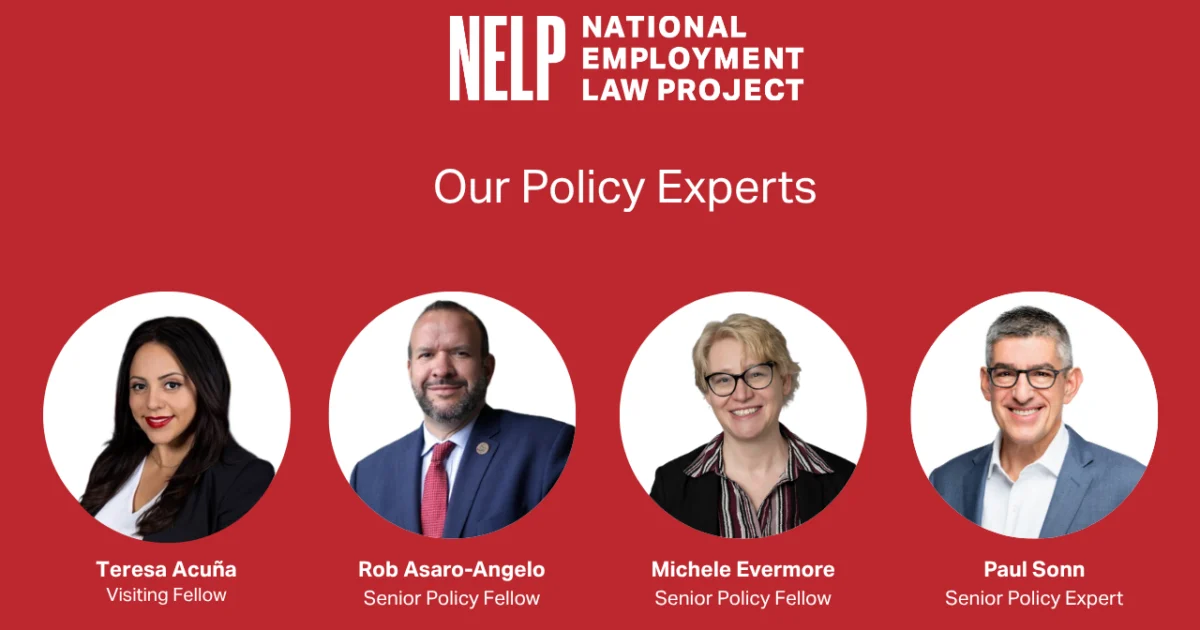
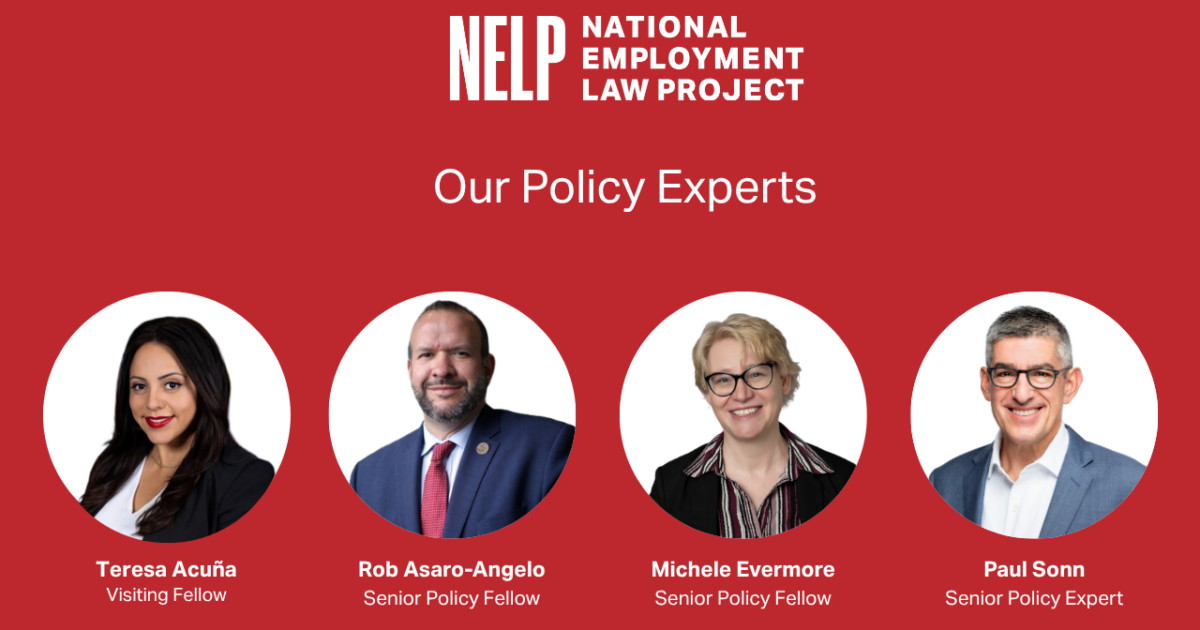
In a strategic move designed to reshape the American labor landscape, the National Employment Law Project (NELP) announced today the appointment of four powerhouse policy experts to its leadership team. As the organization enters its seventh decade of advocacy, this infusion of high-level talent signals a pivot toward more aggressive, transformative policy-making aimed at ensuring that every job in the United States is a “good job.”
The appointments come at a critical juncture for the U.S. labor movement, as the nation navigates the complexities of a post-pandemic economy, rapid technological shifts in manufacturing, and persistent inflationary pressures on the working class. By consolidating this group of veteran architects of labor policy, NELP is positioning itself to be the primary engine for “Good Jobs Democracy” in the coming years.
The Core Mandate: Defining the "Good Jobs Economy"
At the heart of NELP’s mission is a deceptively simple yet profoundly ambitious goal: to move beyond mere employment statistics and ensure that work provides stability, dignity, and a living wage. According to Rebecca Dixon, President and CEO of NELP, the recruitment of these four individuals is not merely a staffing decision; it is a calculated effort to build a "nucleus of a team" capable of executing long-term, structural economic change.
“Creating a Good Jobs Economy for all workers requires leaders with deep policy expertise and a clear vision to achieve bold, lasting change,” Dixon noted in her announcement. “These are the architects of the policies that have defined the last decade of labor progress.”
Meet the New Architects of Labor Policy
The new team brings together a blend of federal administrative experience, state-level implementation expertise, and a history of successful grassroots movement support.
Teresa Acuña: Visiting Fellow for Good Jobs Democracy
Acuña’s appointment is perhaps the most significant signal of NELP’s focus on the intersection of industrial policy and worker rights. As the former director of the Good Jobs Initiative at the U.S. Department of Labor, Acuña was instrumental in linking federal infrastructure and clean energy investments to high-quality job creation. Her work ensures that as the U.S. government spends billions on the green transition, those dollars don’t just build bridges or factories—they build sustainable, union-supported careers for both urban and rural populations.
Rob Asaro-Angelo: Senior Policy Fellow for Worker-First Protections
Asaro-Angelo joins NELP following an eight-year tenure as Commissioner of the New Jersey Department of Labor and Workforce Development (NJDOL). Having served under Governor Phil Murphy from 2018 to 2026, Asaro-Angelo brings a wealth of “boots-on-the-ground” experience in public sector administration. His role will focus on scaling worker protections from the state level to the national stage, leveraging his experience in managing complex workforce services to advocate for robust labor enforcement.
Michele Evermore: Senior Policy Fellow for Economic Security and Worker Transitions
Returning to NELP, Evermore brings a track record of legislative victory. During her previous stint at the organization, she was a primary architect of the historic expansions to Unemployment Insurance (UI) during the COVID-19 pandemic. Her subsequent work as Deputy Director for Policy in the U.S. Department of Labor’s Office of Unemployment Insurance Modernization makes her uniquely qualified to address the structural weaknesses in the nation’s social safety net.
Paul Sonn: Senior Policy Expert for Wages and Affordability
A veteran of the labor movement, Sonn has been a central figure in the fight for living wages for decades. From his foundational work on the first city-level minimum wage laws to his strategic support for the “Fight for $15,” Sonn has spent his career proving that wage increases are not only good for workers but also for the broader economy. In his new role, he will focus on “affordability policy,” exploring ways to ensure that wage growth keeps pace with the rising costs of housing, childcare, and healthcare.
A Chronology of Advocacy: From Grassroots to the White House
The trajectory of these four leaders mirrors the evolution of the modern labor movement.
- 2010s: The Minimum Wage Movement. Paul Sonn’s work at NELP during this era provided the legal and economic framework for the Fight for $15. This period proved that local and state-level victories could exert enough pressure to shift the national conversation.
- 2020: The Pandemic Crucible. The arrival of COVID-19 necessitated an immediate, massive expansion of the social safety net. Michele Evermore’s work at NELP and later at the federal level during this period demonstrated how administrative policy could prevent mass destitution.
- 2021–2025: Industrial Policy and Federal Investment. Under the Biden-Harris administration, the focus shifted to “Good Jobs.” Teresa Acuña’s development of the Good Jobs Initiative codified the idea that government spending must come with strings attached—specifically, the requirement that taxpayer-funded projects provide high-quality employment.
- 2026 and Beyond: Consolidation and Scale. The current moment represents the transition from ad-hoc crisis response to a long-term “Good Jobs” framework. By uniting these leaders, NELP is signaling a shift toward a more proactive, centralized approach to labor advocacy.
Supporting Data: The Case for a "Good Jobs" Focus
The economic environment of 2026 demands this level of expertise. Despite low headline unemployment rates, data from the Bureau of Labor Statistics (BLS) and independent research groups suggest that the “quality” of available jobs remains stagnant.
- The Wage-Cost Gap: As of mid-2026, real wage growth has struggled to keep pace with the hyper-inflationary pressures in the service and housing sectors. Paul Sonn’s focus on affordability aims to bridge this gap through targeted policy interventions.
- Infrastructure Spending Impact: With billions in federal funds allocated to the Infrastructure Investment and Jobs Act and the Inflation Reduction Act, there is a massive opportunity to set labor standards for an entire generation. Acuña’s expertise is designed to ensure these standards are enforced.
- The UI Modernization Gap: The pandemic revealed that the U.S. Unemployment Insurance system was woefully outdated. Evermore’s work in the Department of Labor highlighted that only a fundamental, technology-forward overhaul of these systems can protect workers in future economic downturns.
Official Responses and Strategic Implications
The consolidation of such a high-caliber team has drawn praise from across the labor and economic policy spectrum. Policy analysts note that NELP is effectively becoming a “shadow department of labor,” providing the intellectual heavy lifting that federal agencies often lack the time or political flexibility to pursue.
“When you look at the track record of these four individuals, you aren’t just looking at advocates; you are looking at people who understand the mechanics of the bureaucracy,” says Dr. Elena Vance, a senior economist specializing in labor relations. “By bringing them together, NELP is effectively creating a laboratory for policy innovation that can be exported to states, municipalities, and eventually, federal legislation.”
The implications for the broader U.S. economy are significant. By focusing on “Good Jobs Democracy,” NELP is challenging the traditional neoliberal assumption that market efficiency is the only metric of success. Instead, they are arguing that an economy’s health should be measured by the security and agency it affords its workers.
Implications for the Future: A New Era of Labor Advocacy
As NELP looks toward the final half of the 2020s, the organization is clearly preparing for a long-term fight. The challenges ahead—automation, the rise of the gig economy, and the global transition to green energy—will require exactly the type of nuanced, multi-faceted policy approach that these four leaders possess.
The “Good Jobs” initiative is not merely about increasing hourly wages; it is about systemic reform. It involves rethinking the role of unions, the architecture of unemployment benefits, and the very standards of what constitutes a “career” in the 21st century.
For workers across the country, the message from NELP is one of renewed focus. With a veteran team now in place, the organization is well-equipped to turn the abstract ideals of economic justice into concrete, legislative, and administrative realities. As CEO Rebecca Dixon stated, the organization is moving “onward,” with a sharpened strategic focus that suggests the coming years will be defined by a more assertive and sophisticated push for worker power.
About the National Employment Law Project (NELP)
The National Employment Law Project is a leading advocacy organization that works to ensure all workers have the rights and protections they need to live with dignity. Through research, advocacy, and litigation, NELP partners with low-wage workers and their allies to push for policies that build a more equitable economy. Under the leadership of CEO Rebecca Dixon, the organization continues to be at the forefront of the fight for labor, racial, and gender justice in the American workplace.
