





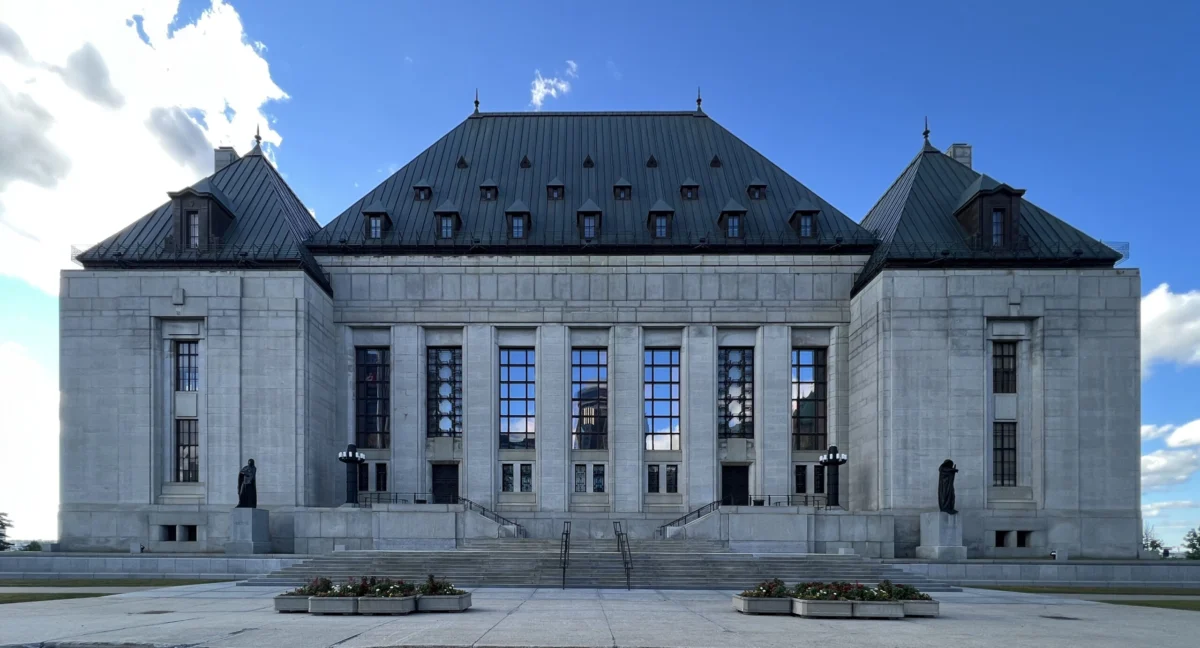
In a landmark ruling that recalibrates the balance of power between the executive branch and the judiciary, the Supreme Court of Canada has issued a unanimous decision declaring that legislative attempts to insulate administrative decisions from judicial review are unconstitutional. The ruling, handed down on Thursday, effectively invalidates "privative clauses"—statutory provisions designed to prevent courts from examining the factual and legal accuracy of government agency decisions—marking a definitive assertion of the judiciary’s role as the final arbiter of law.
Writing for a united bench, Chief Justice Richard Wagner articulated a robust defense of the "core supervisory jurisdiction" of superior courts, grounding the power of judicial review directly in the Constitution Act, 1867. By ruling that the legislature cannot shield executive bodies from scrutiny, the Court has reinforced the principle that in Canada, all public power must be exercised lawfully, reasonably, and within the bounds defined by the Constitution.
The Constitutional Core: Understanding the Ruling
At the heart of the dispute was the question of whether the Canadian Parliament possesses the authority to create "islands of immunity" for administrative tribunals. The government had argued that, in the interest of efficiency and expertise, certain decisions—specifically those made by ethics commissioners—should be final and immune from court intervention regarding findings of fact or law.
Chief Justice Wagner dismantled this argument, clarifying that while Parliament holds the power to prescribe the procedures and forums for judicial review, it lacks the constitutional competency to extinguish the substance of that review.
"The legislature acts beyond its authority when it purports to limit courts’ constitutional power to perform a legality review," Wagner wrote. The Court held that because any irrational or unreasonable exercise of public power is inherently unlawful, the judiciary’s role in ensuring government compliance with the law is an indispensable feature of the Canadian constitutional order. By rendering Section 66 of the Conflict of Interest Act inoperable, the Court has signaled that no administrative body is beyond the reach of the rule of law.
Chronology of the Dispute
The road to this historic ruling began in the heat of the COVID-19 pandemic, tracing back to a high-profile political controversy involving the federal government and the WE Charity.
- June 2020: The federal government selects WE Charity to administer the Canada Student Service Grant (CSSG), a program aimed at supporting students during the pandemic. The decision sparks intense public scrutiny regarding the relationship between the Prime Minister and the charity’s founders.
- May 2021: Ethics Commissioner Mario Dion releases a report clearing Prime Minister Justin Trudeau of conflict of interest violations. The report concludes that while the process was flawed, it did not reach the threshold of a formal conflict of interest under the Conflict of Interest Act.
- Post-2021: Democracy Watch, a prominent advocacy group, files for a judicial review, challenging the Commissioner’s findings. The group alleges that Dion failed to adequately consider the personal ties between the Prime Minister and the Kielburger brothers, the co-founders of WE Charity.
- 2024: The Federal Court of Appeal dismisses the challenge. The lower court holds that the Ethics Commissioner’s reporting relationship with Parliament provides an "adequate alternative" to judicial review, effectively shielding the decision from court oversight under Section 66 of the Act.
- December 2026: The Supreme Court of Canada hears the appeal, resulting in the unanimous decision that overturns the lower court’s reasoning and strikes down the legislative barrier to judicial review.
The WE Charity Controversy: A Catalyst for Change
The case serves as a poignant reminder of the intersection between political accountability and administrative law. When Mario Dion issued his 2021 report, he faced accusations from civil society groups that his investigation was superficial. Democracy Watch argued that the Commissioner had ignored significant evidence concerning the personal connections between the Prime Minister’s office and the leadership of WE Charity.
The lower court’s initial decision to block the review—citing the Commissioner’s duty to report to a Parliamentary committee as a substitute for judicial oversight—was seen by many legal scholars as an abdication of the judiciary’s responsibility. By overturning this, the Supreme Court has clarified that Parliamentary oversight and judicial review are not mutually exclusive. Instead, they serve different functions: Parliament exercises political accountability, while the courts exercise legal accountability. The existence of the former cannot be used to justify the erasure of the latter.
Official Responses and Legal Perspectives
The legal community has largely hailed the decision as a victory for the rule of law. Sujit Choudhry, counsel for Democracy Watch, provided a searing indictment of executive overreach in his reaction to the ruling:
"In an era where executives around the world have sought to assert broad and unlimited powers that are not reviewable by the courts, the Supreme Court of Canada has resoundingly proclaimed that will not occur in Canada. In clear and unequivocal terms, the Supreme Court has affirmed [that] legal powers, by definition, are limited powers, and that it is the constitutional duty of the provincial superior courts and the federal courts to rule on the legality of executive power."
From the government’s perspective, the ruling presents a significant challenge to the way administrative tribunals operate. For decades, the federal government has utilized privative clauses to promote the finality of decisions made by specialized boards and commissions. Legal advisors to the Crown will now be forced to re-evaluate the drafting of future legislation, ensuring that regulatory frameworks respect the inherent supervisory jurisdiction of the courts.
Broader Implications for Administrative Law
The implications of this ruling extend far beyond the specific case of the Ethics Commissioner. By firmly establishing that the core supervisory jurisdiction of superior courts is constitutionally protected, the Supreme Court has set a high bar for any future legislation that seeks to limit judicial access.
1. The Death of the "Finality" Argument
Historically, the government argued that specialized tribunals—such as labor boards, human rights commissions, or ethics offices—required total autonomy to function effectively. The Court has now rejected the notion that "expertise" justifies immunity from legal error. If a tribunal makes a mistake of law, it is now clear that the court has the constitutional authority—and obligation—to correct it.
2. Standard of Review Clarification
The ruling provides much-needed clarity on the standard of review. By confirming that the courts are the final arbiters of legality, the Supreme Court has effectively narrowed the scope for "deference" in cases where the fundamental constitutionality of a process is in question.
3. Impact on Future Legislation
Legislators must now walk a fine line. While they may still set the procedural rules (e.g., filing deadlines, the choice of court, or specific evidentiary rules), they can no longer strip away the court’s power to assess the reasonableness and legality of a decision. Any law attempting to do so will be vulnerable to constitutional challenge.
Conclusion: A New Era of Accountability
The Supreme Court’s decision is a reaffirmation of the "Rule of Law" as a cornerstone of the Canadian democracy. It sends an unequivocal message to the executive branch: the delegation of power to administrative bodies is a convenience, not an abdication of oversight.
As the Federal Court of Appeal prepares to review the Ethics Commissioner’s original conclusions in the WE Charity matter, the broader legal landscape in Canada has shifted. The judiciary has reclaimed its role as the ultimate check on executive power, ensuring that no matter how complex the regulatory environment becomes, the rights of citizens to seek legal redress against administrative error remain intact. This ruling ensures that in the eyes of the law, the actions of the state are always subject to the scrutiny of the courts—a victory for transparency and the fundamental principles of justice.
