



By Alejandra Carranza | Published July 31, 2026
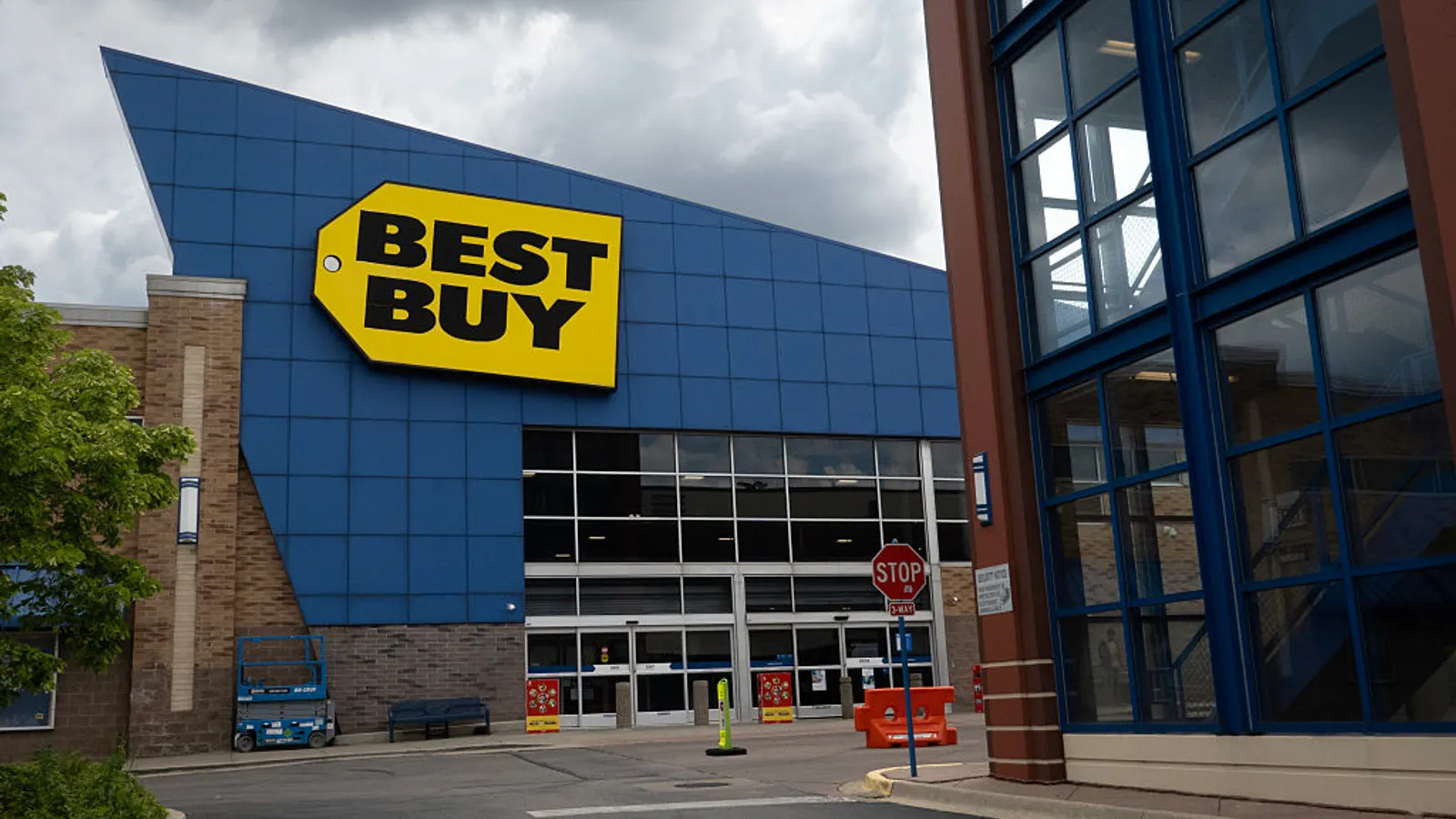
In an era where global retail giants are under increasing pressure to decouple business growth from environmental degradation, Best Buy is doubling down on its commitment to sustainability. The electronics retailer, which has long aimed for net-zero emissions by 2040, recently announced a significant milestone in its operational strategy: the activation of a massive solar field at its distribution center in Dinuba, California.
This development marks more than just a transition to renewable energy; it serves as a keystone in a broader, multi-faceted strategy to overhaul the company’s logistics, waste management, and vendor partnerships. By integrating localized power generation with sophisticated supply chain consolidation, Best Buy is attempting to prove that industrial-scale efficiency and environmental stewardship are not mutually exclusive.
The Dinuba Milestone: Powering the Grid from Within
On July 16, 2026, Best Buy officially powered up its new solar installation in Dinuba. This site is the first of its kind in the company’s extensive distribution network to feature on-site solar generation, representing a pivotal shift in how the retailer powers its infrastructure.
The numbers associated with the project are substantial. The solar field is capable of generating approximately 5.87 million kilowatt-hours (kWh) of electricity annually. To put this into perspective, the capacity is sufficient to power roughly 559 average American homes. By generating a significant portion of its electricity on-site, the Dinuba facility effectively reduces its reliance on local utility grids that may still rely heavily on fossil fuels.
This initiative is not an isolated experiment. It is part of a deliberate, long-term capital investment plan designed to transition the company’s real estate footprint toward carbon neutrality. For a major retailer that relies on energy-intensive warehouses to maintain inventory, cold storage, and logistics operations, such moves are critical to meeting the aggressive 2040 net-zero targets established nearly two decades ago.
Chronology of a Greener Supply Chain
Best Buy’s journey toward its current sustainability posture did not happen overnight. The retailer’s trajectory has been marked by a series of incremental, yet impactful, policy shifts and technological adoptions:
- 2009 – The Baseline: Best Buy established its initial framework for carbon reduction. Since this year, the company reports a 74% reduction in carbon emissions across its direct operations.
- 2020-2024 – Operational Refinement: During this period, the company shifted focus toward "circular economy" principles, emphasizing waste diversion and the reduction of packaging materials.
- 2025 – The "Get There Greener" Expansion: Following a successful pilot, the "Get There Greener" program in Canada was scaled significantly, facilitating the consolidation of freight to reduce the number of truckloads on the road.
- July 2025 – Reporting Milestone: The company published its Corporate Responsibility and Sustainability Report, highlighting the massive reduction in truckloads achieved through collaborative logistics.
- July 2026 – The Solar Milestone: The activation of the Dinuba solar field marks the first major deployment of on-site renewable energy generation within the distribution network, signaling a transition from energy efficiency to energy production.
Supporting Data: Efficiency Through Consolidation
While renewable energy projects like the Dinuba solar field capture headlines, the "unsexy" work of logistics optimization is arguably driving the most significant emissions reductions for the company.
The "Get There Greener" program in Canada stands as the premier example of this. By partnering directly with vendors and carriers, Best Buy has moved away from fragmented, less-than-truckload (LTL) shipments—which are notoriously inefficient—toward a model of consolidated full truckloads.
In fiscal year 2025 alone, this program saved an estimated 7,767 truckloads in Canada. By filling trucks to capacity, the company is effectively lowering the carbon intensity per unit of inventory. This data point is crucial because it addresses Scope 3 emissions—those generated by the third-party carriers that transport Best Buy’s goods. As retailers find it increasingly difficult to control the emissions profiles of their shipping partners, consolidation serves as the most effective lever for immediate impact.

Waste Diversion Statistics
The company’s commitment extends into the warehouse itself. In fiscal year 2025, the installation of 29 new cardboard balers across its network represented a concerted effort to minimize landfill contributions. By compressing cardboard into dense, recyclable bales, the company not only creates a more efficient recycling stream but also reduces the transportation volume required to move waste off-site.
Additionally, the use of polystyrene densifiers—machines that convert bulky, air-filled foam packaging into solid, manageable cubes—has fundamentally altered the economics of warehouse waste. These densifiers allow for more efficient loading of outbound logistics, ensuring that trucks are not hauling "empty space" back to recycling facilities.
Official Perspectives: The Leadership Mandate
The shift toward sustainable operations has been framed by Best Buy’s executive team as a matter of both corporate responsibility and long-term fiscal health.
"We already cut carbon emissions in our operations by 74% since 2009 and are excited to keep making strides toward reducing our carbon emissions across our operations," said Tim Dunn, head of environmental sustainability, in a press statement regarding the California project. Dunn’s comments underscore a company culture that views environmental metrics with the same rigor as quarterly financial results.
Mark Irvin, Chief Supply Chain Officer, offered a broader perspective on the strategy in the 2025 sustainability report. "By adopting zero-waste principles in our supply chain, we are not only minimizing our environmental impact but also improving our efficiency for the long-term success of the enterprise," Irvin stated.

Irvin’s emphasis on "long-term success" is telling. It signals to investors that the retailer does not view sustainability as a "nice-to-have" expense, but as a mechanism to lower operational costs, optimize space usage, and future-proof the business against potential carbon taxes or stringent environmental regulations.
Implications: The Retailer’s Path Forward
The implications of Best Buy’s recent moves are significant for the retail industry at large. By proving that on-site solar can be successfully deployed at scale and that logistics consolidation can eliminate thousands of truckloads annually, Best Buy is setting a benchmark for competitors.
1. The Role of Scope 3 Emissions
The most significant challenge for any retailer is Scope 3 emissions—the indirect emissions that occur in the value chain. Best Buy’s "Get There Greener" program is a direct answer to this challenge. It suggests that the future of retail logistics lies in deep, collaborative partnerships between retailers, suppliers, and carriers. The ability to coordinate freight across disparate vendor networks requires sophisticated data sharing and trust, factors that may become the new standard for industry-wide competition.
2. Infrastructure as a Battery
The Dinuba solar field highlights a transition in how corporations view their physical assets. Warehouses are no longer just storage units; they are becoming nodes in a distributed energy network. If Best Buy continues to roll out solar fields to its remaining distribution centers, it could eventually transition from a net-consumer of energy to a net-contributor to the local grid, potentially opening new revenue streams or energy-sharing partnerships with local municipalities.
3. Circularity and Operational Efficiency
The focus on cardboard balers and polystyrene densifiers illustrates the growing importance of the "circular economy." As consumers become increasingly sensitive to the environmental cost of packaging, companies that can demonstrate a closed-loop system—where waste is treated as a secondary raw material—will likely see a boost in brand equity. Furthermore, the efficiency gains identified by Mark Irvin—such as improved truck utilization and reduced waste-handling costs—suggest that sustainability initiatives are actively subsidizing their own implementation.
4. The 2040 Target
With the 2040 net-zero deadline approaching, the next decade will be the most critical for Best Buy. The "low-hanging fruit" of waste reduction and basic energy efficiency has largely been harvested. The coming years will likely require more complex interventions, such as the electrification of the last-mile delivery fleet and a deeper transition to renewable-only energy contracts.
In conclusion, Best Buy’s current strategy is one of quiet, methodical integration. By layering solar generation, logistics consolidation, and waste diversion, the company is constructing a robust, resilient supply chain. While the path to 2040 remains long, the milestones achieved in 2025 and 2026 suggest that the retailer is not merely chasing targets, but fundamentally re-engineering its operations for a decarbonized future. The industry will be watching closely to see if these efforts in California and beyond can be scaled globally, potentially turning a retail distribution center into a model for 21st-century environmental management.
